
(858) 247-2933
Book
Book a consultation
Eyelid Surgery, Newport Beach & Orange County
If hooded upper lids or under-eye bags make you look more tired than you feel, the cause is not always the eyelids alone. At your Newport Beach consultation, Tim Sayed MD examines your lids, brow, and eye health, then explains whether blepharoplasty, a brow procedure, a non-surgical option, or no treatment is the better fit.
Choose your consultation office with follow-up in mind. If you consult in Newport Beach, your follow-ups are at 3991 MacArthur Boulevard, Suite 320, Newport Beach, CA 92660. Surgery is performed only in accredited operating rooms separate from both consultation offices, not at the MacArthur Boulevard office.
Blepharoplasty removes excess upper eyelid skin and lower eyelid puffiness to make the eyes look more open and rested. It is an outpatient procedure, and most people return to normal activities within one to two weeks.
What it is
Surgery that trims loose upper eyelid skin, repositions or reduces lower eyelid fat, and tightens the lids. It can be functional, cosmetic, or both.
Upper, lower, or both
Upper blepharoplasty opens a hooded, heavy upper lid. Lower blepharoplasty softens under-eye bags and puffiness. Many patients combine the two.
Anesthesia
Usually local anesthesia with light sedation, or general anesthesia. It is an outpatient procedure, so you go home the same day.
Downtime
Bruising and swelling settle over one to two weeks. Most people feel comfortable in public and back at desk work within 7 to 10 days.
Results
A more open, rested upper lid and a smoother lower lid. Upper eyelid results often last a decade or longer; aging continues gradually.
Who it suits
Adults bothered by hooded upper lids, under-eye bags, or a tired look, in good health and with realistic goals. A consultation confirms candidacy.
Why patients choose Tim Sayed MD
Dr. Sayed is certified by both the American Board of Plastic Surgery and the American Board of Surgery, and he has been recertified in both after ten years. He is a Fellow of the American College of Surgeons.
He earned his medical degree at the UCSF School of Medicine, completed general surgery training at Massachusetts General Hospital and Harvard, and returned to UCSF for his plastic surgery fellowship.
Ask about eyelid cases similar to yours, how the plan accounts for your brow and dry-eye history, and what would happen if a revision were needed.
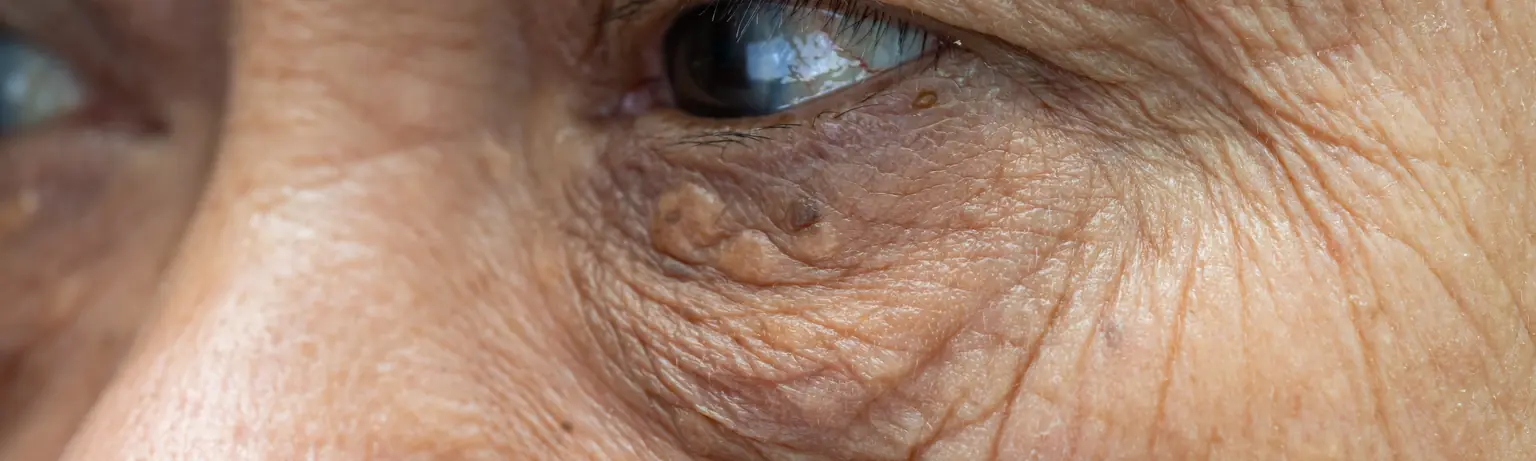
Upper blepharoplasty addresses excess upper-lid skin that folds toward the lashes and, in some cases, a small amount of fat or muscle. The incision is usually placed in the natural eyelid crease.
Lower blepharoplasty addresses under-eye bags caused by fat pushing forward and, sometimes, loose lower-lid skin. The incision may be placed just below the lash line or inside the lower lid (transconjunctival). Fat may be removed or repositioned, depending on the anatomy. Some patients need one; others benefit from both. The plan depends on your examination, not on a standard package.
Expect swelling, bruising, and tightness that are usually most noticeable in the first several days. Many patients return to desk work in about one to two weeks; your timeline may differ. Sutures are typically removed within the first week or so if they are not absorbable. Use cold compresses, keep your head elevated, and use eye drops or ointment as directed. Ask when you may wear contact lenses or eye makeup, read screens for long periods, exercise, and drive. Scars usually soften and fade over several months. Your follow-ups are at the Newport Beach office where you had your consultation. Before surgery, confirm when each check is needed so you can plan the trip back to MacArthur Boulevard, and ask how to reach the team outside office hours. Office hours are not an emergency-care schedule.
Request an eyelid surgery consultation in Newport Beach · (858) 247-2933
Upper vs lower
Upper blepharoplasty addresses excess upper-lid skin that folds toward the lashes and, in some cases, a small amount of fat or muscle. The incision is usually placed in the natural eyelid crease.
Lower blepharoplasty addresses under-eye bags caused by fat pushing forward and, sometimes, loose lower-lid skin. The incision may be placed just below the lash line or inside the lower lid (transconjunctival). Fat may be removed or repositioned, depending on the anatomy.
Some patients need one; others benefit from both. The plan depends on your examination, not on a standard package.
See eyelid surgery before and after results
Consultation
Bring a list of your medications and supplements, any recent eye-exam or visual-field results, and your history of dry eye, contact lens use, thyroid problems, or prior eye or laser vision surgery. Photos from earlier years can help show how your lids have changed.
Ask whether the concern is the eyelid skin, lower-lid fat, brow position, or a combination; which incisions are proposed; and how dry eye would be managed. If your upper lids interfere with vision, ask whether testing is appropriate before any insurance discussion.
Related options include brow lift in Newport Beach, facial fat transfer in Newport Beach, and facial plastic surgery in Newport Beach.
Compare eyelid surgery with a brow lift
The procedure
Eyelid surgery is usually an outpatient procedure under local anesthesia with sedation or under general anesthesia. Operating time depends on whether one or both lids are treated and whether other procedures are combined.
Markings are made with you sitting upright. Excess skin, and any fat to be removed or repositioned, is addressed through the planned incisions, which are then closed with fine sutures. Plan for an adult to drive you home from the operating facility.
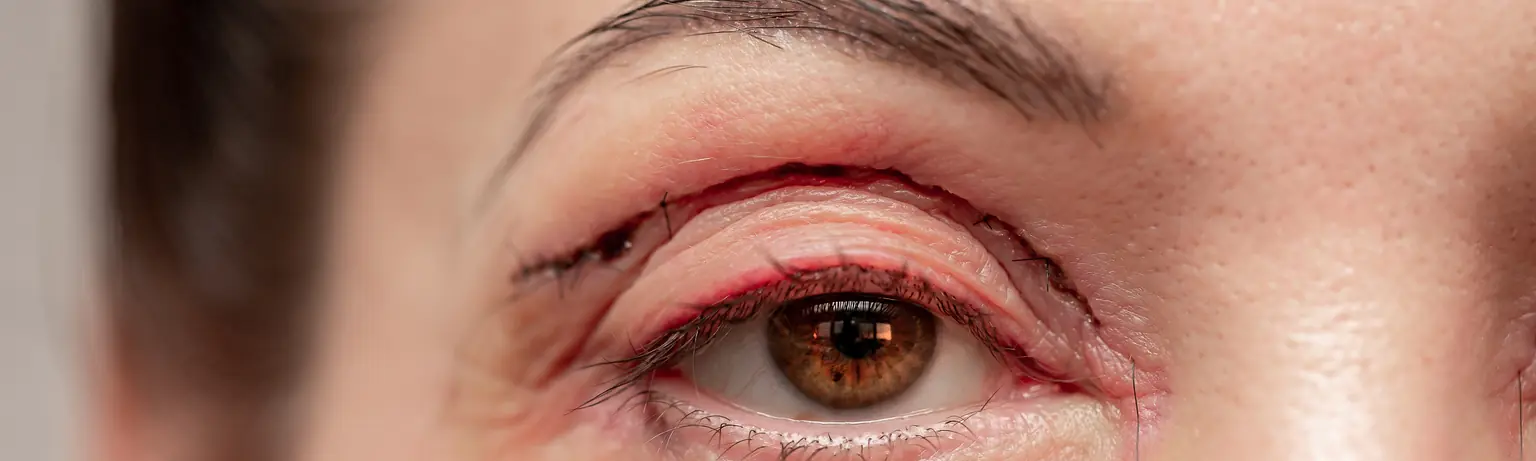
Risks include bleeding, infection, dry or irritated eyes, temporary blurred vision, difficulty closing the eyes fully during early healing, asymmetry, visible scarring, and a change in lower-lid position. Too much tissue removal can create a hollow look, and further surgery is sometimes needed. Loss of vision is rare but serious.
Tell the team about dry eye, glaucoma, thyroid eye disease, blood thinners, and prior eye surgery. Seek urgent care for sudden vision changes, severe or increasing eye pain, or rapidly increasing swelling around the eye.
Related and alternative options
Blepharoplasty is designed for structural changes in the lids: redundant skin, hooding, and lower-lid bags. When heavy upper lids block part of the upper field of vision, upper blepharoplasty may also improve that.
It does not treat pigment-related dark circles, fine surface lines, or crepey texture; skin treatments may help those. Under-eye hollows may need volume rather than fat removal. A low brow can make the upper lids look heavy, and removing lid skin will not lift it. Matching the procedure to the cause helps avoid a hollow or pulled appearance.
Related options include brow lift in Newport Beach, facial fat transfer in Newport Beach, and facial plastic surgery in Newport Beach.
Before and after
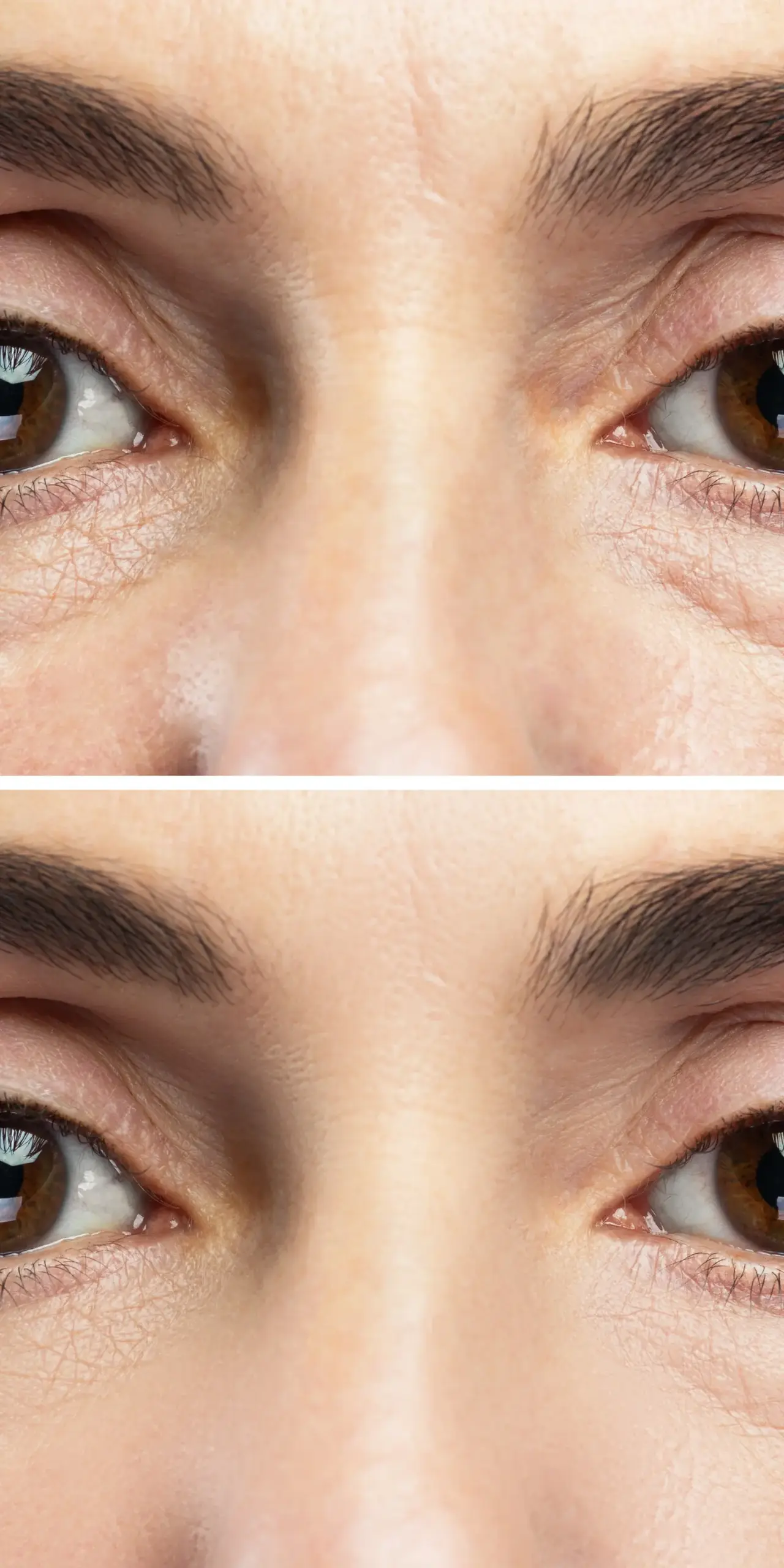
Ask to see before-and-after photographs relevant to your concerns. The same practice gallery is used for both offices; these are not location-specific results. Photographs do not guarantee your outcome.
Practice photo gallery information for Newport Beach patients
Cost and financing
The practice’s current guide is about $4,000–$9,000 for upper or lower blepharoplasty, with a higher total when both lids are treated or another procedure is added. The same guide applies at both consultation offices; it is not a Newport Beach-specific market price.
Request a written quote for your proposed plan. Ask exactly which fees it includes, such as the surgeon, anesthesia, and facility, and what could add to the cost. Lower-lid surgery is generally cosmetic. Upper-lid surgery may be considered by some insurers when testing documents a vision obstruction; coverage depends on your policy and its requirements.
Ask about eyelid surgery financing
Recovery
Expect swelling, bruising, and tightness that are usually most noticeable in the first several days. Many patients return to desk work in about one to two weeks; your timeline may differ. Sutures are typically removed within the first week or so if they are not absorbable.
Use cold compresses, keep your head elevated, and use eye drops or ointment as directed. Ask when you may wear contact lenses or eye makeup, read screens for long periods, exercise, and drive. Scars usually soften and fade over several months.
Days 1 to 3
Cold compresses, head elevated, rest. Expect swelling, bruising, and some tightness. Keep activity light and the eyes lubricated.
Days 4 to 7
Upper-lid sutures usually come out around day 5 to 7. Bruising starts to fade and makeup can often cover what remains.
Week 2
Most people are comfortable in public and back to desk work. Residual swelling keeps settling.
Weeks 3 to 6
Return to exercise as cleared. Scars along the creases and lash line continue to fade and soften.
Months 2 to 6
The final shape and the fully settled, rested look emerge as the last swelling resolves and scars mature.
Ask about eyelid surgery recovery
Your surgeon
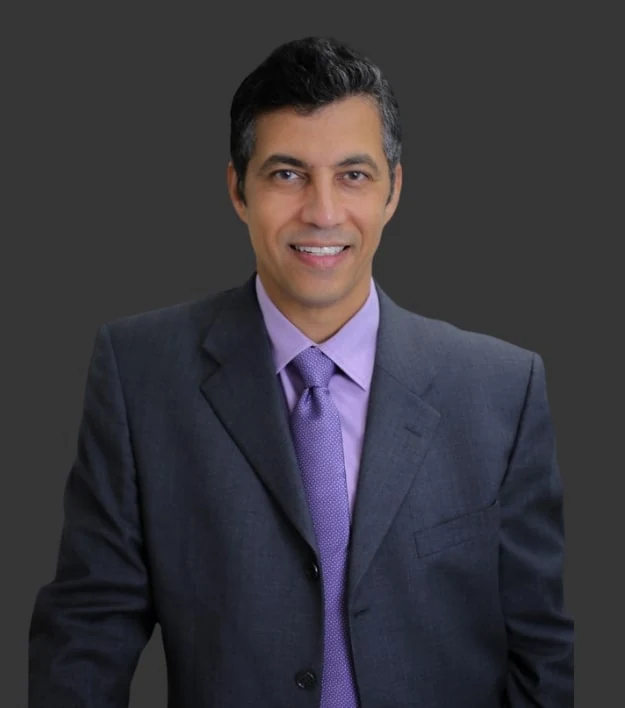
Dr. Sayed is certified by both the American Board of Plastic Surgery and the American Board of Surgery, and he has been recertified in both after ten years. He is a Fellow of the American College of Surgeons.
He earned his medical degree at the UCSF School of Medicine, completed general surgery training at Massachusetts General Hospital and Harvard, and returned to UCSF for his plastic surgery fellowship.
Ask about eyelid cases similar to yours, how the plan accounts for your brow and dry-eye history, and what would happen if a revision were needed.
Read the practice biography before your Newport Beach consultation
American Board of Plastic Surgery
Board certified and recertified
American Board of Surgery
Board certified and recertified
UCSF School of Medicine
MD and plastic surgery residency
Harvard, Mass General
General surgery training
Kellogg School of Management
Executive MBA, Northwestern
Alpha Omega Alpha
National medical honor society
Office
Choose Newport Beach if this office is the more practical place for both your consultation and your follow-up visits. The La Jolla office is in University City, San Diego; neither consultation office is an operating facility.
Confirm your appointment time when scheduling. This office opens at 8:30 AM on Mondays; the La Jolla / University City office opens at 9:00 AM that day. The shared phone number serves both offices, so say Newport Beach when you request an appointment.
Office and consultation details for Newport Beach · Compare the La Jolla / University City consultation office
Your consultation and postoperative visits use the Newport Beach address. Your operation takes place in a separate accredited operating room, and you may recover somewhere else. Get the operating facility's address and arrival instructions before you arrange your ride; the MacArthur Boulevard office is not your surgery destination.
Tell the team where you plan to recover and ask when you need to return to Newport Beach for checks. If coming back here would be difficult, raise it before your consultation rather than assuming follow-ups can move to San Diego.
Tim Sayed MD, Newport Beach
Address
3991 MacArthur Boulevard, Suite 320, Newport Beach, CA 92660
Phone
(858) 247-2933
Hours
Mon–Fri 8:30 AM–4:30 PM PT; Sat–Sun closed
Surgery
Accredited operating rooms only, separate from both consultation offices
Approved copy
Choose Newport Beach if this office is the more practical place for both your consultation and your follow-up visits. The La Jolla office is in University City, San Diego; neither consultation office is an operating facility.
Tim Sayed MD — Newport Beach consultation office 3991 MacArthur Boulevard, Suite 320 Newport Beach, CA 92660 Shared practice phone: (858) 247-2933
Confirm your appointment time when scheduling. This office opens at 8:30 AM on Mondays; the La Jolla / University City office opens at 9:00 AM that day. The shared phone number serves both offices, so say Newport Beach when you request an appointment.
Office and consultation details for Newport Beach · Compare the La Jolla / University City consultation office
Your consultation and postoperative visits use the Newport Beach address. Your operation takes place in a separate accredited operating room, and you may recover somewhere else. Get the operating facility's address and arrival instructions before you arrange your ride; the MacArthur Boulevard office is not your surgery destination.
Tell the team where you plan to recover and ask when you need to return to Newport Beach for checks. If coming back here would be difficult, raise it before your consultation rather than assuming follow-ups can move to San Diego.
Bring a list of your medications and supplements, any recent eye-exam or visual-field results, and your history of dry eye, contact lens use, thyroid problems, or prior eye or laser vision surgery. Photos from earlier years can help show how your lids have changed.
Ask whether the concern is the eyelid skin, lower-lid fat, brow position, or a combination; which incisions are proposed; and how dry eye would be managed. If your upper lids interfere with vision, ask whether testing is appropriate before any insurance discussion.
The practice’s current guide is about $4,000–$9,000 for upper or lower blepharoplasty, with a higher total when both lids are treated or another procedure is added. The same guide applies at both consultation offices; it is not a Newport Beach-specific market price.
Request a written quote for your proposed plan. Ask exactly which fees it includes, such as the surgeon, anesthesia, and facility, and what could add to the cost. Lower-lid surgery is generally cosmetic. Upper-lid surgery may be considered by some insurers when testing documents a vision obstruction; coverage depends on your policy and its requirements.
Practice pricing information for Newport Beach patients · Financing information for Newport Beach patients
Dr. Sayed is certified by both the American Board of Plastic Surgery and the American Board of Surgery, and he has been recertified in both after ten years. He is a Fellow of the American College of Surgeons.
He earned his medical degree at the UCSF School of Medicine, completed general surgery training at Massachusetts General Hospital and Harvard, and returned to UCSF for his plastic surgery fellowship.
Ask about eyelid cases similar to yours, how the plan accounts for your brow and dry-eye history, and what would happen if a revision were needed.
FAQ
Upper blepharoplasty addresses excess skin and hooding of the upper lid. Lower blepharoplasty addresses under-eye bags and, sometimes, loose lower-lid skin. They treat different concerns and are sometimes performed together.
Candidates are generally healthy adults bothered by upper-lid hooding or lower-lid bags, with realistic expectations. Uncontrolled dry eye or certain eye conditions may require evaluation first. An examination determines whether surgery fits.
The practice’s current guide is about $4,000–$9,000 for upper or lower blepharoplasty, more when both lids are treated or a brow procedure is added. The same guide applies at both offices; request a written quote for your plan.
Operating time depends on whether upper lids, lower lids, or both are treated and whether another procedure is combined. It is usually an outpatient procedure, so most patients go home the same day.
Many patients feel comfortable returning to desk work in about one to two weeks. Bruising and swelling fade gradually, and scars continue to soften for months. Follow your surgeon’s individual instructions.
Upper-lid incisions are usually placed in the natural crease, and lower-lid incisions sit below the lashes or inside the lid. Scars typically fade over time, but healing varies and no scar is guaranteed to be invisible.
Over-removal of skin or fat can cause a hollow appearance. Ask how much tissue is planned and whether fat may be repositioned rather than removed. Results vary.
Lower-lid surgery is generally cosmetic. Upper-lid surgery may be considered by some insurers when testing documents a vision obstruction. Check your policy’s requirements before surgery.
Sometimes. A low brow can make the upper lids look heavy. If the brow is the main cause, removing lid skin alone may not help. The examination determines whether you need one, the other, or both.
Not directly. Blepharoplasty addresses skin excess and fat. Pigment, fine lines, and texture may respond better to skin treatments, which can sometimes be combined with surgery.
Risks include dry eyes, temporary blurred vision, bleeding, infection, asymmetry, scarring, and a change in lower-lid position. Serious vision problems are rare. Review your eye history with your surgeon.
Timing depends on healing. Ask your surgeon for your specific clearance date rather than relying on a general rule.
Results are often long-lasting, but the face continues to age. The lids may gradually change again over the years.
It can sometimes be combined with a brow lift, facelift, or fat transfer. Combining procedures may change the anesthesia, cost, and recovery. Ask whether combining is appropriate for you.
The office is at 3991 MacArthur Boulevard, Suite 320, Newport Beach, CA 92660. It is open Monday–Friday, 8:30 AM–4:30 PM, Pacific Time, and closed Saturday and Sunday. Confirm your appointment time when scheduling. Call (858) 247-2933 and say you want the Newport Beach office.
No. Surgery is performed only in accredited operating rooms separate from both consultation offices. Your consultation and follow-ups are at the MacArthur Boulevard office. Get the operating facility's address before you arrange a ride, and confirm your return-visit timing before you travel.
Patient Reviews