
(858) 247-2933
Book
Book a consultation
Breast Implant Illness, Southern California
Breast implant illness, or BII, is the name many women give to a cluster of symptoms they connect to their breast implants, including fatigue, brain fog, joint pain, and rashes. It is not a recognized medical diagnosis, and that uncertainty is why a careful evaluation matters. Tim Sayed MD, a double board-certified plastic surgeon, reviews your history, helps rule out other causes, and, if you choose removal, takes out the implants and capsule and sends both to pathology. He sees BII patients in San Diego and Newport Beach.
Explant
Implants and capsule removed, sent to pathology
2
Board certifications
20+
Years in practice
4.6
Google rating
At a glance
Breast implant illness describes real symptoms that deserve to be taken seriously, even though research has not shown that implants cause them. The right first step is a careful evaluation, not an assumption.
What it is
A set of symptoms, such as fatigue, brain fog, and joint pain, that some women connect to their breast implants. It is not a recognized medical diagnosis.
Common symptoms
Commonly reported symptoms include fatigue, brain fog, joint and muscle pain, rashes or dry skin, hair changes, headaches, poor sleep, and mood changes.
How it is evaluated
Dr. Sayed reviews your history and your implants, examines you, and helps rule out other causes before discussing whether removal is reasonable for you.
Pathology
If you choose removal, the implants and the capsule are sent to pathology afterward, so a pathologist can check for abnormal cells, including BIA-ALCL.
Cost and recovery
Removal typically costs about $9,000 to $14,000 all in, and more with a lift or fat transfer. Most patients return to desk work in about a week.
Your surgeon
Tim Sayed MD, MBA, FACS, double board-certified, seeing BII patients in San Diego (University City) and Newport Beach (Airport Area).
Symptoms and risk
Women across Southern California who ask about breast implant illness tend to describe the same handful of symptom patterns. None of these is proof that implants are the cause, and each can have other explanations, which is why a careful evaluation comes first. These are the experiences patients most often bring to Dr. Sayed.
Persistent tiredness that rest does not fix is one of the symptoms patients mention most. It often comes with a general sense of feeling unwell or run down.
Trouble concentrating, word-finding lapses, and a feeling of mental cloudiness are common reports. They can be frustrating because they are hard to measure and easy to dismiss.
Aching joints, muscle soreness, and stiffness that do not track with activity are frequently described, sometimes with new sensitivities or a feeling of inflammation.
Compare breast implant removal options in Southern California
Skin rashes, unusual dryness, and hair thinning or shedding come up often. Like the other symptoms, they have many possible causes that are worth checking.
Many women report poor sleep, low mood, anxiety, or heart palpitations, which can add to the fatigue and brain fog. Palpitations in particular are worth checking with your primary care doctor or a cardiologist.
Reports span saline and silicone, smooth and textured, cosmetic and reconstructive implants. Some women notice symptoms within months, others after many years, and there is no single profile.

The most accurate answer is that removal may ease some symptoms and may not change others, because the science is still unsettled. A thorough evaluation, a clear explanation of what removal can and cannot do, and pathology on every specimen are what good care looks like.
The evidence
Your symptoms are real. What is still unproven is whether the implants caused them. Both things can be true, and good care takes both seriously without treating the question as settled.
Breast implant illness is a term patients use, not a recognized medical diagnosis. Women report a collection of symptoms, most often fatigue, brain fog, joint pain, and rashes, that they believe began or worsened after getting implants. Research so far has not established that implants cause these symptoms, and large studies have not confirmed a single mechanism.
Why does this matter for your decision? If implants are not clearly the cause, removal may not resolve your symptoms, and no surgeon should promise that it will. At the same time, many women do report feeling better afterward, and removing the implant and capsule also addresses real, measurable problems such as rupture, capsular contracture, and the small BIA-ALCL risk tied to certain textured implants. Dr. Sayed helps you weigh all of that before you decide.
How en bloc capsulectomy in Southern California removes the implant and capsule together
Pathology and BIA-ALCL
Pathology is one of the most important parts of breast implant removal. After every explant, Dr. Sayed sends the capsule and the implant to a pathologist, who examines the tissue and reports back in about a week. You receive a copy, and he reviews it with you.
Breast implant-associated anaplastic large cell lymphoma, or BIA-ALCL, is a rare but real cancer of the immune system that can develop in the fluid or scar capsule around an implant, most often with certain textured devices. It is treatable, and when it is caught early, removing the implant and the complete capsule is often the only treatment needed. Pathology is how it is found.
This is why removal and pathology belong together. Having the capsule and implant examined shows what was happening around your implants instead of leaving it to guesswork. For most women the report is reassuring, and either way you get clear information about the tissue that was removed.
En bloc breast implant removal and intact specimens in Southern California
Evaluation and treatment
There is no blood test or scan that diagnoses breast implant illness, so good care starts with listening and ruling things out, then moves to removal only if that is the right choice for you. Here is how Dr. Sayed approaches it, from the first visit through recovery.
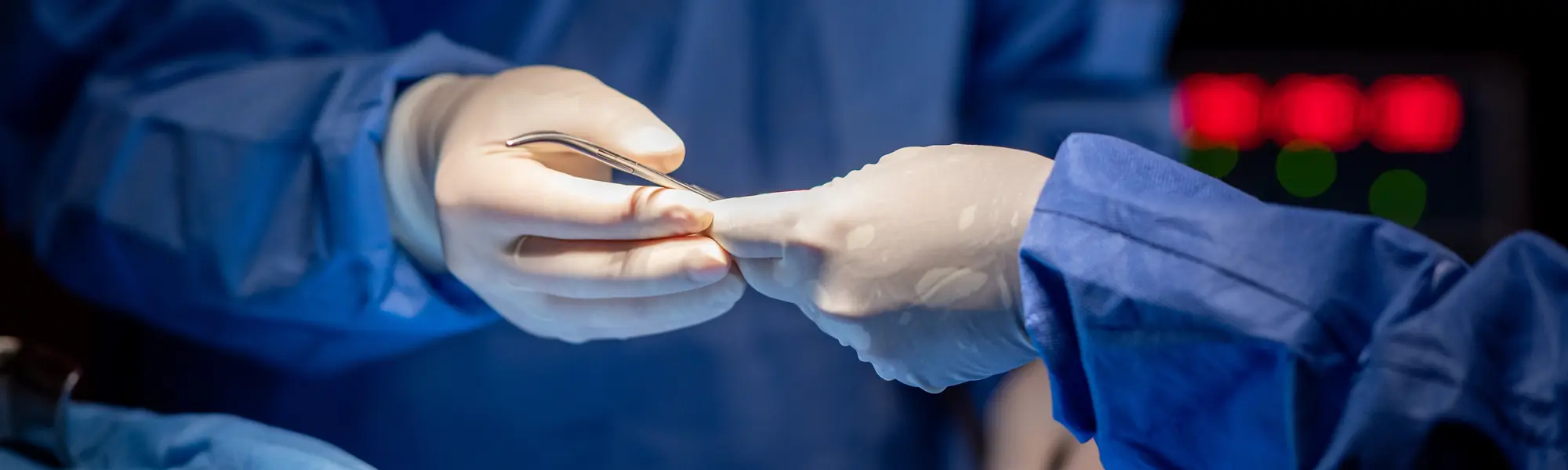
01
Dr. Sayed listens to your full history: your symptoms and when they started, your implant records, prior surgeries, and your overall health. Your experience is taken seriously, not dismissed.
02
Many BII symptoms overlap with thyroid problems, anemia, autoimmune conditions, perimenopause, and more. He helps make sure a treatable condition is not missed, with testing or referrals as needed.
03
He examines you and reviews imaging where useful to look for rupture, capsular contracture, or fluid, and to identify the implant type, since certain textured implants carry the small BIA-ALCL risk.
04
If removal is reasonable, he explains plainly what it can and cannot do: it may ease some symptoms, results vary, and it does address physical problems such as rupture and capsular contracture, along with BIA-ALCL concerns tied to textured implants. You decide together.
05
If you proceed, Dr. Sayed removes the implants and the capsule, using en bloc or total capsulectomy as your anatomy safely allows, and sends the specimen to pathology. A lift or fat transfer can be added if you want it.
06
You go home the same day. The pathology report comes back in about a week, and Dr. Sayed reviews it with you, along with how you are healing and feeling.
Removing implants is surgery under general anesthesia, and it carries the risks any breast operation does: bleeding, infection, a fluid collection, changes in nipple or skin sensation, scarring, asymmetry, and the chance that the breasts look different from what you pictured once the implant volume is gone.
Most of these are uncommon and manageable, and your consultation covers each one in plain language, along with how your own health history changes the picture.
If your evaluation points to another, treatable cause of your symptoms, Dr. Sayed will say so and help you get the right care first. Removal is also usually postponed during pregnancy or breastfeeding, significant weight change, or active nicotine use.
Some women decide to keep their implants and simply monitor, or to correct a specific problem such as capsular contracture instead. That is a valid choice too.
Your options after removal
You do not have to settle this before you walk in. Dr. Sayed will show you what each path has looked like on women with tissue like yours, and recommend the simplest one that gets you there.
Removal is only half the plan. The other half is what the breast looks like once the implant volume is gone, and that depends on your own tissue, your implant size, and your goals.
Read Dr. Sayed's guide to lift and fat grafting with removal
The simplest option, and often the right one. It works well when the implants were modest for your frame, your skin still has good elasticity, and the nipple sits at or above the breast fold.
Recovery is the shortest of the three, and the breast settles over three to six months toward its pre-augmentation size. The trade-off is patience: the final shape takes time to appear.
Some women with larger implants decide later that they want a lift. That can be done as a second stage once the tissue has settled, which also gives you time to see how you feel after removal.
When an implant has stretched the skin or dropped the nipple below the fold, removing the volume alone leaves loose skin with nowhere to go. A breast lift reshapes the remaining tissue and lifts the nipple back to a natural position.
Dr. Sayed chooses the lightest lift that will do the job: a periareolar lift for modest repositioning, a lollipop or anchor lift when more skin must come out.
It adds about an hour of surgery, a slightly longer recovery, and scars that fade over 12 to 18 months. For many women with larger or long-standing implants, it is what makes removal look right rather than deflated.
Fat grafting suits women who are done with implants but miss softness at the top of the breast. Dr. Sayed harvests fat from the abdomen, flanks, or thighs and transfers it during the same operation.
A portion of the grafted fat takes and stays, usually enough for a modest, natural gain in fullness, and the donor area gets some contouring as well.
Fat transfer cannot replace a large implant volume for volume. It needs enough donor fat to work with, and it is sometimes staged a few months after removal, once the tissue has settled.
Nipple position. At or above the fold points to removal alone; below it points to a lift. This single measurement decides more than any other.
Skin quality. A pinch test and a look at stretch marks tell him how much the skin will shrink back on its own over six months.
Your own tissue versus the implant. A 200 cc implant on a woman with a full B cup of her own tissue behaves very differently from a large implant on thin tissue.
Capsule and implant condition. A thick, calcified capsule or a ruptured implant can leave contour dips that fat grafting smooths best.
Your priorities. How you feel about scars, a second stage, donor-site liposuction, and budget all shape the plan. Nothing is decided for you.

Case studies
Dr. Sayed photographs and documents his removal cases so you can see what explant looks like on real bodies, not illustrations. The galleries below group cases by what was done alongside the removal.
Gallery 01
The largest group: women whose implants had stretched the skin or dropped the nipple, treated with removal and a lift to reshape the remaining tissue.
Gallery 02
Smaller implants and good elasticity, with nothing added. These cases answer the most common question: what will I look like with the implants simply gone?
Gallery 03
Women who wanted to stay implant-free but keep some softness at the top of the breast. Fat grafted from the abdomen or flanks fills the upper pole and improves the donor area.
Gallery 04
A gentler lift for women who need modest nipple repositioning and prefer to keep scarring to the areola border, paired with removal.
Results vary from patient to patient, and photographs are shared with consent. Ask at your consultation to see cases that match your implant size, tissue, and goals.
Cost
When you compare quotes, ask whether the capsule is removed, whether it goes to pathology, and what is included. Those answers tell you more about the care than the price does.
Breast implant removal in Southern California typically costs about $9,000 to $14,000 all in, covering the surgeon, anesthesia, the accredited facility, and pathology. A lift or fat transfer adds to the total.
Removing the capsule. En bloc or total capsulectomy takes longer and is more technically demanding than removing the implant alone, which is reflected in the fee.
Adding a lift or fat transfer. Each adds operating time and technical work, and each is quoted as part of a single combined fee rather than tacked on later.
Implant history. Older ruptured silicone, heavily calcified capsules, and prior revisions take more time to remove cleanly.
Insurance. Removal for a documented rupture, severe capsular contracture, or BIA-ALCL may be partly covered. Removal for breast implant illness symptoms alone usually is not, though it is worth checking with your plan.
Financing. Monthly payment plans through third-party medical lenders are available to qualified patients.
Recovery
Most women are up and walking the day of surgery, back at a desk in about a week, and cleared for full exercise around six weeks. Drains, if used, come out within a week or two. If you are having implants removed in the hope of feeling better, allow weeks to months for any change in symptoms, and know that results vary from person to person.
Surgery day
Outpatient, home within a few hours. Expect tightness and soreness managed with prescribed medication. Someone drives you home and stays the first night.
Days 2 to 7
Swelling and bruising peak and start to ease. Short walks several times a day. Drains are usually removed at your first visit. Many women are back at a desk by the end of the week.
Weeks 2 to 3
Daily routines return. Driving once you are off prescription pain medication. Surgical bra continues. No lifting, pushing, or chest exercise yet.
Weeks 4 to 6
Light cardio resumes, then full activity and upper-body training once Dr. Sayed confirms healing.
Months 3 to 6
Swelling resolves, the breast softens, and any lift or fat transfer settles into its final shape. This is when you see your final result.
Sleeping. On your back, upper body raised, for about three to four weeks. Side sleeping once Dr. Sayed clears it.
Drains. Small tubes that keep fluid from collecting where the implant and capsule sat. Most women find them more awkward than painful, and they come out within a week or two.
Scars. Dr. Sayed reuses your original incision whenever he can. Scars fade over 12 to 18 months, and he will guide you on tape, silicone, and sun protection.
Working out. Walking from day one. Lower-body work at about three weeks, full training including chest and shoulders at about six.
How the breast looks early on. Flat or deflated in the first weeks is normal. Fullness and shape return as swelling fades and the tissue relaxes over three to six months.
Symptom changes. Many women who removed implants for BII concerns describe improvement over weeks to months. Results vary, and Dr. Sayed will talk through what is realistic for you.
Your surgeon
For Dr. Sayed, Aesthetics Done Right means taking your symptoms seriously, telling you the truth about what removal can and cannot do, and performing the full operation himself.
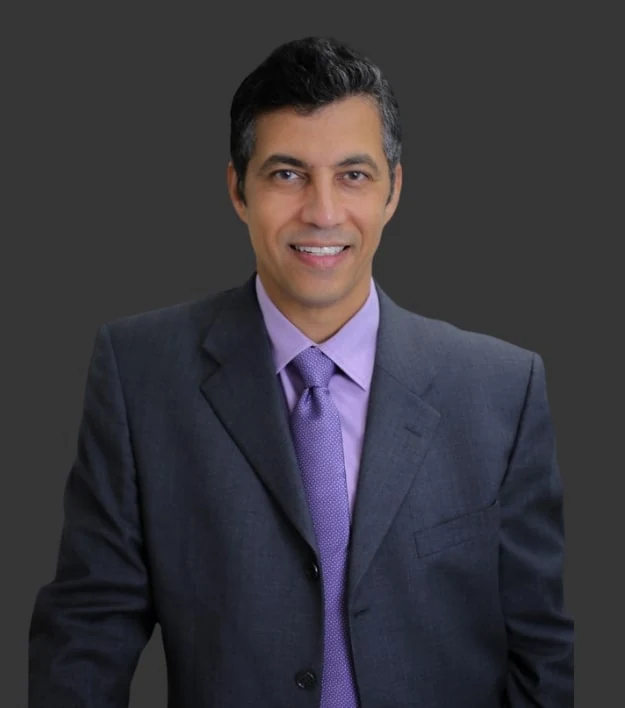
Tim Sayed MD, MBA, FACS is a double board-certified plastic surgeon, certified by both the American Board of Plastic Surgery and the American Board of Surgery. He trained at UCSF and at Harvard's Massachusetts General Hospital, and he earned an executive MBA from Northwestern's Kellogg School of Management.
In more than 20 years of practice, breast implant removal has become the heart of his work. Women come to him with breast implant illness concerns because he listens, evaluates each case carefully, removes the implant and capsule with pathology on every case, and does not promise results the science cannot support.
American Board of Plastic Surgery
Board certified and recertified
American Board of Surgery
Board certified and recertified
UCSF School of Medicine
MD and plastic surgery residency
Harvard, Mass General
General surgery training
Kellogg School of Management
Executive MBA, Northwestern
Alpha Omega Alpha
National medical honor society
Serving San Diego and Orange County
Dr. Sayed sees breast implant illness patients at two Southern California offices. His San Diego office sits in University City at 4510 Executive Drive, Suite 210, minutes from UTC, La Jolla, and the coast. His Orange County office is in the Newport Beach Airport Area at 3991 MacArthur Boulevard, Suite 320, near Fashion Island and John Wayne Airport. Women travel to him from across the region, including Los Angeles. For office-specific details, see breast implant illness care in La Jolla and breast implant illness care in Newport Beach.
Southern California makes recovery easier. Walking is the best early activity, and the region's flat coastal paths and mild, dry weather make daily walks comfortable in the first weeks after removal.
Tim Sayed MD, Southern California
Offices
San Diego: 4510 Executive Drive, Suite 210, San Diego, CA 92121. Newport Beach: 3991 MacArthur Boulevard, Suite 320, Newport Beach, CA 92660.
Phone
(858) 247-2933
San Diego area
University City, UTC, La Jolla, La Jolla Shores, Torrey Pines, Del Mar, Carmel Valley, Pacific Beach
Orange County area
Newport Beach, Corona del Mar, Costa Mesa, Irvine, Huntington Beach, Laguna Beach

Bring your implant records, your symptom history, and whatever is on your mind. Dr. Sayed will examine you, help rule out other causes, and tell you plainly whether removal is likely to help, so you can make a clear decision.
Questions
Breast implant illness is a patient-coined term for a cluster of symptoms, such as fatigue, brain fog, joint pain, and rashes, that some women connect to their breast implants. It is not a recognized medical diagnosis, and research has not proven that implants cause these symptoms. The symptoms are still real, and they deserve a careful evaluation.
The symptoms are real, and Dr. Sayed takes them seriously. What is not yet proven is that breast implants are the cause. Studies have not confirmed a mechanism or a diagnostic test, so the most accurate way to put it is that BII describes real symptoms whose cause is still being studied.
The most commonly reported are fatigue, brain fog and memory trouble, joint and muscle pain, rashes and dry skin, hair thinning, headaches, poor sleep, anxiety, and heart palpitations. Each of these can also come from other conditions, which is why a careful evaluation matters.
There is no blood test or scan for BII. Instead, Dr. Sayed evaluates your symptoms by listening to your history, examining you, checking your implants for rupture or contracture, and helping rule out other treatable causes such as thyroid disease, anemia, or autoimmune conditions.
It may help, and it may not. Many women report that symptoms improve over weeks to months after removal, but because implants are not proven to cause BII, no surgeon can promise that removal will resolve your symptoms. Dr. Sayed will talk through what is realistic for you before you decide.
Symptoms are reported across all implant types: saline and silicone, smooth and textured, cosmetic and reconstructive. No single implant type has been shown to cause BII. Certain textured implants do carry a separate, small risk of BIA-ALCL.
There is no reliable prevalence figure, because BII is not a formally defined diagnosis and is self-reported. Surveys suggest that some women with implants report these symptoms, but reliable data is limited. That uncertainty is part of why evaluation is individual.
Yes, every time. If you choose removal, the implants and the capsule go to a pathologist, who examines the tissue and reports back in about a week. This checks for abnormal cells, including BIA-ALCL, and gives you clear information about the tissue that was removed.
Breast implant-associated anaplastic large cell lymphoma is a rare but real cancer of the immune system that can develop in the fluid or capsule around an implant, most often with certain textured devices. It is treatable, and when it is caught early, removing the implant and the complete capsule is often the only treatment needed.
There is no proof that the en bloc sealing technique itself changes BII symptoms. What most women want is complete removal of the implant and capsule. Dr. Sayed removes the capsule using en bloc or total capsulectomy as your anatomy safely allows, and sends it to pathology either way.
Not always. If the implants were modest for your frame, the skin still springs back, and the nipple sits at or above the fold, removal alone often looks good. If the skin has stretched or the nipple has dropped, a lift reshapes the breast in the same operation.
Most women are back at desk work in about a week, have any drains out within a week or two, return to light cardio around four weeks, and are cleared for full exercise around six weeks. Swelling settles and the final shape appears over three to six months.
It typically costs about $9,000 to $14,000 all in, covering the surgeon, anesthesia, the accredited facility, and pathology. Adding a lift or fat transfer increases the fee. Insurance may help if removal is for a documented rupture, severe contracture, or BIA-ALCL.
He is double board-certified in plastic surgery and general surgery, trained at UCSF and Harvard's Massachusetts General Hospital, and has more than 20 years in practice with breast implant removal at its center. He takes your symptoms seriously, evaluates each case carefully, sends every specimen to pathology, and will not promise results the science cannot support.
Patient Reviews