
(858) 247-2933
Book
Book a consultation
Breast Implant Removal | BII
Capsular contracture treatment releases or removes the tightened scar capsule around a breast implant, then either places a new implant in a fresh pocket or takes the implant out for good. Tim Sayed MD, a double board-certified plastic surgeon, treats capsular contracture for patients across Southern California from offices in La Jolla (San Diego) and Newport Beach (Orange County). Newport Beach is about an hour's drive from downtown Los Angeles without traffic.
Medically reviewed by Tim Sayed MD, MBA, FACS, double board-certified plastic surgeon · Last reviewed October 15, 2026
20+
Years in practice
Double
Board-certified
1:1
Surgeon-led care
At a glance
What it is
Surgery that releases the tight capsule (capsulotomy) or removes it (capsulectomy, including en bloc removal), with an implant exchange or permanent implant removal in the same operation.
Who it suits
Patients with a previous breast augmentation and a noticeable or painful contracture, in good general health, who can stay nicotine-free for at least 3 weeks before surgery and through recovery.
Implant removal cost (reference)
Your procedure is quoted individually after consultation. For reference, breast implant removal with en bloc capsulectomy typically totals about $9,000 to $14,000. That is the removal price, not the price of a capsulotomy or an exchange with new implants, which are quoted after your exam. Financing is available.
Procedure time
Most corrections take about 2 hours, performed as outpatient surgery in an AAAASF-certified operating room.
Recovery
A few days of rest, no driving for about the first 10 days, light exercise after 2 weeks, and a surgical bra for a few weeks.
Provider
Tim Sayed MD, MBA, FACS, a double board-certified plastic surgeon serving Southern California for more than 20 years.
Every breast implant forms a capsule, but not every capsule contracts. When one does, the options are to release it, to remove it and start over with a new implant pocket, or to remove the implant and capsule together and go without implants.
The condition
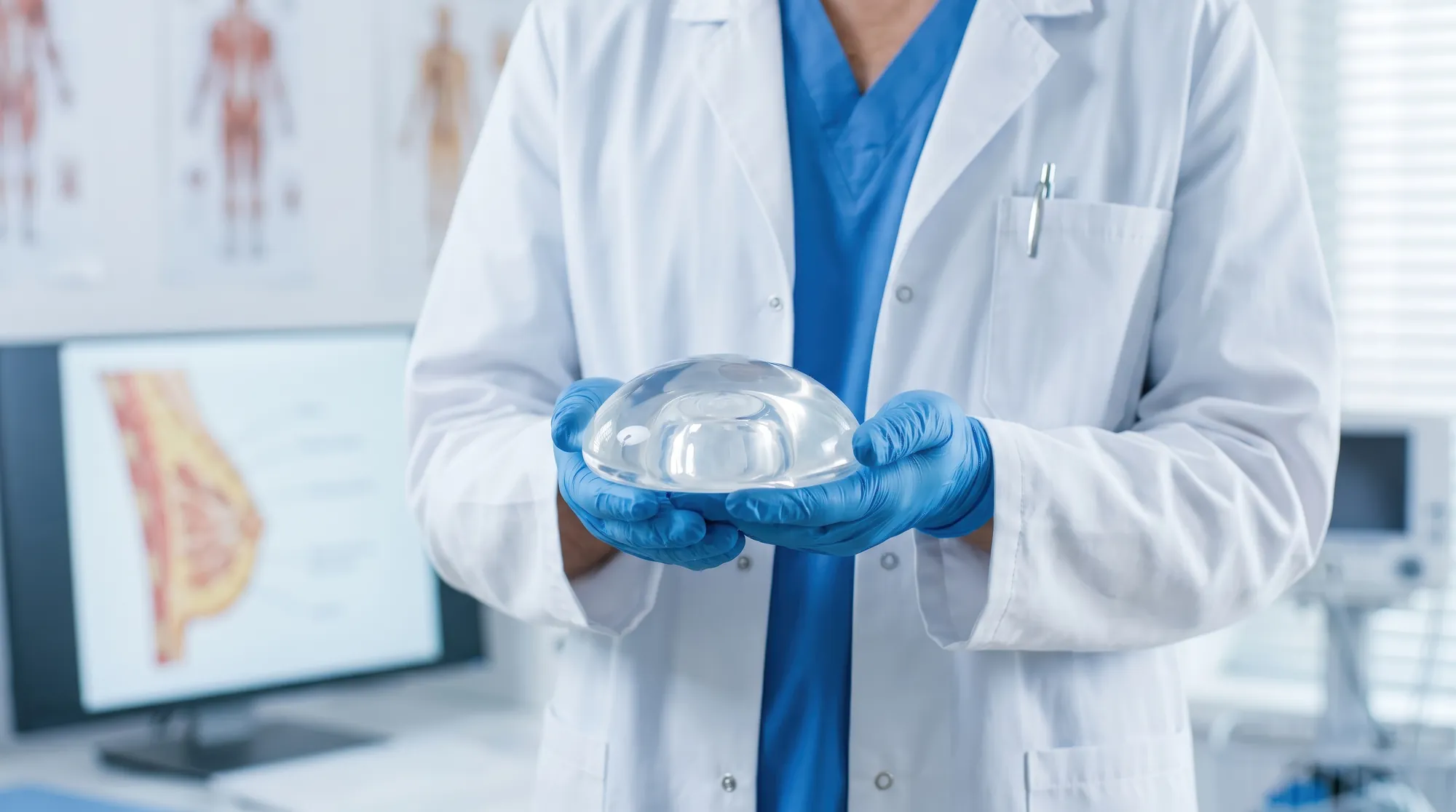
Capsular contracture is the tightening and hardening of the scar tissue capsule that the body forms around every breast implant. A thin capsule is the normal, expected reaction to a permanent implant, not rejection. Contracture occurs when that capsule thickens and squeezes the implant, which can make the breast firm, high-riding, misshapen, or painful.
It affects a minority of augmentation patients, and published rates vary widely with implant type, placement, and follow-up, from under 1% to about 30%. A clinical review in Archives of Plastic Surgery put the overall incidence at about 10.6%. Contracture was much more common with early implants placed on top of the muscle (subglandular augmentation) and with older generations of silicone implants; smooth implants and radiation therapy are also recognized risk factors. Another risk factor is biofilm: thin layers of protein, bacteria, and other biological material that can enter the implant pocket during surgery or afterward. Surgical technique and post-operative care also influence risk.
Capsular contracture is not the same as breast implant illness (BII). Contracture is a local problem with the capsule and the shape or comfort of the breast. BII describes whole-body symptoms such as fatigue, joint pain, and cognitive issues that some women attribute to their implants. Some patients with contracture decide they want implants out altogether, which is where en bloc breast implant removal comes in.
See Dr. Sayed's breast implant removal and revision before-and-after photos

Symptoms and grades
Symptoms range from a breast that is only slightly firmer than the other to one that is hard, painful, and visibly distorted. Surgeons describe severity with the Baker classification, from Grade 1 (soft and natural, not really a contracture) to Grade 4 (hard, painful, and abnormal in appearance). Grades 3 and 4 are the ones usually corrected.
Baker Grade 1
The breast is normally soft and looks natural in shape and size. This is not really a contracture.
Baker Grade 2
The breast is slightly firm but normal in appearance.
Baker Grade 3
The breast is firm and abnormal in appearance, for example sitting high or looking distorted.
Baker Grade 4
The breast is hard, painful to the touch, and appears abnormal.
Severe hardening
Severe, painful hardening is much less common and is often related to a secondary issue such as radiation treatment, infection, or a leak of an older-generation silicone implant. New or worsening firmness, swelling, or pain deserves an exam.
Firmness. One breast feels tighter or harder than it used to, or harder than the other side.
Shape change. The implant rides higher, looks rounder, or the breasts no longer match.
Discomfort. Tenderness or aching that, in severe cases, becomes pain to the touch.
Hardening years later. A breast implant that hardens after 10 years or more can be contracture, an implant leak, or both, so an exam and imaging review come first.
Mild cases. Very mild contracture can be hard to detect and may show only as a subtle change in implant position.
Candidacy
You are usually a candidate if you have had a breast augmentation, your implants are still in place, the contracture is visible or painful on examination, and you are in good general health. The consultation confirms your grade, reviews your implant type and records, and settles whether you want new implants or none at all.

have a visible or painful capsular contracture confirmed on physical examination
have had a breast augmentation and still have your implants in place
are in good general health, without major uncorrected heart, lung, kidney, or other organ conditions
are a nonsmoker, or can stop nicotine in every form for at least 3 weeks before surgery and through recovery
have a support person for appointments and the first 5 to 7 days, and realistic expectations about shape and size
have a breast mass that has not been evaluated; a mammogram may be requested first if you are over 30 or have a significant family history
want replacement implants but are under 18 (saline) or under 22 (silicone), per FDA recommendations
cannot pause nicotine in every form for the weeks around surgery
want implants gone for good, in which case breast implant removal with capsule removal is the better plan
need a guarantee it can never return; for some patients contracture recurs even after thorough treatment
The capsule is only half the decision. The other half is whether you still want implants, and Dr. Sayed will talk through the pros and cons of each approach with you.
Your options
Yes. Most patients improve significantly with treatment, although contracture can come back in some patients. There is no single best fix: the right option depends on your Baker grade, the type and age of your implants, your original incision, and whether you want to keep implants.
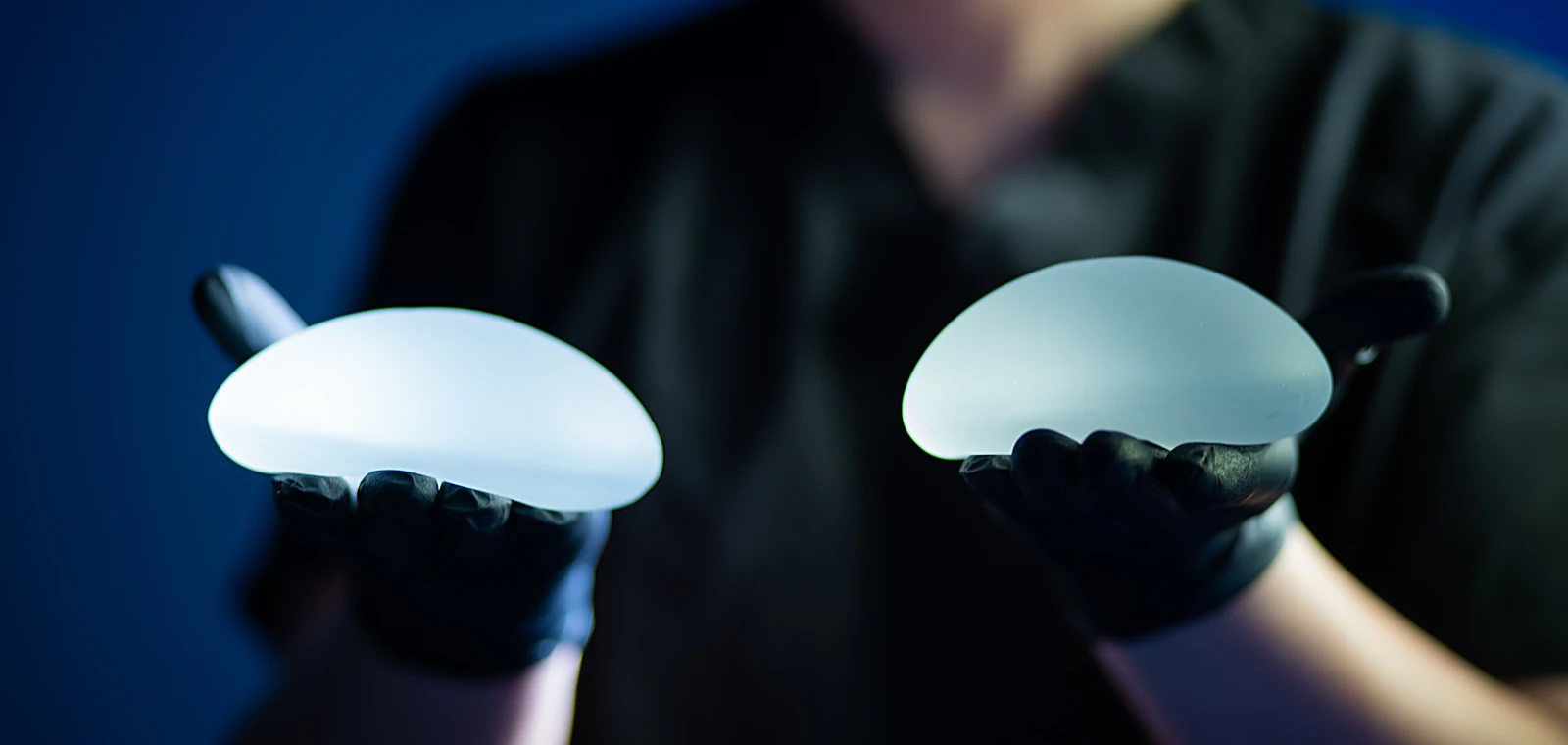
The capsule is scored or partially released from the inside, giving the implant more room to settle. Sometimes this is enough, particularly for milder contracture. In many cases it is not, and partial or complete capsule removal is needed instead.
The capsule is partially or completely removed with the implant, and a new implant is placed, usually in the same operation. The pocket may be changed, for example a neosubpectoral pocket. This is the more comprehensive correction for patients who want to keep implants, and consultations for implant exchange are available at both the La Jolla and Newport Beach offices.
The implant and capsule come out and nothing goes back in. Dr. Sayed offers complete en bloc removal of the implant with the entire capsule for patients ready to be done with implants. Expect a change in breast shape; a breast lift or fat transfer can be planned at the same time.
Keeping implants and removing them are both valid fixes. The right one matches your tissue, your history with contracture, and how you feel about implants today.
Non-surgical vs surgical
Sometimes, in milder cases, but the evidence is limited. The FDA has not cleared or approved any device to treat or reduce capsular contracture, and a 2020 review of non-surgical treatment found only observational studies, with no controlled trials. For firm, distorted, or painful contracture (Baker Grades 3 and 4), surgery to release or remove the capsule remains the established treatment. Here is how the options compare.
Leukotriene inhibitors
Off-label asthma drugs such as Singulair (montelukast) and Accolate (zafirlukast). Case series report improvement in some milder cases. They are not FDA approved for this use, and zafirlukast needs liver monitoring.
Ultrasound (Aspen-type)
External ultrasound sessions over two to three weeks, offered by some practices. An American Society of Plastic Surgeons (ASPS) article cites it for Grades 2 and 3; a 2020 review found one case series and no controlled trials.
Massage
Hands-on implant massage, often suggested after augmentation. Major studies have not proven it effective as a treatment for an established contracture.
Closed capsulotomy
Squeezing the breast from the outside to break the capsule, common decades ago. Largely abandoned because of rupture and recurrence; the FDA does not recommend it for saline implants.
Surgery
Open capsulotomy, capsulectomy with a pocket change and new implant, or removal of implant and capsule. The FDA notes Grades 3 and 4 usually need reoperation; contracture can still recur.
Grade 1. Soft and natural looking. No treatment is needed, only routine follow-up.
Grade 2. Slightly firm, normal appearance. Usually monitored, since treatment is generally reserved for Grades 3 and 4; some patients at this stage ask about medication or ultrasound.
Grade 3. Firm and visibly abnormal. Treatment is usually recommended, most often surgery, because non-surgical options have limited evidence.
Grade 4. Hard, painful, and distorted. Surgery is the established treatment.
Hardening years later. A ruptured implant is the most common cause of late-onset contracture, so an exam and imaging review come before any treatment decision.
How it works
Most corrections are outpatient procedures of about 2 hours in an AAAASF-certified operating room. Removing an entire capsule from one breast takes 15 to 30 minutes, and longer if the capsule is firmly attached or the implant has ruptured, and placing new implants can add 20 to 40 minutes per side. Three decisions shape the result: incision, pocket and implant, and pocket protection.
Existing scar. Treatment is usually done through an existing scar on the breast.
Armpit or belly button. If the original implant went in through the armpit (transaxillary) or belly button (TUBA), an inframammary fold incision may be needed.
Around the nipple. An inframammary fold incision may also be needed if the original incision was around the nipple.
Pocket change. A new neosubpectoral pocket can give a replacement implant a fresh space.
Implant exchange. New implants are chosen by type, brand, and style, which also affect cost.
No replacement. Implant and capsule removed for good, en bloc wherever it is safe.
Antibiotics in the pocket. Part of Dr. Sayed's antiseptic regimen to reduce biofilm exposure.
Keller funnel and special handling. The implant is handled carefully, with a Keller funnel where indicated.
No-touch technique. A general no-touch approach on the skin to limit contamination of the pocket.
Tissue support where needed. Acellular dermal matrix (ADM) has been studied for recurrent contracture with promising results, though long-term data are still limited.
Capsular contracture is one of several reasons patients come to Dr. Sayed for implant surgery. If you are weighing a full explant, start with breast implant removal in Southern California and the difference between en bloc and total capsulectomy. If you want to keep implants and also correct shape or position, see breast augmentation revision, and for background on the original procedure, breast augmentation in Southern California.
Cost
Capsular contracture surgery is quoted individually because the price depends on the plan: a capsulotomy, a capsulectomy with new implants, or removal of the implants and capsule for good, plus where surgery is performed and the brand and style of any new implants. You receive a written estimate after consultation, and a fee schedule is available in the office.
Reference price for implant removal only: breast implant removal with en bloc capsulectomy typically totals about $9,000 to $14,000, covering the surgeon, anesthesia, the accredited facility, pathology, and follow-up. Adding a breast lift commonly brings the total to roughly $14,000 to $19,000. A capsulotomy, or a capsulectomy with new implants, is priced differently and quoted after consultation. Your written quote is the only exact figure.
Type of capsule work. Capsulotomy, partial or total capsulectomy, and en bloc removal take different amounts of surgeon and facility time.
New implants or none. Replacement adds the cost of implants, which varies by brand and style; removal alone does not add that cost, though a breast lift may be added.
Anesthesia and facility. Surgery takes place in an AAAASF-certified operating room, and where you have surgery affects the total.
Surgeon experience. Dr. Sayed performs each operation and follow-up himself, from consultation through recovery.
Insurance may contribute in some cases, such as a documented rupture or severe capsular contracture, while elective or cosmetic changes generally are not covered. The team can submit a predetermination to your insurer. Monthly payment plans are available through financing options, and you can build a procedure wishlist on the plastic surgery pricing page.
Recovery
After capsular contracture treatment, most patients go home the same day, take a few days of rest, avoid driving for about 10 days, and return to light fitness after 2 weeks. If new implants were placed or the capsule was released, the implants may ride slightly high at first. Dr. Sayed gives every patient a 24-hour phone number for urgent questions.

Day of surgery
Outpatient surgery, with up to a couple of hours in the post-operative suite before you go home with a companion, family member, or friend.
First week
Bruising, swelling, and mild discomfort are expected, and nipple sensation may be reduced. A caretaker should help for the first 5 to 7 days.
Days 10 to 14
Driving resumes after about 10 days, once you are off prescription pain medication. Most sutures dissolve; any that need removal come out within 14 days.
Weeks 2 to 4
Light fitness routines restart after 2 weeks. Keep wearing the surgical bra and skip underwires for a few weeks.
Long term
About 90 to 95% of patients get a good, lasting correction. In the rest, some degree of contracture may return, which does not always mean another full operation.
Driving. Not in the first 10 days, or for as long as you take prescription pain medication.
Exercise. No exercise for 2 weeks, then a gradual return to light fitness.
Clothing. A surgical bra, no underwires for a few weeks, and front-button tops for the first 10 days or so.
Supplements. You may be given supplements for pain, bruising, swelling, and nutrition; ask Dr. Sayed before adding anything else, since some ingredients are avoided before surgery.
Staying in touch. A secure patient app lets you or your caregiver send messages, photos, and video to the team between visits.
The surgeon
Tim Sayed MD, MBA, FACS is double board-certified by the American Board of Plastic Surgery and the American Board of Surgery, with more than 20 years in practice and a focus on breast revision, en bloc breast implant removal, and breast implant illness. He performs every operation and follow-up himself, in La Jolla and Newport Beach.
He trained at UC Berkeley, the UCSF School of Medicine, and Massachusetts General Hospital at Harvard, completed a plastic surgery fellowship at UCSF, and later earned an executive MBA from Northwestern's Kellogg School of Management. Consultations use drawing tools, your own images, and anatomic education tools he helped develop, so you can see what each option means. To hear him explain explant surgery, including capsular contracture, listen to episode 3 of his podcast, The Scalpel's Edge. Review his credentials and results before you decide.
American Board of Plastic Surgery
American Board of Surgery
Fellow, American College of Surgeons
20+ years in practice, Southern California

The area
Dr. Sayed offers capsular contracture treatment at two Southern California offices. The La Jolla office in University City is minutes from La Jolla, Del Mar, Torrey Pines, and Carmel Valley. The Newport Beach office sits near Fashion Island and about a mile from John Wayne Airport (SNA), serving Corona del Mar, Irvine, and the rest of Orange County. Distances below are approximate road miles and drive times without traffic. For local detail, see breast implant removal in La Jolla and breast implant removal in Newport Beach.
Recovery fits Southern California life with a little planning. Walking is encouraged early, but swimming, surfing, and upper-body gym work wait until Dr. Sayed clears you. Fresh scars darken under UV light, so a rash guard or high-coverage swimsuit and mineral sunscreen are advisable through the first year.
San Diego County
La Jolla office, 4510 Executive Drive, Suite 210, San Diego, CA 92121. About 10 minutes from La Jolla, 15 from Del Mar, 20 from Encinitas and downtown San Diego, and 30 from Carlsbad. San Diego International Airport (SAN) is about 12 miles away.
Orange County
Newport Beach office, 3991 MacArthur Boulevard, Suite 320, Newport Beach, CA 92660, about a mile from John Wayne Airport (SNA). About 5 to 10 minutes from Irvine and Costa Mesa, and about 20 from Huntington Beach and Laguna Beach.
Los Angeles County
Newport Beach is the nearer office for Los Angeles County: about 40 miles (roughly an hour) from downtown Los Angeles and about 50 miles from Santa Monica, Beverly Hills, and Pasadena. The Conejo Valley (Thousand Oaks, Westlake Village, Calabasas) is farther, so a virtual consultation is a convenient first step.
Inland Empire and desert
Riverside is about 40 miles from the Newport Beach office, and Temecula is about 50 miles from the La Jolla office. From the Coachella Valley, including Rancho Mirage, either office is a little over 100 miles, so a virtual consultation is a practical first step.
Outside the region
Start with a virtual consultation to review your implant history and imaging before you plan a trip.
4510 Executive Drive, Suite 210
San Diego, CA 92121
Get directions to the La Jolla office on Google Maps
3991 MacArthur Boulevard, Suite 320
Newport Beach, CA 92660

Meet one-on-one with Dr. Sayed in La Jolla or Newport Beach, or start virtually. Bring your implant records and any imaging, and leave with your contracture grade, a recommendation on keeping or removing implants, and a written quote.

Questions
It depends on the plan, so it is quoted after consultation. As a reference point for removal only, breast implant removal with en bloc capsulectomy typically totals about $9,000 to $14,000, covering the surgeon, anesthesia, the accredited facility, pathology, and follow-up. A capsulotomy or a capsulectomy with new implants is priced differently, because implant brand and style, pocket work, and operating time change the total. You receive a written quote after consultation, and financing is available.
Sometimes, in mild cases, but the evidence is limited. Leukotriene inhibitors such as Singulair and Accolate are sometimes prescribed off-label, and some practices offer ultrasound (Aspen-type) therapy, but the published studies are observational, and the FDA has not cleared or approved any device to treat capsular contracture. Firm, distorted, or painful contracture (Baker Grades 3 and 4) usually needs surgery, and Dr. Sayed can tell you which applies to you.
They may help modestly. Singulair (montelukast) and Accolate (zafirlukast) are asthma medications called leukotriene inhibitors, and some plastic surgeons prescribe them off-label for capsular contracture because case series suggest a modest benefit. They are not FDA approved for this purpose, so discuss risks and fit with Dr. Sayed before starting either.
Mild contracture may feel only slightly firmer than normal or show up as a small change in implant position. More advanced contracture feels firm to hard, and the breast can look high, round, or distorted. In Baker Grade 4, the most severe, the breast is hard and painful to the touch and looks abnormal.
Every implant gets a thin scar capsule; contracture happens when that capsule tightens and hardens. One recognized risk factor is biofilm, thin layers of protein, bacteria, and other biological material introduced into the implant pocket during surgery or afterward. Implant type, placement over or under the muscle, surgical technique, and post-operative care also influence the risk.
Capsular contracture ranges from mild firmness to painful hardening, and it usually shows up as a change in how the breast feels and looks. Severe, painful hardening is much less common and is often related to another issue, such as radiation treatment, infection, or a leak of an older silicone implant. Any new or worsening firmness, swelling, or pain deserves an exam.
Yes, it can. About 90 to 95% of patients get a good, lasting correction, and in the rest some degree of contracture may return. A return does not always mean another full capsulectomy and implant exchange. To reduce biofilm exposure, Dr. Sayed uses antibiotics in the pocket, special implant handling, Keller funnels where indicated, and a no-touch technique.
Most capsular contracture corrections take about 2 hours. Removing an entire capsule from one breast takes 15 to 30 minutes, and longer if the capsule is firmly attached or the implant has ruptured, and placing new implants can add 20 to 40 minutes per side. It is outpatient surgery, so most patients go home the same day with a companion.
Both are valid fixes. Replacing implants, often in a new pocket, lets you stay with implants, while removing the implants and capsule means no implant for a capsule to form around again, in exchange for a change in breast shape. Dr. Sayed reviews your tissue, history, and goals and talks through the pros and cons of each approach.
Sometimes, in part. A documented rupture or severe capsular contracture may qualify for partial coverage, while elective or cosmetic changes generally do not. The team can submit a predetermination to your insurer so you know before surgery, and monthly payment plans through third-party medical lenders are available to qualified patients.
Often, yes, if it is mild. Grade 1 and many Grade 2 capsules are not painful and are usually monitored rather than treated; the FDA describes Grades 3 and 4 as the severe grades that may require another operation. If firmness is increasing, the breast is changing shape, or it hurts, have it examined, because late hardening can also be a sign of implant rupture.
It is one of the most common complications of breast augmentation, but rates vary widely by implant type, placement, and length of follow-up. A clinical review in Archives of Plastic Surgery reported an overall incidence of about 10.6%, with individual studies ranging from 2.8% to 20.4%. Smooth implants, placement above the muscle, and radiation therapy are recognized risk factors.
Early signs are usually subtle: one breast feels firmer or tighter than before, an implant sits a little higher or looks rounder, a new asymmetry appears, or there is mild tenderness. According to an article from the American Society of Plastic Surgeons, about 75% of contractures appear within two years of augmentation. Read more about the early signs of capsular contracture.
Yes. Most contractures develop in the first two years, but contracture can appear many years after augmentation. A ruptured implant is the most common cause of late-onset contracture, so a breast that hardens years later needs an exam and imaging review before any treatment decision.
There is no strong evidence that it does. Massage is often suggested after augmentation, but it has not been proven effective by major studies as a treatment for an established contracture. Ask Dr. Sayed before starting any massage routine on your implants.
A closed capsulotomy breaks the capsule by squeezing the breast from the outside, without an incision. It was common decades ago but has largely fallen out of use because it can rupture the implant and contracture often returns, and the FDA states it is not recommended for saline implants. A capsulotomy today is usually an open procedure, performed through an incision.
Possibly. If you keep implants, the exchange is a chance to choose a new size, style, or pocket, larger or smaller. What is realistic depends on your tissue, the condition of the pocket, and whether a lift is needed, which Dr. Sayed assesses at consultation.
Dr. Sayed treats capsular contracture at his La Jolla office (4510 Executive Drive, Suite 210, San Diego) and his Newport Beach office (3991 MacArthur Boulevard, Suite 320). Newport Beach is the nearer office for most Los Angeles County patients, and anyone outside the region can start with a virtual consultation. Call (858) 247-2933 to book.
1. U.S. Food and Drug Administration. Risks and Complications of Breast Implants. Content current as of December 14, 2023.
2. Tehrani K. What is capsular contracture and how can it be treated? American Society of Plastic Surgeons, June 12, 2018.
3. Headon H, Kasem A, Mokbel K. Capsular Contracture after Breast Augmentation: An Update for Clinical Practice. Archives of Plastic Surgery. 2015;42(5):532.
4. Papaconstantinou A, Koletsa T, Demiri E, et al. Nonsurgical treatment of capsular contracture: Review of clinical studies. Journal of International Medical Research. 2020;48(6).
Reference prices on this page come from Tim Sayed MD's breast implant removal pricing; your written quote after consultation is the only exact figure.
Patient Reviews