(858) 247-2933
Book
Book a consultation
Breast Surgery
Breast reduction removes excess breast tissue, fat, and skin to help relieve the back, neck, and shoulder pain that heavy breasts can cause, and it lifts the breasts to a higher, more proportional shape. Tim Sayed MD, a double board-certified plastic surgeon serving Southern California, performs breast reduction for women whose breast size limits their comfort, activity, or choice of clothing. When the surgery is medically necessary, he provides the documentation you need to pursue insurance reimbursement.
20+
Years in practice
Double
Board-certified
1:1
Surgeon-led care
At a glance
What it is
An operation that removes excess breast tissue, fat, and skin to ease the physical strain of heavy breasts, while reshaping and lifting the breasts and raising the nipple to a natural height.
Who it suits
Women with heavy, pendulous breasts that cause symptoms such as back, neck, or shoulder pain, bra-strap grooving, or rashes, and who are in good health and at a stable weight.
Southern California cost
Self-pay is typically about $9,000 to $15,000 in Southern California, including the surgeon's fee, anesthesia, and accredited facility fees. When the surgery is medically necessary, insurance may offset part of the cost.
Procedure time
About 2.5 to 3 hours under general anesthesia as an outpatient procedure, so you go home the same day to recover.
Recovery
Desk work in about 1 to 2 weeks and full exercise around 6 to 8 weeks, with swelling settling and the final shape appearing over several months.
Provider
Tim Sayed MD, MBA, FACS, a double board-certified plastic surgeon with more than 20 years in practice.
A breast lift raises your own tissue without changing its size, and augmentation adds volume. Breast reduction does the reverse of augmentation: it removes volume and weight to ease symptoms and lifts the breast at the same time.
The procedure
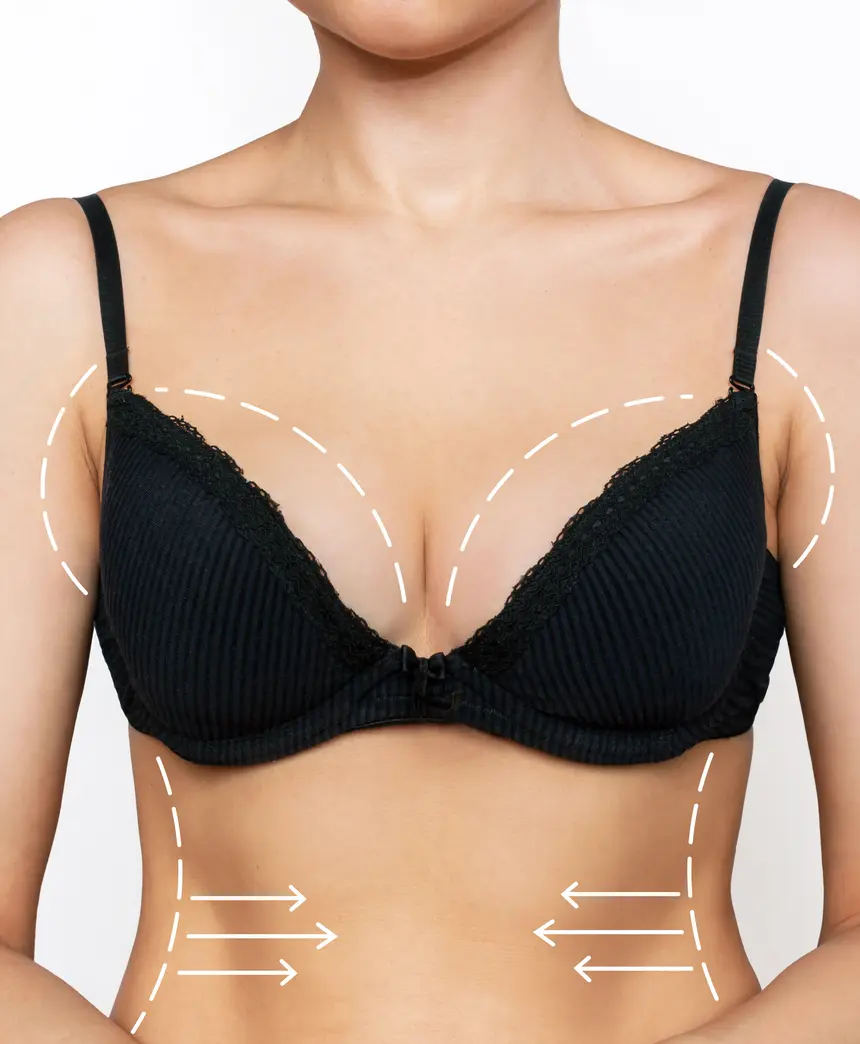
Breast reduction, medically called reduction mammaplasty, removes excess breast tissue, fat, and skin, then reshapes and lifts what remains into a smaller, firmer breast. Dr. Sayed repositions the nipple and areola to a natural, higher position on the reduced breast, keeping the nipple attached to its own blood supply, which helps preserve sensation and, in many cases, the ability to breastfeed. It is performed under general anesthesia as a same-day outpatient procedure and usually takes about 2.5 to 3 hours.
Most women choose breast reduction for relief rather than appearance. Breasts that are too large for your frame pull on the neck, back, and shoulders, carve grooves where bra straps dig in, trap moisture that leads to rashes underneath, and make exercise and everyday clothing difficult. Removing the excess weight usually eases those symptoms, and the lift and reshaping that come with it leave the breasts higher and more proportional.
If your breasts are not too large but sag after pregnancy or weight change, a breast lift may be the better fit. If you want more fullness rather than less, see breast augmentation. Breast reduction is for women whose breast size itself is the concern.
Candidacy
You may be a good candidate for breast reduction if your breasts are heavy enough to cause physical symptoms and you want lasting relief along with a smaller, lifted shape. The procedure suits women who are bothered by the weight of their breasts, are at a stable weight, and are in good general health. At your consultation, Dr. Sayed examines your breast size, skin, and nipple position, documents your symptoms, and confirms whether reduction is the right procedure for your goals.
have heavy breasts that cause chronic back, neck, or shoulder pain
have bra-strap grooving, skin rashes, or irritation under the breasts
are at a stable weight and in good general health
are a nonsmoker or are willing to stop all nicotine for several weeks before and after surgery
are bothered by breast size during exercise, work, or sleep, and have realistic goals and time set aside for recovery
are planning a future pregnancy, which can enlarge the breasts again and change your result
are still breastfeeding or stopped less than 6 months ago
are actively losing a large amount of weight, in which case it is better to reach a stable weight first
are mainly bothered by sagging at a size you are happy with, which points to a breast lift instead
want more fullness rather than less, which points to breast augmentation
Breast reduction is both a medical and an aesthetic operation, so Dr. Sayed is candid at your Southern California consultation about how much tissue can be safely removed, where your scars will fall, and what to expect from insurance if your symptoms qualify.
Your options
Breast reduction is one of the few aesthetic operations that is often considered medically necessary. When heavy breasts cause documented physical symptoms, part of the cost may be reimbursable, which is why it helps to understand how coverage works before your consultation.
If your breasts cause chronic pain, grooving, or rashes that have not resolved with conservative measures, your reduction may be considered medically necessary. If you are reducing primarily for appearance, it is treated as cosmetic and paid out of pocket. Many patients fall somewhere in between, and your consultation helps clarify which path applies to you.
Carriers typically want documented symptoms, a record of conservative treatment such as physical therapy or supportive bras tried over several months, and a minimum amount of tissue to be removed based on your body surface area. Dr. Sayed measures and documents these at your visit.
Dr. Sayed's office does not bill insurance directly for breast reduction but provides the itemized procedure and diagnosis codes and the operative documentation you need to file for out-of-network reimbursement with your carrier. If you have Medicare, a self-pay waiver may be required.
Because every policy is different, the surest way to know where you stand is to bring your insurance details to the consultation, where Dr. Sayed documents your symptoms and explains both the medically necessary and self-pay paths.
Breast reduction is as much about relief as appearance. When heavy breasts cause real symptoms, the right documentation can support an insurance claim for part of the cost.
How it works
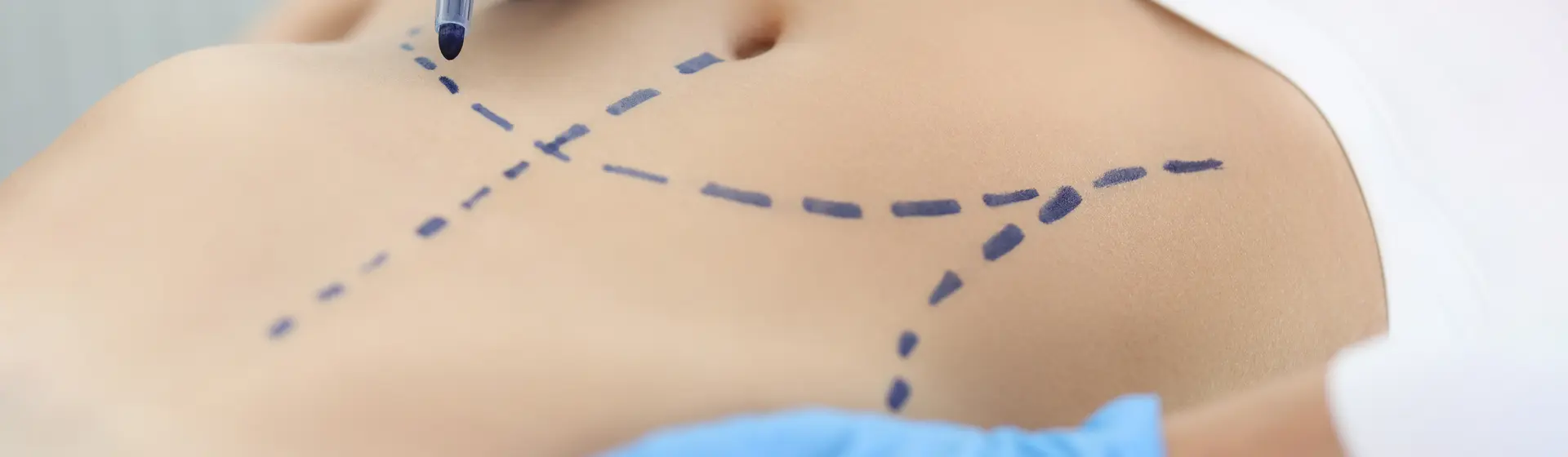
Breast reduction is performed under general anesthesia at an accredited surgery center and usually takes about 2.5 to 3 hours. After marking the skin while you are upright, Dr. Sayed removes excess tissue, fat, and skin by quadrant, keeps the nipple attached to a pedicle of tissue for its blood supply, lifts and repositions the nipple and areola, reshapes the smaller breast, and closes in layers. Three decisions shape your result: the incision pattern, how the nipple stays attached, and how much tissue is removed from each side.
Liposuction only. For mostly fatty breasts with little sagging; liposuction through small incisions reduces volume.
Lollipop. A scar around the areola and vertically down to the crease, for moderate reductions.
Anchor. A scar around the areola, vertically down to the crease, and along the crease. This is the most common pattern for large reductions and significant sagging.
Pedicle. The nipple stays attached to its own blood supply and nerves as it is lifted, which helps preserve sensation and, in many cases, the ability to breastfeed.
Areola size. A stretched areola is usually reduced to match the smaller, higher breast.
Symmetry. Each side is planned to its own measurements, since few breasts start out matched in size or position.
Free nipple graft. Rarely, with very large reductions, the nipple is removed and grafted back; Dr. Sayed has needed this in only a couple of cases.
Amount removed. The amount of tissue removed is planned to relieve symptoms while keeping a safe blood supply and a natural shape.
Combined procedures. Breast reduction can be combined with other procedures in one operation when it is safe to do so.
For sagging without excess size, see breast lift; for added fullness, see breast augmentation. You can also explore the full range of breast surgery at Tim Sayed MD.
Cost
Self-pay breast reduction in Southern California typically costs about $9,000 to $15,000 in total, including the surgeon's fee, general anesthesia, and accredited facility fees. When your breasts cause documented symptoms and the surgery is medically necessary, insurance may reimburse part of that cost, lowering what you pay out of pocket. The exact figure depends on the complexity of your reduction, so the only accurate number is the written quote you receive after your consultation.
Plan on roughly $9,000 to $15,000 self-pay for breast reduction across Southern California. If your symptoms meet your carrier's criteria, insurance reimbursement may reduce that, and your written consultation quote is the only exact figure.
Complexity. Larger reductions and significant reshaping take more operating time, which affects the fee.
Technique. A full anchor reduction involves more surgery than a liposuction-only reduction, which raises the total.
Anesthesia and facility. Surgery is performed with board-certified anesthesia care at an accredited surgical facility, and both are included in your quoted price.
Surgeon experience. The fee reflects the experience of a double board-certified plastic surgeon with more than 20 years in practice, and experience can help make results more predictable.
When your reduction is medically necessary, Dr. Sayed provides the codes and documentation you need to file an out-of-network claim, and monthly financing lets you spread self-pay costs over time. You can review typical plastic surgery pricing before your visit.
Recovery
Most patients return to desk work in about 1 to 2 weeks and are cleared for full exercise around 6 to 8 weeks, and many feel relief from the weight almost immediately. Swelling is significant at first and settles over the following weeks, with the final size and shape appearing over several months. Dr. Sayed sends you home with a written recovery plan and follows you through each stage of healing.
Day of surgery
You go home the same day in a supportive surgical bra, with soreness and swelling managed by medication.
First week
Rest with limited arm motion; soreness, swelling, and bruising peak and then begin to ease.
Weeks 2 to 4
Continue desk work and light daily activity, wearing the surgical bra Dr. Sayed recommends, with no underwire.
Weeks 4 to 6
Gradually build up activity as cleared at your follow-up; full exercise and heavier lifting usually resume around 6 to 8 weeks.
3 to 6 months
Most swelling resolves, scars continue to fade, and your final smaller, lifted shape appears.
Sleeping. Sleep on your back, slightly elevated, for the first few weeks to protect the healing breasts.
Driving. Resume driving once you are off prescription pain medication and can move comfortably, usually after about 10 days.
Exercise. Walking is encouraged early; chest and upper-body workouts wait until you are cleared around 6 to 8 weeks.
Scars. Incision lines look pink and firm at first, then soften and fade over 6 months to 2 years; Dr. Sayed guides scar care throughout.
Breastfeeding. Because the nipple stays attached to its tissue, many patients can still breastfeed, though breastfeeding cannot be guaranteed.
The surgeon
Breast reduction calls for judgment as much as technique: the surgeon must balance how much tissue to remove against a safe blood supply and a natural shape. Tim Sayed MD is double board-certified by the American Board of Plastic Surgery and the American Board of Surgery, trained at UCSF, Harvard, and Massachusetts General Hospital, and has practiced for more than 20 years. The same surgeon who plans your procedure performs it and follows you through recovery.
Beyond reduction, Dr. Sayed is known nationally for breast implant removal and breast implant illness care, demanding breast work that calls for the same careful handling of tissue, blood supply, and incisions that a good reduction depends on. We invite you to review his credentials and results before you decide.
American Board of Plastic Surgery
American Board of Surgery
Fellow, American College of Surgeons
20+ years in practice, Southern California

The area
Tim Sayed MD sees breast reduction patients at two offices: La Jolla, near Westfield UTC, for San Diego County communities such as Carmel Valley, Del Mar, Encinitas, and Carlsbad, and Newport Beach, for patients across Orange County. For local detail, see breast reduction in La Jolla and breast reduction in Newport Beach, or our full range of breast surgery.
Southern California life is active and outdoors, from La Jolla Cove and the Orange County beaches to year-round yoga, Pilates, and gym routines, and breast reduction is planned to make all of it more comfortable once you heal. Because the coastal sun can darken fresh scars, Dr. Sayed asks every patient to keep incisions covered and out of direct UV for the first several months, which good sunscreen and clothing make easy.
4510 Executive Drive, Suite 210
San Diego, CA 92121
Get directions to the La Jolla office on Google Maps
3991 MacArthur Boulevard, Suite 320
Newport Beach, CA 92660

Meet one-on-one with Tim Sayed MD to review your options in person. You will leave the consultation with a clear recommendation, a straightforward answer on whether breast reduction fits your goals, documentation of your symptoms for insurance if they qualify, and a written quote for your breast reduction.
Questions
Self-pay breast reduction in Southern California typically costs about $9,000 to $15,000 in total, including the surgeon's fee, general anesthesia, and accredited facility fees. When your breasts cause documented symptoms and the surgery is medically necessary, insurance may reimburse part of the cost. Dr. Sayed's office provides the codes and documentation to file an out-of-network claim; your exact price comes from a written quote after your consultation.
Often, yes, when it is medically necessary. If heavy breasts cause documented pain, grooving, or rashes that have not resolved with conservative treatment, carriers may cover part of the cost. If you are reducing mainly for appearance, it is cosmetic and self-pay. Dr. Sayed's office does not bill insurance directly but provides the procedure and diagnosis codes and operative notes you need to file for out-of-network reimbursement.
Carriers generally want documented symptoms such as back, neck, or shoulder pain, grooving, or rashes, evidence that conservative treatment like physical therapy or supportive bras was tried over several months, and a minimum amount of tissue removed based on your body surface area. Dr. Sayed measures and documents all of this at your consultation so you can file a complete claim.
Most patients return to desk work in about 1 to 2 weeks and are cleared for full exercise around 6 to 8 weeks. Many patients feel relief from the weight almost immediately. You go home the same day with a written recovery plan and should avoid driving for about 10 days. Swelling settles and the final shape appears over several months.
Many patients can, because the nipple is kept attached to its underlying tissue, ducts, and blood supply. That said, no breast surgery can guarantee breastfeeding, and sensation or milk supply can change. If future breastfeeding matters to you, tell Dr. Sayed so he can plan the technique accordingly.
The relief and smaller shape are long-lasting, and most patients keep them for many years at a stable weight. Significant weight gain, pregnancy, and the normal effects of aging and gravity can change breast size again over time, but the breast tissue that is removed does not grow back.
Removing the excess weight typically eases chronic back, neck, and shoulder pain, relieves the grooves bra straps carve into the shoulders, helps clear rashes and irritation under the breasts, and makes exercise, posture, and everyday clothing easier. Many patients notice the difference in weight as soon as they wake up from surgery.
There is no strict age limit. Teens with severe symptoms are sometimes candidates, though surgeons usually prefer to wait until breast development is complete. Healthy adults of any age may be candidates. Dr. Sayed reviews timing and development at your consultation.
Scars sit around the areola and, depending on the technique, run vertically to the crease and sometimes along it; a liposuction-only reduction leaves only small marks. They look pink and raised at first, then usually soften and fade over 6 months to 2 years. Dr. Sayed places incisions where bras and most swimwear cover them and guides scar care throughout, though scars never disappear completely.
In the first several days, most patients feel soreness and swelling rather than sharp pain, and the medication Dr. Sayed prescribes usually keeps it under control. Many patients say the relief from the weight outweighs the discomfort of healing. You go home the same day in a supportive surgical bra, and most patients are off prescription pain medicine within a few days.
Choose a surgeon board-certified by the American Board of Plastic Surgery who performs reductions regularly and can show you before and after photos of their own patients. Ask who performs the surgery, who handles your insurance documentation, and who follows your recovery. Tim Sayed MD is double board-certified, has practiced for more than 20 years, and personally sees each patient from the consultation through healing.
Patient Reviews