(858) 247-2933
Book
Book a consultation
Rhinoplasty, Southern California
Rhinoplasty, or nose surgery, reshapes the nose to fit your face and, when needed, improves breathing. Tim Sayed MD, a double board-certified plastic surgeon, refines the bridge, tip, and proportions for a natural result that still looks like you. He sees Southern California patients at his San Diego and Newport Beach offices.
Nose
BALANCED, NOT OVERDONE
2
Board certifications
20+
Years in practice
4.6
Google rating
At a glance
Rhinoplasty reshapes the nose to balance the face and can also improve breathing. It is usually an outpatient procedure, and most people return to normal activities within one to two weeks, with the nose refining over about a year.
What it is
Surgery that reshapes the bone and cartilage of the nose to change its size, shape, or proportions, and can straighten a deviated septum to help breathing.
Open or closed
Closed rhinoplasty hides all incisions inside the nose. Open rhinoplasty adds a tiny incision across the columella for more visibility in complex cases.
Anesthesia
General anesthesia or deep sedation. It is usually an outpatient procedure, so you go home the same day.
Downtime
A splint stays on about one week. Bruising and swelling settle over two weeks; most people are back at desk work in 7 to 10 days.
Results
Immediate change, with the tip and fine shape refining over about a year as swelling resolves. The result is meant to be permanent.
Who it suits
Adults with a fully grown nose bothered by its shape or breathing, in good health and with realistic goals. A consultation confirms candidacy.
Why patients choose Tim Sayed MD
Rhinoplasty is one of the most technically demanding operations in plastic surgery. Millimeters of bone and cartilage change the whole face, and the nose must look natural and breathe well. Tim Sayed MD is double board-certified and plans each nose to the individual face.
Dr. Sayed is certified by the American Board of Plastic Surgery and the American Board of Surgery, with more than 20 years in practice.
Read about Tim Sayed MD
He avoids the scooped, pinched, over-done look. The goal is a nose that fits your face and that most people would never guess was operated on.
A beautiful nose that does not breathe is a failure. He addresses a deviated septum or valve collapse so the nose works as well as it looks.
See rhinoplasty results
He plans with your ethnicity, skin thickness, and facial balance in mind, rather than imposing one standard shape on every face.
He performs first-time rhinoplasty and takes on selected revision cases, where scarring and altered anatomy make the work harder.
If a non-surgical option or no surgery is the better answer, he will tell you. Not every nose needs surgery.
Book a rhinoplasty consultation
Open vs closed
Closed rhinoplasty hides every incision inside the nose; open rhinoplasty adds one small, well-hidden incision across the columella for more access in complex cases. The right choice depends on your nose, not a preference.
Both techniques can give an excellent result. The choice comes down to how much reshaping the tip and framework need and how much visibility the surgeon requires. The table below compares the two.
Dr. Sayed chooses the approach that fits your anatomy and goals, and explains why at consultation. Neither is universally better.
See rhinoplasty before and after results
What it treats
Rhinoplasty can reduce or refine a dorsal hump, narrow a wide bridge, reshape a bulbous, drooping, or over-projected tip, narrow wide nostrils, straighten a crooked nose, and improve the angle between the nose and lip. Paired with septoplasty or valve repair, it can also improve breathing through a deviated septum or collapsed valves.
It is bounded by your own anatomy. Skin thickness, cartilage strength, and healing shape the result, and there are limits to how small or how defined a given nose can safely become. Very thick skin, for example, resists fine tip definition, and a nose must keep enough structure to breathe and to age well.
That is why planning matters more than any single maneuver. Over-reduction is the main cause of a pinched, operated look and of breathing problems years later. Dr. Sayed reshapes conservatively and reinforces structure so the nose looks natural and functions for the long term.
Compare rhinoplasty with non-surgical options
The procedure
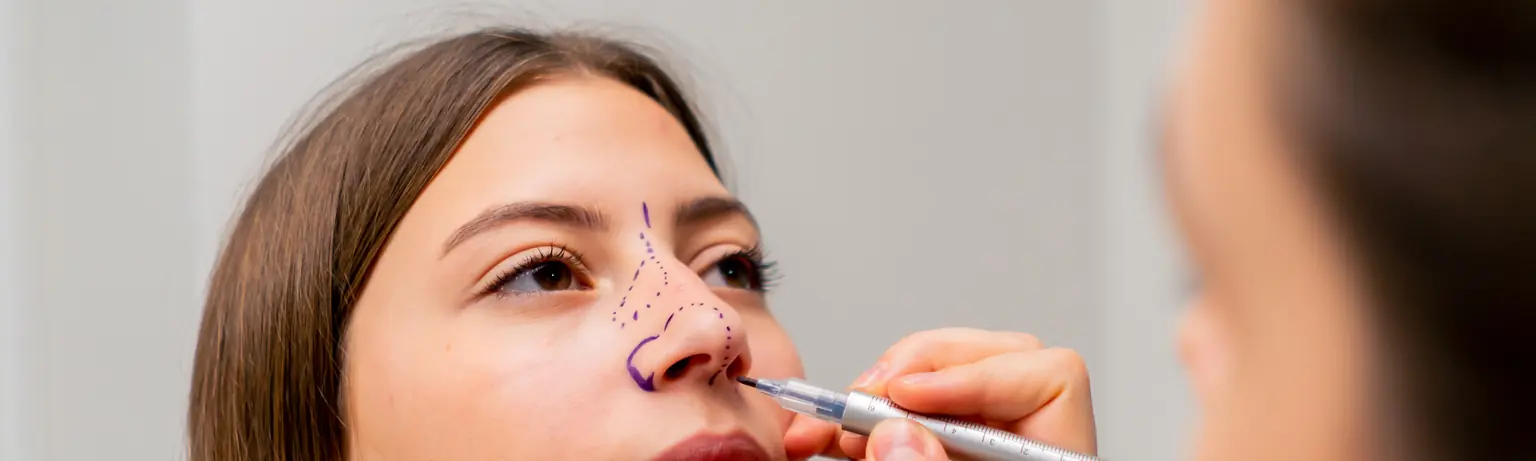
Rhinoplasty is usually an outpatient procedure under general anesthesia or deep sedation, and typically takes two to three hours depending on complexity and whether breathing work is included. Incisions are hidden inside the nose, with at most a tiny, well-concealed external incision in the open approach.
01
Dr. Sayed confirms the plan with you, then anesthesia is given. Most rhinoplasty is done under general anesthesia or deep sedation as an outpatient.
02
In a closed approach, all incisions are inside the nostrils. In an open approach, one small incision crosses the columella for a direct view of the framework.
03
The bone and cartilage are precisely reshaped: a hump is lowered, the bridge narrowed, or cartilage added as a graft to support and define, depending on your plan.
04
Tip cartilage is reshaped, repositioned, or supported with grafts to set its projection, rotation, and definition, so it balances the rest of the nose.
05
If needed, a deviated septum or collapsed valve is corrected at the same time. Incisions are then closed with fine sutures inside the nose.
06
A small splint, and sometimes internal supports, protect the new shape. You go home the same day; a responsible adult drives you.
Rhinoplasty is generally safe in experienced hands, but every surgery carries risk. Nose-specific risks include swelling, bruising, temporary numbness, nosebleeds, breathing changes, asymmetry, and, in a minority of cases, the need for a small revision later. Serious complications are uncommon.
Dr. Sayed lowers risk with conservative reshaping, structural support to protect breathing, careful screening, and clear aftercare. He reviews your full history and medications at consultation so the plan fits your health.
Surgery is best deferred until the nose is fully grown, generally the mid-to-late teens, and declined when expectations cannot be met, when health or healing issues raise risk, or when a minor concern is better left alone. An active skin infection should clear first.
If a small bump or a drooping tip can be camouflaged with a non-surgical touch-up, or if your nose already suits your face, Dr. Sayed will say so.
Related and alternative options
The nose sits at the center of the face, so balance often involves more than the nose alone. The chin, the septum, or a non-surgical touch-up may be part of the plan.
What gives the best result depends on your goals and anatomy. Sometimes the nose alone is the answer; sometimes supporting the chin or correcting breathing does more for balance and function. These are the options Dr. Sayed weighs with you.
See facial plastic surgery options
A small or receding chin can make the nose look larger.
Balancing the chin can improve the profile.
Often planned alongside rhinoplasty.
Straightens a deviated septum or opens collapsed valves.
Improves breathing, done with the reshaping.
May qualify for insurance coverage.
Filler can smooth a small bump or lift the tip.
A temporary option with no downtime.
Not a substitute for surgical reshaping.
Liquid rhinoplasty: filler can camouflage a small dorsal bump or add a little tip support, with results that last several months.
What it can do: smooth a minor irregularity or improve a profile line without surgery or downtime.
What it cannot do: make a nose smaller, narrow the bridge, refine a bulbous tip, or improve breathing.
Safety: filler in the nose carries real vascular risks and should be done only by an experienced injector.
When surgery is better: for a lasting change in size, shape, or breathing, surgical rhinoplasty is the right tool.
Before and after
Photographs show how rhinoplasty refines the bridge, tip, and profile while keeping the nose in harmony with the rest of the face. Results vary from person to person; these are examples, not a promise of a specific outcome. Full galleries are shared in consultation.
Gallery 01
A dorsal hump reduced for a smoother, balanced profile.
Gallery 02
A bulbous or drooping tip refined for better definition.
Gallery 03
A crooked nose straightened, often with breathing improved too.
Gallery 04
Refinement that respects and preserves your features.
Photographs are examples of real outcomes and are not a guarantee. Individual results depend on anatomy, healing, and the specific plan. All photos are shared with patient consent.
Cost and financing
In San Diego, rhinoplasty commonly runs about $10,000 to $18,000, with complex or revision cases higher. When breathing work for a deviated septum is included, part of the surgery may be covered by insurance.
Rhinoplasty pricing depends on complexity, whether it is a first-time or revision procedure, the technique, the anesthesia, and whether breathing work is included. The quote covers the surgeon's fee, anesthesia, and the facility. A functional septoplasty or valve repair may be partly covered by insurance when it is medically necessary.
Complexity: a small refinement costs less than major reshaping or a crooked-nose correction.
Primary vs revision: revision rhinoplasty is more demanding and usually costs more.
Technique and grafts: open approaches and cartilage grafting add time and cost.
Anesthesia and facility: general anesthesia and the surgical facility are part of the total.
Functional component: medically necessary septum or valve work may qualify for partial insurance coverage.
Ask about rhinoplasty financing
Recovery
Most people are presentable within two weeks, once the splint is off and the worst bruising fades. The nose keeps refining for about a year as the last swelling resolves, especially in the tip.
Days 1 to 7
Splint on, head elevated, rest. Expect congestion, swelling, and some bruising around the eyes. Keep activity light.
Day 7
The splint and any sutures usually come off. Most bruising is fading and can be covered with makeup.
Weeks 2 to 3
Most people are back in public and at desk work. The nose still looks swollen to you but not to others.
Weeks 4 to 6
Return to exercise as cleared. Avoid contact sports and anything that could bump the nose for longer.
Months 3 to 12
Swelling keeps resolving and the tip refines. The final, settled shape emerges over about a year.
Head elevated: sleep propped up for the first week or two to reduce swelling.
Protect the nose: avoid bumping it; no contact sports or roughhousing while it heals.
Glasses: keep glasses off the bridge until Dr. Sayed clears it, usually several weeks.
Sun protection: shield the healing skin from sun, which can worsen swelling and discoloration.
Patience with the tip: the tip is the last area to settle; give it the full year.
Follow up: keep your check visits so healing and shape are monitored.
Ask about rhinoplasty recovery
Your surgeon
Rhinoplasty is millimeter surgery. Tim Sayed MD reshapes conservatively and reinforces structure, so the nose looks natural and keeps breathing well for the long term.
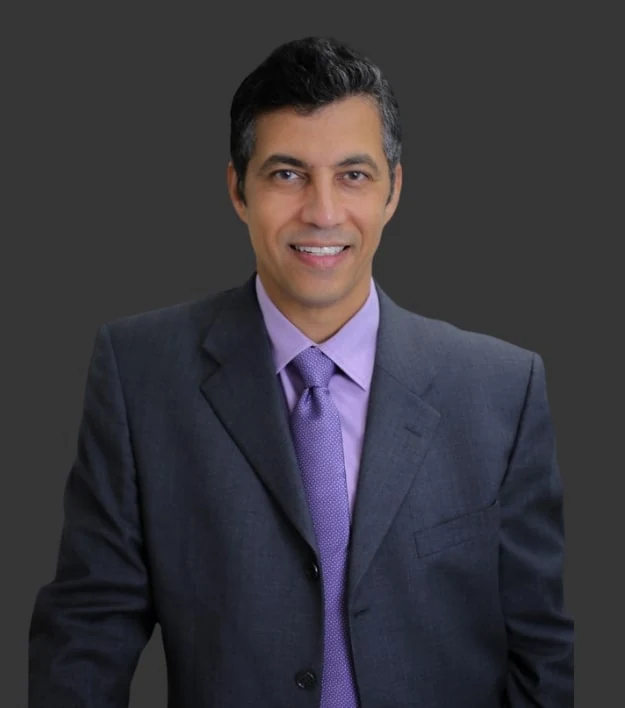
Tim Sayed MD, MBA, FACS is a double board-certified plastic surgeon, certified by both the American Board of Plastic Surgery and the American Board of Surgery. He trained at UCSF and at Harvard's Massachusetts General Hospital, and earned an executive MBA from Northwestern's Kellogg School of Management.
Dr. Sayed is a double board-certified plastic surgeon with more than 20 years of experience. His approach to rhinoplasty is structural and conservative: he reshapes the framework precisely, supports the tip and valves so breathing holds up, and plans each nose to the individual face rather than a single ideal. He performs primary and selected revision rhinoplasty, and will tell you honestly when a non-surgical touch-up or no surgery fits you better.
American Board of Plastic Surgery
Board certified and recertified
American Board of Surgery
Board certified and recertified
UCSF School of Medicine
MD and plastic surgery residency
Harvard, Mass General
General surgery training
Kellogg School of Management
Executive MBA, Northwestern
Alpha Omega Alpha
National medical honor society
Serving Southern California
Dr. Sayed sees rhinoplasty patients at two Southern California offices: San Diego, at 4510 Executive Drive, Suite 210, near UTC and La Jolla; and Newport Beach, at 3991 MacArthur Boulevard, Suite 320, in the Airport Area near Fashion Island. Patients travel from across San Diego and Orange County for his natural, structural approach to the nose.
Southern California makes rhinoplasty recovery easier. In the first weeks, sunglasses, a hat, and gentle walks along the coast, in mild and dry weather, protect the healing nose from sun and strain.
Tim Sayed MD, San Diego & Newport Beach
Offices
San Diego: 4510 Executive Drive, Suite 210, San Diego, CA 92121. Newport Beach: 3991 MacArthur Boulevard, Suite 320, Newport Beach, CA 92660.
Phone
(858) 247-2933
San Diego area
San Diego, La Jolla, UTC, Del Mar, Carmel Valley, Encinitas, Rancho Santa Fe
Orange County area
Newport Beach, Corona del Mar, Costa Mesa, Irvine, Laguna Beach, Fashion Island

If the shape of your nose or how it breathes bothers you, a consultation with Tim Sayed MD is the place to start. He will examine your nose and face, explain open and closed options honestly, and tell you whether surgical rhinoplasty, a breathing procedure, or a non-surgical touch-up fits you best.
FAQ
In San Diego, rhinoplasty commonly runs about $10,000 to $18,000, with complex or revision cases higher. The quote covers the surgeon, anesthesia, and facility. When medically necessary breathing work for a deviated septum is included, part of the surgery may be covered by insurance.
Rhinoplasty, often called a nose job, is surgery that reshapes the bone and cartilage of the nose to change its size, shape, or proportions. It can also straighten a deviated septum to improve breathing. It is one of the most common facial plastic surgery procedures.
Closed rhinoplasty keeps all incisions inside the nose with no external scar. Open rhinoplasty adds one small incision across the columella, the skin between the nostrils, for a direct view of the framework in complex or revision cases. Both can give excellent results; the right choice depends on your nose.
Most rhinoplasty takes about two to three hours, depending on complexity and whether breathing work is included. It is usually an outpatient procedure under general anesthesia or deep sedation, so you go home the same day.
The splint comes off around day 7, and most people are back in public and at desk work within two weeks. Bruising fades over the first two weeks; the nose keeps refining for about a year as the last swelling resolves, especially in the tip.
It can. When a deviated septum or collapsed nasal valve is the cause of poor breathing, Dr. Sayed can correct it at the same time as the reshaping. That functional work may qualify for partial insurance coverage when it is medically necessary.
Cosmetic reshaping is not covered. The functional part, straightening a deviated septum or repairing a collapsed valve to improve breathing, may be partly covered when it is medically necessary and documented. The exam and imaging determine that.
Liquid rhinoplasty uses filler to camouflage a small bump or lift the tip, with no surgery or downtime. It is temporary, lasting several months, and cannot make a nose smaller, narrow the bridge, or improve breathing. It carries real vascular risks and should be done only by an experienced injector.
That is the goal. Dr. Sayed avoids the scooped, pinched, over-done look, reshaping conservatively and keeping balance with the rest of your face, so the result looks like a natural version of your own nose rather than an obvious operation.
The nose should be fully grown first, generally the mid-to-late teens, a little earlier for girls than boys. For a cosmetic change, surgeons usually wait until growth is complete. Functional breathing surgery is sometimes done earlier when medically needed.
Glasses should not rest on the bridge while the bones heal, usually for several weeks. Dr. Sayed will give you a specific timeline and ways to support glasses off the nose in the meantime, such as taping them up or using cheek rests.
Risks include swelling, bruising, temporary numbness, nosebleeds, breathing changes, asymmetry, and, in a minority of cases, the need for a small revision later. Serious complications are uncommon. Conservative reshaping and structural support lower the risks.
Revision rhinoplasty corrects or improves the result of a previous nose surgery. Scar tissue and altered anatomy make it more demanding than a first-time procedure, so it usually takes longer, often uses cartilage grafts, and is best done by an experienced surgeon.
Good candidates are adults with a fully grown nose who are bothered by its shape or breathing, in good general health, with realistic goals. A consultation and exam confirm whether surgery, a breathing procedure, or a non-surgical option fits you.
Patient Reviews