
(858) 247-2933
Book
Book a consultation
Tummy Tuck, Southern California
A tummy tuck (abdominoplasty) removes loose abdominal skin, trims stubborn fat, and tightens separated muscle for a flatter, firmer midsection, most often after pregnancy or weight loss. Tim Sayed MD, a double board-certified plastic surgeon, places the scar low and hidden. He sees Southern California patients at his San Diego and Newport Beach offices.
Flatter
FIRMER, TIGHTER MIDSECTION
2
Board certifications
20+
Years in practice
4.6
Google rating
At a glance
A tummy tuck removes loose abdominal skin, repairs separated muscle, and refines the waist with liposuction when needed. It is usually outpatient or a short stay, with a low, hidden scar and recovery over a few weeks.
What it is
An abdominoplasty that removes excess skin and fat from the lower abdomen and tightens the underlying muscle for a flatter, firmer midsection.
Where it is used
The abdomen and waist: loose skin, a lower-belly pooch, stretch marks below the navel, and muscle separation (diastasis) after pregnancy or weight loss.
Anesthesia
General anesthesia, as an outpatient procedure or a short overnight stay. It usually takes two to four hours, longer when combined with liposuction.
Downtime
Most people take about two weeks off desk work and avoid strenuous activity and heavy lifting for about six weeks while the repair heals.
Results
A flatter, firmer abdomen and a defined waist. With a stable weight, the result is long-lasting; the low scar fades over about a year.
Who it suits
Adults at a stable weight, in good health, usually done having children, with loose abdominal skin or muscle separation. A consultation confirms candidacy.
Why patients choose Tim Sayed MD
A great tummy tuck is about more than removing skin. The muscle repair must be secure, the waist contoured with liposuction, and the scar kept low and fine so it hides under a swimsuit. Tim Sayed MD is double board-certified and plans each tummy tuck around a flat, natural, lasting result.
Dr. Sayed is certified by the American Board of Plastic Surgery and the American Board of Surgery, with more than 20 years in practice.
Read about Tim Sayed MD
He places the incision low, where underwear or a swimsuit covers it, and closes without tension so the scar stays fine.
He repairs separated abdominal muscle firmly, which flattens the belly and supports the core, not just the skin.
See tummy tuck results
Liposuction of the waist and flanks shapes the whole midsection, so the result looks sculpted rather than simply tightened.
A tummy tuck pairs with breast surgery and liposuction in a mommy makeover, addressing the body in one recovery.
If liposuction alone, a mini tuck, or waiting until after a planned pregnancy suits you better, he will tell you.

Book a tummy tuck consultation
Full vs mini
A full tummy tuck addresses the whole abdomen above and below the navel with muscle repair; a mini tummy tuck treats only a small lower-belly pooch with a shorter scar. The right one depends on how much skin and muscle laxity you have.
Both flatten the lower abdomen, but they differ in scope. A mini tuck is a smaller operation for a limited concern; a full tuck tightens the entire abdominal wall and removes more skin. The table below compares them.
Many patients come in unsure which they need; the exam settles it. Most who have had children or lost significant weight need a full tummy tuck for the muscle repair.
Compare a tummy tuck with liposuction
What it treats
A tummy tuck removes loose, hanging abdominal skin, trims fat, flattens a lower-belly pooch, reduces stretch marks below the navel, and repairs separated abdominal muscle. It restores a firm, flat midsection that diet and exercise cannot, because loose skin and separated muscle do not respond to either.
It is not a weight-loss operation and does not remove fat from the whole body; liposuction shapes the waist, but large-volume fat loss should come first. It cannot erase stretch marks above the navel or guarantee a specific dress size, and a future pregnancy can undo the muscle repair.
Matching the operation to the problem matters. Loose skin and muscle separation need a tuck; isolated fat with firm skin may need only liposuction. Dr. Sayed assesses skin, fat, and muscle together so the plan fits your body.
Compare a tummy tuck with a mommy makeover
The procedure
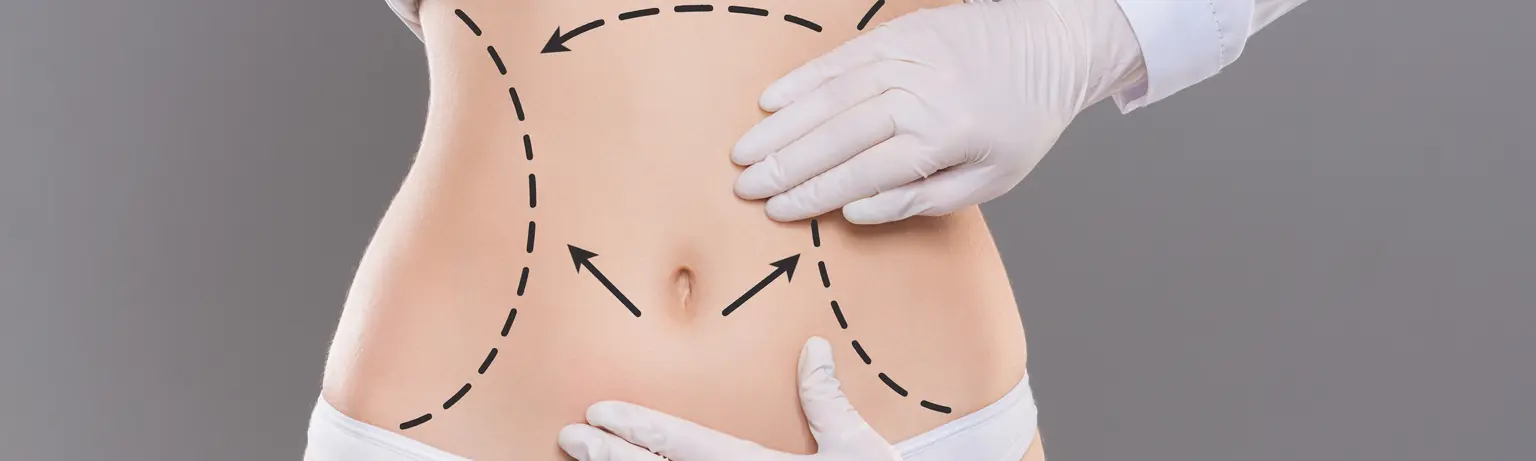
A tummy tuck is done under general anesthesia, as an outpatient procedure or a short overnight stay, and typically takes two to four hours, longer with liposuction. It has a few key stages.
01
Dr. Sayed marks the incision low and the muscle repair, then general anesthesia is given for a comfortable, outpatient or short-stay procedure.
02
A low incision is made from hip to hip, kept below the underwear line, with a small incision around the navel for a full tummy tuck.
03
The separated abdominal muscles are stitched back together down the midline, flattening the belly and tightening the core.
04
Loose skin and fat below the navel are removed, the remaining skin is redraped, and the navel is brought out through a new opening.
05
Liposuction refines the waist and flanks if planned, and the incision is closed in layers without tension so the scar stays low and fine.
06
A compression garment is placed, sometimes with small drains, and you go home the same day or after a short stay with clear aftercare.
A tummy tuck is generally safe, but every surgery carries risk. Specific risks include bleeding, infection, fluid collection (seroma), changes in skin sensation, wider or raised scarring, delayed healing at the incision, and, rarely, blood clots. Smokers heal less well.
Dr. Sayed lowers risk with careful technique, drains or quilting sutures to limit fluid, early walking to reduce clot risk, and clear aftercare. He reviews your full history at consultation so the plan fits your health.
A tummy tuck is deferred when you are still losing significant weight, planning a future pregnancy, or your health raises surgical risk. Smokers are asked to stop well before and after surgery, since smoking impairs healing of the incision.
If liposuction alone, a mini tuck, or waiting is the better path, Dr. Sayed will say so.
Related and alternative options
The abdomen is one part of the body. Depending on your goals, a tummy tuck pairs with liposuction, breast surgery, or body-contouring after weight loss.
What fits best depends on whether the issue is loose skin, separated muscle, stubborn fat, or all three. These are the options Dr. Sayed weighs with you.
See all body procedures
Removes stubborn fat from the waist and flanks.
Often added to a tummy tuck to shape the midsection.
Does not tighten loose skin on its own.
Combines a tummy tuck with breast surgery.
Restores the body after children in one recovery.
Tailored to your goals and history.
Removes hanging skin around the whole trunk.
For loose skin after major weight loss.
A larger operation than a tummy tuck.
With liposuction: liposuction shapes the waist and flanks while the tuck tightens skin and muscle.
As a mommy makeover: a tummy tuck with breast surgery restores the body after children in one recovery.
After weight loss: a body lift addresses hanging skin beyond the abdomen when weight loss is the cause.
Mini vs full: a small lower-belly pooch may need only a mini tuck with a shorter scar.
Muscle repair: separated abdominal muscle (diastasis) is repaired during the tuck to flatten and support the core.

Before and after
Photographs show flatter, firmer abdomens with a low, hidden scar after a tummy tuck. Results vary from person to person; these are examples, not a promise of a specific outcome.
Gallery 01
A flat abdomen and repaired muscle after children.
Gallery 02
Loose skin removed and the waist refined.
Gallery 03
A tummy tuck with liposuction for a sculpted waist.
Photographs are examples of real outcomes and are not a guarantee. Individual results depend on anatomy, healing, and the specific plan. All photos are shared with patient consent.
Cost and financing
In San Diego, a tummy tuck commonly runs about $8,000 to $15,000, and more when combined with liposuction or breast surgery. The quote covers the surgeon, anesthesia, the facility, and the garment.
Tummy tuck pricing depends on whether it is a full or mini tuck, whether liposuction is added, and the anesthesia and facility time. The quote covers the surgeon fee, anesthesia, and the facility. Because it is cosmetic, it is not covered by insurance.
Full or mini: a full tummy tuck with muscle repair costs more than a mini tuck.
Added liposuction: contouring the waist and flanks adds to the fee but shares one recovery.
Anesthesia and facility: longer, combined surgery means more operating-room time.
Combined procedures: a mommy makeover with breast surgery is priced as a combination.
Surgeon experience: a double board-certified surgeon reflects training and a secure, natural result.
Ask about tummy tuck financing
Recovery
Most people take about two weeks off desk work and return to full activity by about six weeks. You will be bent slightly forward at first to protect the repair, then gradually straighten as you heal.
Days 1 to 3
Rest with the knees and upper body slightly bent to protect the repair. Expect tightness and soreness, managed with medication; keep the garment on and walk gently.
Days 4 to 7
Walking a little more each day. Any drains usually come out this week. The abdomen feels tight, which is the muscle repair.
Weeks 2 to 3
Many people return to desk work and can stand upright. Keep wearing the garment and avoid lifting.
Weeks 4 to 6
Energy returns and light activity resumes. Avoid core exercise and heavy lifting until Dr. Sayed clears you near six weeks.
Months 2 to 6
Swelling settles and the flat, firm result shows. The scar is firm and pink at first, then fades over the following year.
Wear the garment: it controls swelling and supports the new contour; wear it as directed.
Walk early: gentle walking from day one lowers clot risk and helps healing.
No heavy lifting: protect the muscle repair; avoid lifting and core strain for about six weeks.
No smoking: smoking impairs healing of the incision; avoid it before and after.
Scar care: use any recommended silicone or scar treatment once the incision has healed.
Stable weight: a steady weight keeps the result looking its best.
Ask about tummy tuck recovery
Your surgeon
Flat and natural, with a hidden scar. Tim Sayed MD repairs the muscle securely, contours the waist, and keeps the incision low so the result looks firm and the scar stays out of sight.
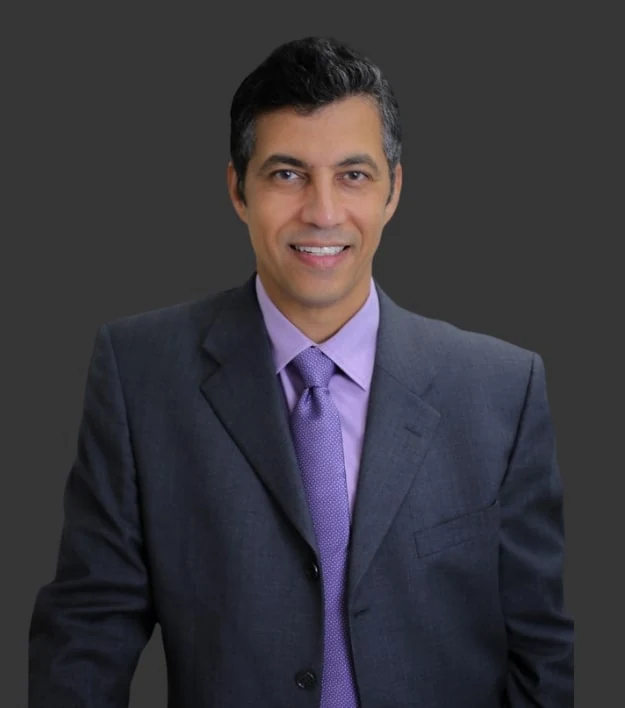
Tim Sayed MD, MBA, FACS is a double board-certified plastic surgeon, certified by both the American Board of Plastic Surgery and the American Board of Surgery. He trained at UCSF and at Harvard's Massachusetts General Hospital, and earned an executive MBA from Northwestern's Kellogg School of Management.
Dr. Sayed is a double board-certified plastic surgeon with more than 20 years of experience. His approach to the tummy tuck is thorough: a secure muscle repair, liposuction to shape the waist, and a low, fine closure, so the abdomen looks flat and natural.
American Board of Plastic Surgery
Board certified and recertified
American Board of Surgery
Board certified and recertified
UCSF School of Medicine
MD and plastic surgery residency
Harvard, Mass General
General surgery training
Kellogg School of Management
Executive MBA, Northwestern
Alpha Omega Alpha
National medical honor society
Serving Southern California
Dr. Sayed sees tummy tuck patients at two Southern California offices: San Diego, at 4510 Executive Drive, Suite 210, near UTC and La Jolla; and Newport Beach, at 3991 MacArthur Boulevard, Suite 320, in the Airport Area near Fashion Island. Patients travel from across San Diego and Orange County for his natural approach to body contouring.
Southern California makes tummy tuck recovery easier. In the first weeks, gentle daily walks along the region flat coastal paths, in mild and dry weather, keep you moving comfortably while the repair heals.
Tim Sayed MD, San Diego & Newport Beach
Offices
San Diego: 4510 Executive Drive, Suite 210, San Diego, CA 92121. Newport Beach: 3991 MacArthur Boulevard, Suite 320, Newport Beach, CA 92660.
Phone
(858) 247-2933
San Diego area
San Diego, La Jolla, UTC, Del Mar, Carmel Valley, Encinitas, Rancho Santa Fe
Orange County area
Newport Beach, Corona del Mar, Costa Mesa, Irvine, Laguna Beach, Fashion Island

If loose skin or separated muscle is keeping your abdomen from looking the way you want, a consultation with Tim Sayed MD is the place to start. He will examine your abdomen, explain a full or mini tuck and whether to add liposuction, and lay out the plan, cost, and recovery honestly.
FAQ
In San Diego, a tummy tuck commonly runs about $8,000 to $15,000, and more when combined with liposuction or breast surgery. The quote covers the surgeon, anesthesia, and the facility. Because it is cosmetic, it is not covered by insurance.
Most people take about two weeks off desk work and return to full activity by about six weeks. You are bent slightly forward at first to protect the muscle repair, then straighten as you heal. Swelling settles over the following months.
A tummy tuck, or abdominoplasty, removes loose abdominal skin and fat and repairs separated abdominal muscle for a flatter, firmer midsection. It is usually done under general anesthesia with a low, hidden scar, often with liposuction to shape the waist.
It depends on how much skin and muscle laxity you have. A mini tuck treats only a small lower-belly pooch with a shorter scar; a full tuck tightens the whole abdominal wall and removes more skin. Most patients after pregnancy or weight loss need a full tuck.
Yes, there is a low horizontal scar from hip to hip, placed below the underwear or swimsuit line, plus a small scar around the navel for a full tuck. It is firm and pink at first and fades over about a year; scar care helps keep it fine.
Yes. Pregnancy and weight change can separate the abdominal muscles (diastasis recti), which a tummy tuck repairs by stitching them back together. This flattens the belly and supports the core in a way that exercise cannot.
Yes, and it often is. Combined with liposuction it shapes the whole midsection; combined with breast surgery it becomes a mommy makeover. Combining addresses several areas in one recovery, planned around your safety.
The first few days feel tight and sore, more from the muscle repair than the skin, and are controlled with medication. Most people are off strong pain medicine within a week and describe tightness rather than sharp pain after that.
With a stable weight, the result is long-lasting and essentially permanent. Significant weight gain or a future pregnancy can stretch the skin and undo the muscle repair, which is why a tummy tuck is best after you are done having children.
Usually yes. A future pregnancy can re-separate the repaired muscles and stretch the skin, undoing the result. Most surgeons, including Dr. Sayed, recommend a tummy tuck once you are finished having children.
Gentle walking starts right away. Light activity resumes over the first few weeks, and core exercise and heavy lifting wait until Dr. Sayed clears you, usually around six weeks, so the muscle repair heals securely.
Risks include bleeding, infection, fluid collection (seroma), changes in sensation, wider scarring, delayed healing, and, rarely, blood clots. Serious problems are uncommon. Careful technique, early walking, and good aftercare keep risk low.
Often. Liposuction of the waist and flanks is commonly added to shape the whole midsection, so the result looks sculpted rather than only tightened. Whether it is included depends on your anatomy and goals.
Good candidates are adults at a stable weight, in good health, usually done having children, with loose abdominal skin or separated muscle. Not smoking matters for healing. A consultation and exam confirm whether a full or mini tuck fits you.
Patient Reviews