(858) 247-2933
Book
Book a consultation
Otoplasty, Southern California
Otoplasty, or ear surgery, reshapes prominent or misshapen ears and sets them closer to the head. Tim Sayed MD, a double board-certified plastic surgeon, reshapes the ear through a hidden incision behind it, for a natural, balanced result in children and adults. He sees Southern California patients at his San Diego and Newport Beach offices.
Ears
SET BACK, NOT PINNED
2
Board certifications
20+
Years in practice
4.6
Google rating
At a glance
Otoplasty, also called ear pinning, reshapes prominent or protruding ears and brings them into better balance with the face. It is an outpatient procedure with a scar hidden behind the ear, and results are permanent.
What it is
Surgery that reshapes the cartilage of the ear to reduce how far it projects, rebuild a missing fold, or correct an irregular shape.
Ear pinning
The most common otoplasty sets prominent ears closer to the head and recreates the natural fold, so the ears look balanced, not pinned.
Anesthesia
Local anesthesia with sedation for most adults; general anesthesia for younger children. It is an outpatient procedure, so you go home the same day.
Downtime
A head dressing stays on a few days. Most adults return to desk work or school in about a week; strenuous activity waits a few weeks.
Results
Permanent. The reshaped ears keep their new position and shape for life, giving a lasting, natural result.
Who it suits
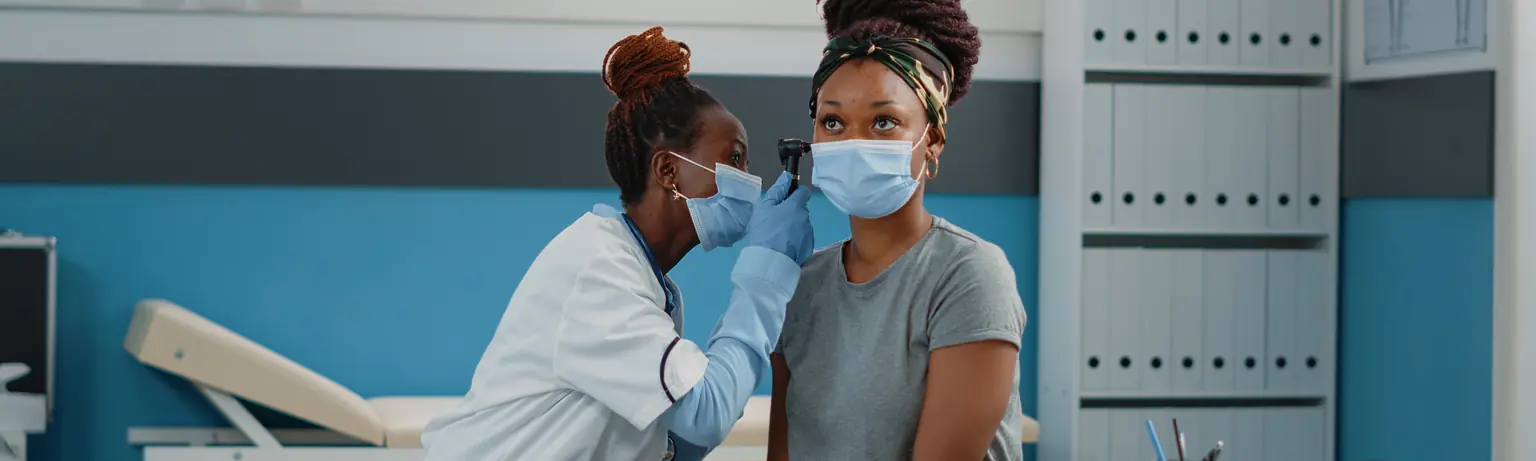
Children from about age 5, when the ears are nearly grown, and adults bothered by prominent or misshapen ears, in good health. A consultation confirms candidacy.
Why patients choose Tim Sayed MD
Natural ear surgery is about proportion, not just pinning the ears back. Over-correction leaves ears flat against the head or with an unnatural contour. Tim Sayed MD is double board-certified and reshapes the ear to look natural from every angle.
Dr. Sayed is certified by the American Board of Plastic Surgery and the American Board of Surgery, with more than 20 years in practice.
Read about Tim Sayed MD
The goal is ears that sit in a normal position and keep their natural folds, not ears flattened against the head.
He operates on children from about age 5 and on adults, adjusting the technique and anesthesia to the patient.
See otoplasty results
The incision sits in the crease behind the ear, so the healed scar is hard to see.
When both ears are treated, he matches them carefully; when one ear is corrected, he balances it to the other.
If your ears are within a normal range or surgery is not the right step, he will tell you. Not every ear needs surgery.
Book an otoplasty consultation
Children vs adults
Otoplasty works for both children and adults. The ear is nearly full-size by about age 5, so surgery can be done early, and adults can have it at any age. The technique is similar; mainly the anesthesia and timing differ.
Ear surgery is one of the few facial procedures commonly done in childhood, because the ears reach adult size early and prominent ears can affect a child socially. Adults choose it too, at any age. The table below compares the two.
Whether for a child or an adult, the plan is tailored to the ear and the person. A consultation settles timing, anesthesia, and technique.
See otoplasty before and after results
What it treats
Otoplasty corrects ears that stand out too far from the head (prominent or protruding ears), ears missing the natural fold, an overly deep or large bowl of the ear, and some irregular or asymmetric shapes. It can also refine the result of a previous ear surgery and address a constricted or cupped ear.
It reshapes the cartilage and skin of the outer ear; it does not change hearing, which depends on the inner ear. Very large congenital differences, such as a severely underdeveloped ear, are a separate reconstructive problem that may need staged surgery or a different specialist.
The aim is balance, not a dramatic change. Setting the ears too far back or removing too much cartilage looks unnatural and can distort the ear. Dr. Sayed reshapes conservatively so the ears look like they were always that way.
Ask what otoplasty can do for you
The procedure
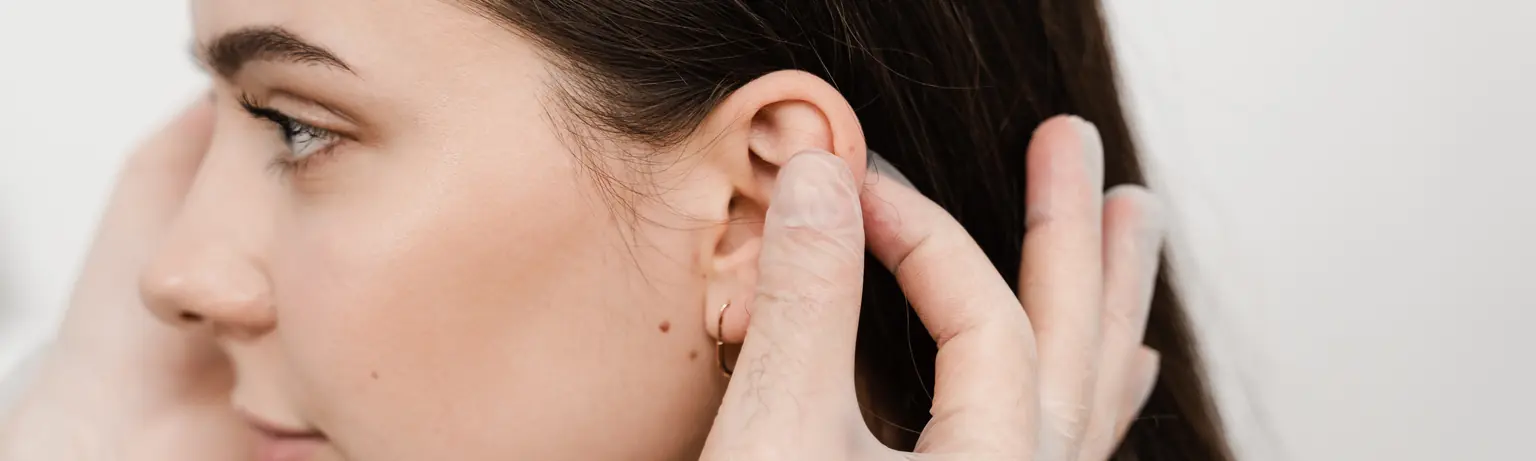
Otoplasty is an outpatient procedure that typically takes one to two hours. The incision is placed in the crease behind the ear, so the scar stays hidden. The cartilage is then reshaped and, if needed, the ear is set closer to the head with permanent sutures.
01
Dr. Sayed marks the plan, then anesthesia is given, local with sedation for most adults and general for younger children. It is an outpatient procedure.
02
A small incision is made in the natural crease behind the ear, where the healed scar is hard to see.
03
The cartilage is reshaped to create or strengthen the natural fold of the ear and to soften an overly prominent contour.
04
Where the ear projects too far, permanent internal sutures bring it gently closer to the head, into a natural position rather than flat against it.
05
Both ears are compared and matched, or a single ear is balanced to the other, so the result is symmetric from the front and the side.
06
A supportive head dressing protects the ears. You go home the same day; an adult drives, and for a child a parent stays close.
Otoplasty is generally safe, but every surgery carries risk. Ear-specific risks include swelling, bruising, numbness, a visible or raised scar, asymmetry, over- or under-correction, and, rarely, a partial return of prominence or a stitch that needs attention. Serious complications are uncommon.
Dr. Sayed lowers risk with conservative reshaping, secure technique, careful aftercare, and attention to symmetry. He reviews the full history at consultation, including for a child.
Surgery is usually deferred until the ears are nearly grown, about age 5, and declined when expectations cannot be met or a health issue raises risk. A large congenital difference may need reconstructive care rather than standard otoplasty.
If the ears are within a normal range, Dr. Sayed will say so rather than operate.
Related and alternative options
Surgery is the only lasting way to reshape prominent ear cartilage. In infancy, non-surgical molding can work, but by childhood and adulthood, otoplasty is the reliable option.
What fits depends mostly on age. For newborns, soft cartilage can sometimes be molded without surgery; after that window, reshaping needs otoplasty. These are the options Dr. Sayed discusses.
See facial plastic surgery options
Soft newborn cartilage can sometimes be molded with a device.
Works only in the first weeks of life.
Not an option for older children or adults.
The reliable, lasting correction for prominent ears.
Reshapes and repositions the cartilage.
For children from about age 5 and adults.
Hair can hide prominent ears day to day.
A temporary workaround, not a correction.
Many choose surgery for a permanent result.
Non-surgical pinning: there is no reliable non-surgical way to set grown cartilage back; molding works only in newborns.
One ear or both: otoplasty can treat a single prominent ear and balance it to the other, or reshape both.
For children: surgery is usually considered from about age 5, when the ears are nearly full size and the child is ready.
Permanence: otoplasty results are permanent; the ears keep their new shape and position for life.
Hearing: otoplasty reshapes the outer ear only and does not affect hearing.
Before and after
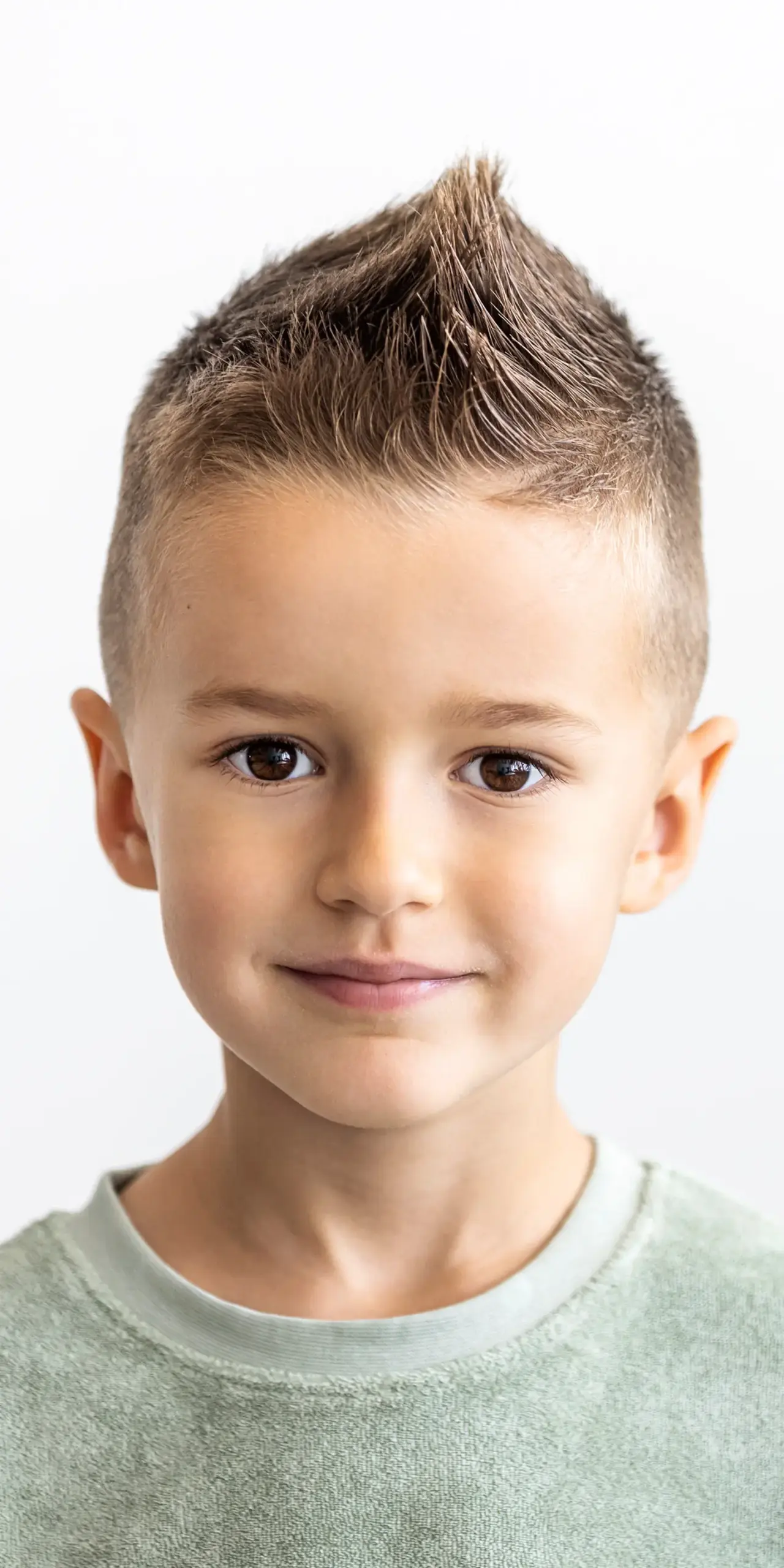
Photographs show how otoplasty sets prominent ears into a natural position and rebuilds the ear's folds while keeping the result balanced. Results vary from person to person; these are examples, not a promise of a specific outcome. Full galleries are shared in consultation.
Gallery 01
Protruding ears set closer to the head in a natural position.
Gallery 02
A missing natural fold rebuilt for a balanced ear shape.
Gallery 03
A single prominent ear balanced to match the other.
Gallery 04
Ear surgery in a school-age child, done with care.
Photographs are examples of real outcomes and are not a guarantee. Individual results depend on anatomy, healing, and the specific plan. All photos are shared with patient consent.
Cost and financing
In San Diego, otoplasty commonly runs about $5,000 to $8,000 for both ears, with a single ear often less. The quote covers the surgeon, anesthesia, and facility.
Otoplasty pricing depends on whether one ear or both are treated, how much reshaping is needed, and the anesthesia used. The quote covers the surgeon's fee, anesthesia, and the facility. For children, a significant congenital ear deformity is occasionally covered by insurance; purely cosmetic reshaping is not.
One ear or both: treating both ears costs more than correcting a single ear.
Complexity: simple pinning costs less than rebuilding a missing fold or correcting an unusual shape.
Anesthesia: general anesthesia for a child usually costs more than local with sedation.
Surgeon's experience: a double board-certified surgeon reflects training and careful, symmetric work.
Insurance: a documented congenital deformity in a child may qualify; cosmetic reshaping does not.
Ask about otoplasty financing
Recovery
Most people are back to light routines within a week. A supportive dressing protects the ears at first, followed by a headband at night, and the ears settle into their new shape over the following weeks.
Days 1 to 3
A head dressing stays on. Expect some swelling, tightness, and mild discomfort controlled with medication. Rest with the head elevated.
Days 4 to 7
The dressing usually comes off and is replaced by a soft headband. Most adults return to desk work and children to school.
Weeks 2 to 3
Swelling keeps settling. A headband is often worn at night to protect the ears while they heal.
Weeks 4 to 6
Return to sports and strenuous activity as cleared. Avoid anything that could bend or bump the ears until then.
Months 2 to 3
The ears reach their final, settled shape and position as the last swelling resolves.
Wear the dressing and headband: they hold the ears in position while they heal; follow the schedule given.
Sleep on your back: avoid pressure on the ears, especially in the first couple of weeks.
No bending the ears: protect them from contact sports and roughhousing until cleared.
Keep incisions clean: follow the care instructions for the area behind the ear.
Be patient: swelling settles over weeks; the final shape takes a couple of months.
Follow up: keep check visits so healing and symmetry are monitored.
Ask about otoplasty recovery
Your surgeon
Natural ears are the goal. Tim Sayed MD reshapes the ear to sit in a normal position with its folds intact, so the result looks like it was always there.
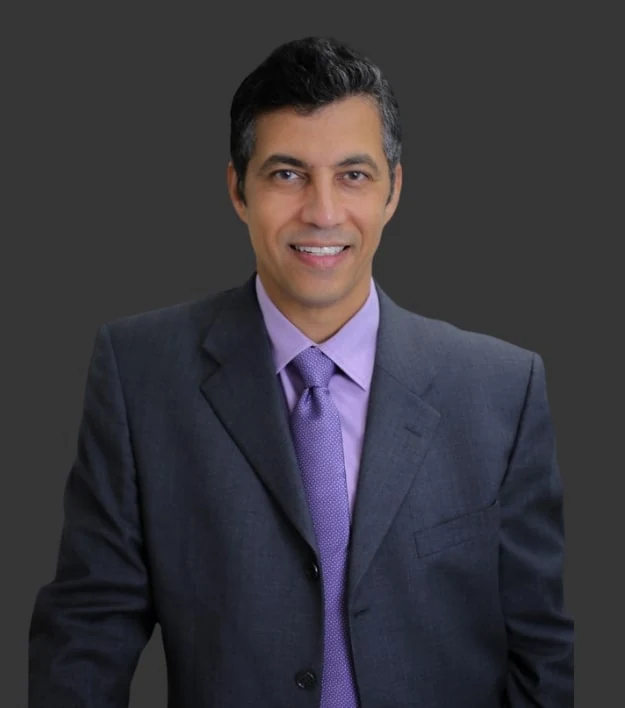
Tim Sayed MD, MBA, FACS is a double board-certified plastic surgeon, certified by both the American Board of Plastic Surgery and the American Board of Surgery. He trained at UCSF and at Harvard's Massachusetts General Hospital, and earned an executive MBA from Northwestern's Kellogg School of Management.
Dr. Sayed is a double board-certified plastic surgeon with more than 20 years of experience. His approach to otoplasty is conservative and symmetric: he reshapes the cartilage, rebuilds natural folds, and sets prominent ears gently back rather than flat, matching both sides carefully. He operates on children from about age 5 and on adults, and will tell you honestly when ears are within a normal range and surgery is not needed.
American Board of Plastic Surgery
Board certified and recertified
American Board of Surgery
Board certified and recertified
UCSF School of Medicine
MD and plastic surgery residency
Harvard, Mass General
General surgery training
Kellogg School of Management
Executive MBA, Northwestern
Alpha Omega Alpha
National medical honor society
Serving Southern California
Dr. Sayed sees otoplasty patients at two Southern California offices: San Diego, at 4510 Executive Drive, Suite 210, near UTC and La Jolla; and Newport Beach, at 3991 MacArthur Boulevard, Suite 320, in the Airport Area near Fashion Island. Children and adults travel from across San Diego and Orange County for his natural, symmetric ear surgery.
Southern California makes otoplasty recovery easy. In the first weeks, a hat or headband and gentle time outdoors, in mild and dry weather, protect the healing ears without strain.
Tim Sayed MD, San Diego & Newport Beach
Offices
San Diego: 4510 Executive Drive, Suite 210, San Diego, CA 92121. Newport Beach: 3991 MacArthur Boulevard, Suite 320, Newport Beach, CA 92660.
Phone
(858) 247-2933
San Diego area
San Diego, La Jolla, UTC, Del Mar, Carmel Valley, Encinitas, Rancho Santa Fe
Orange County area
Newport Beach, Corona del Mar, Costa Mesa, Irvine, Laguna Beach, Fashion Island

If prominent or misshapen ears bother you or your child, a consultation with Tim Sayed MD is the place to start. He will examine the ears, explain the options honestly for a child or an adult, and tell you whether otoplasty is the right step.
FAQ
In San Diego, otoplasty commonly runs about $5,000 to $8,000 for both ears, with a single ear often less. The quote covers the surgeon, anesthesia, and facility. For a child, a documented congenital ear deformity is occasionally covered by insurance; cosmetic reshaping is not.
Otoplasty, also called ear pinning or ear surgery, reshapes the cartilage of the outer ear to set prominent ears closer to the head, rebuild a missing fold, or correct an irregular shape. It is done through a hidden incision behind the ear.
Usually from about age 5, when the ears are nearly full size and the child is old enough to cooperate with recovery. Correcting prominent ears before the school years can spare a child teasing, but the timing is always individual.
No. Adults have otoplasty at any age for ears they have been self-conscious about for years. The technique is similar; adults often have it under local anesthesia with sedation rather than general.
Most otoplasty takes about one to two hours, depending on whether one ear or both are treated and how much reshaping is needed. It is an outpatient procedure, so you go home the same day.
The incision is placed in the crease behind the ear, so the healed scar sits where it is very hard to see. From the front, there is no visible scar.
Yes. Otoplasty permanently reshapes and repositions the ear cartilage, so the ears keep their new shape and position for life. A small minority need a minor touch-up.
No. Otoplasty reshapes the outer ear only. Hearing depends on the inner ear, which the surgery does not touch.
Yes. If only one ear is prominent, it can be reshaped and balanced to match the other. Many patients, though, choose to treat both for the best symmetry.
Discomfort is usually mild to moderate and controlled with medication. The ears feel tight and tender for the first few days, then settle. Children generally tolerate it well.
Most adults return to desk work and children to school in about a week, once the dressing is off. Contact sports and anything that could bump the ears wait a few weeks until cleared.
Only in newborns, whose soft cartilage can sometimes be molded with a device in the first weeks of life. After that, there is no reliable non-surgical fix, and otoplasty is the lasting correction.
Risks include swelling, bruising, numbness, a visible scar, asymmetry, over- or under-correction, and, rarely, a partial return of prominence. Serious complications are uncommon. Conservative, symmetric technique keeps the risks low.
Good candidates are healthy children from about age 5 and adults bothered by prominent or misshapen ears, with realistic goals. A consultation and exam confirm whether otoplasty is the right step.
Patient Reviews