
(858) 247-2933
Book
Book a consultation
Earlobe Repair, Southern California
Earlobe repair fixes torn, split, stretched, or gauged earlobes in a short in-office procedure under local anesthesia. Tim Sayed MD, a double board-certified plastic surgeon, closes the lobe cleanly so it looks natural and can be re-pierced later. He sees Southern California patients at his San Diego and Newport Beach offices.
In-office
LOCAL ANESTHESIA, NO DOWNTIME
2
Board certifications
20+
Years in practice
4.6
Google rating
At a glance
Earlobe repair closes a torn, split, or stretched earlobe in about 30 to 60 minutes under local anesthesia, in the office. Stitches come out in about a week, and the ear can usually be re-pierced after it heals.
What it is
A short in-office procedure that repairs a torn, split, stretched, or gauged earlobe, or reduces an overly large lobe, under local anesthesia.
Where it is used
The earlobe: fully torn-through lobes, partial splits and stretched piercings, healed gauge or plug holes, and large or elongated lobes.
Anesthesia
Local anesthesia only. You are awake and comfortable, and you drive yourself home. No sedation or general anesthesia is needed.
Downtime
Minimal. Most people return to work the same or next day. A small bandage covers the lobe, and stitches come out in about a week.
Results
A clean, natural-looking earlobe. Once healed, the lobe can usually be re-pierced, often in a slightly different spot for strength.
Who it suits
Anyone with a torn, split, stretched, or gauged earlobe, or lobes they feel are too large. A quick exam confirms the approach.
Why patients choose Tim Sayed MD
An earlobe repair looks simple, but a careful closure is what keeps the lobe from notching at the rim, keeps the scar thin, and leaves a natural contour that holds an earring again. Tim Sayed MD is double board-certified and repairs the lobe meticulously so the result looks like it never tore.
Dr. Sayed is certified by the American Board of Plastic Surgery and the American Board of Surgery, with more than 20 years in practice.
Read about Tim Sayed MD
He repairs the lobe in layers and bevels the edges so the scar is thin and the rim stays smooth, not notched.
He rebuilds the natural curve of the lobe, so a repaired ear looks like the other side rather than patched.
See earlobe repair results
Most repairs take under an hour under local anesthesia, with no sedation and no real downtime.
He plans the repair so the lobe can be safely re-pierced once it heals, usually away from the old scar.
He will tell you if a simple repair, a reduction, or a staged plan for a large gauge fits you best.
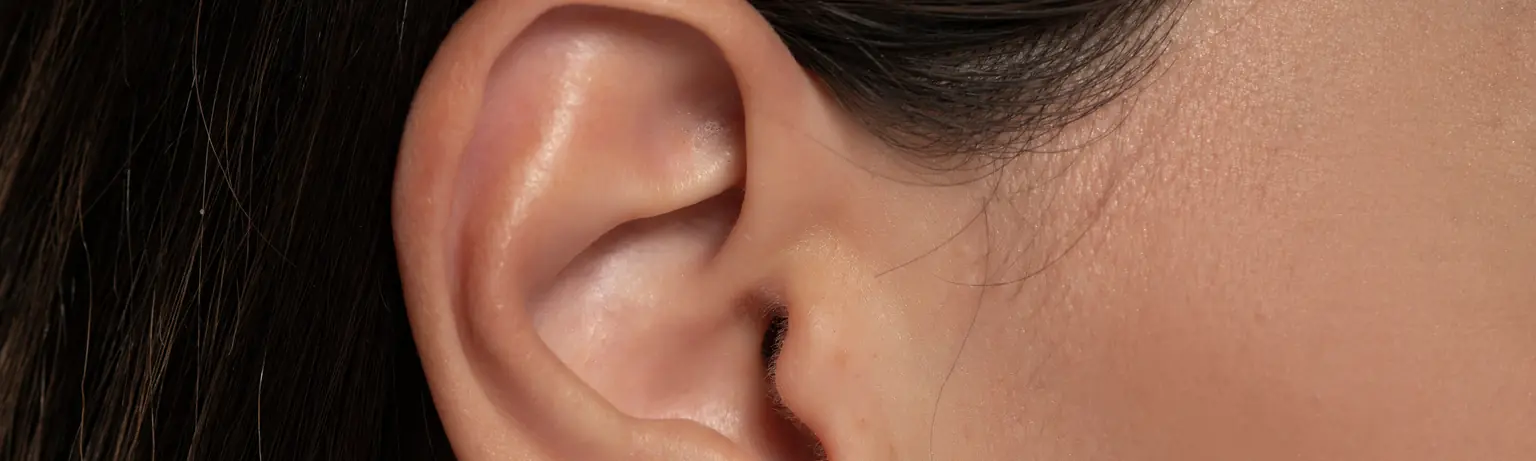
Book an earlobe repair consultation
Torn vs gauged
A torn or split lobe is closed directly for a quick, strong repair. A stretched or gauged lobe needs the thinned skin trimmed and rebuilt, a slightly bigger repair, but still in-office. The right approach depends on the hole.
Both are fixed in the office under local anesthesia, but the technique differs. A clean tear is simply re-approximated; a large gauge hole has stretched, thinned skin that must be freshened and reshaped into a natural lobe. The table below compares them.
Many patients have one torn ear and one stretched, or want a reduction at the same time. A consultation settles the plan for each ear.
Compare earlobe repair options
What it treats
Earlobe repair corrects a fully torn-through lobe, a partial split from a stretched piercing, a healed gauge or plug hole, a keloid or bump at the piercing, and a lobe that has grown long or heavy with age. It restores a smooth, natural lobe that can hold an earring again.
It treats the earlobe itself; it does not change the cartilage of the upper ear, and it is not an otoplasty for prominent ears. A very large keloid may need added treatment to keep it from returning. The repaired lobe is strong, but a new piercing should still be placed thoughtfully.
Matching the fix to the problem matters. A simple tear is a quick closure; a wide gauge or a long heavy lobe needs reshaping or reduction. Dr. Sayed examines the lobe and your goals so the repair is neither over- nor under-done.
Compare earlobe repair with otoplasty
The procedure
Earlobe repair is an in-office procedure under local anesthesia, usually 30 to 60 minutes for one or both ears. It has a few simple stages.
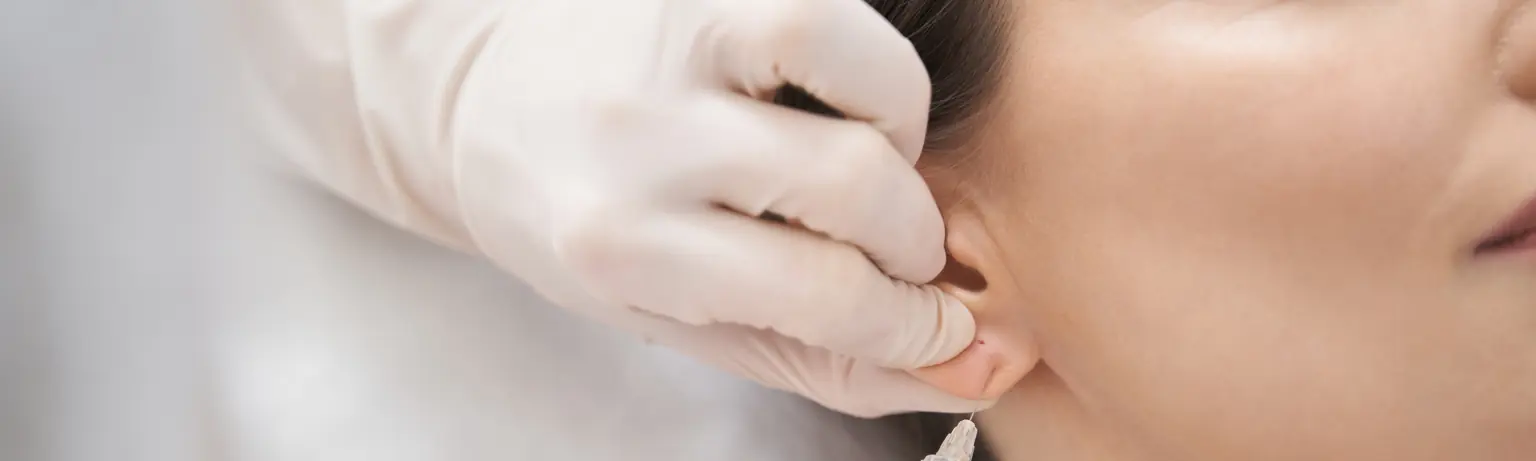
01
Dr. Sayed examines the lobe, discusses re-piercing, and marks the repair so the lobe keeps its natural shape.
02
The lobe is numbed with local anesthetic. You are awake and comfortable throughout, with no sedation needed.
03
The thin, healed skin lining the tear or hole is removed so the raw edges can knit together into strong tissue.
04
The lobe is closed in layers, often with a small step or bevel at the rim, so it does not notch and the scar stays thin.
05
Dr. Sayed shapes the lobe to match the other ear, reducing a long or heavy lobe at the same time if that is the plan.
06
A small dressing covers the lobe. You go home right away with simple aftercare; stitches come out in about a week.
Earlobe repair is very safe, but every procedure carries some risk. These include a visible or thickened scar, a small notch at the rim, slight difference between the two ears, and, rarely, infection or a keloid, especially in those prone to them.
Dr. Sayed lowers risk with a careful layered closure, edge beveling, and clear aftercare, and plans keloid-prone ears accordingly. He reviews your history at consultation so the plan fits you.
Repair is deferred if there is active infection or inflammation at the lobe, and keloid-prone patients may need a combined plan to prevent recurrence. An unrealistic goal, such as an invisible scar, is discussed honestly first.
If a reduction, a staged gauge repair, or keloid treatment suits you better, Dr. Sayed will say so.
Related and alternative options
The earlobe is one part of the ear and face. Depending on your goals, earlobe repair pairs with ear reshaping, piercing, or scar care.
What fits best depends on whether the issue is the lobe, the upper ear, or the piercing itself. These are the options Dr. Sayed weighs with you.
See facial plastic surgery options
Reshapes a long or heavy lobe.
Often done at the same time as a repair.
In-office, local anesthesia.
Sets back or reshapes prominent ears.
Addresses the cartilage, not the lobe.
The right tool for the upper ear.
A fresh, well-placed piercing after healing.
Usually about six weeks after repair.
Placed away from the old scar for strength.
Torn vs gauged: a clean tear is closed directly; a stretched gauge hole needs reshaping into a natural lobe.
With a reduction: a long or heavy lobe can be trimmed and repaired in the same visit.
Keloids: a bump at the piercing can be removed, with a plan to keep it from returning.
Upper ear: prominent or misshapen cartilage is an otoplasty, not a lobe repair.
Re-piercing: once healed, the lobe can hold an earring again, placed thoughtfully.
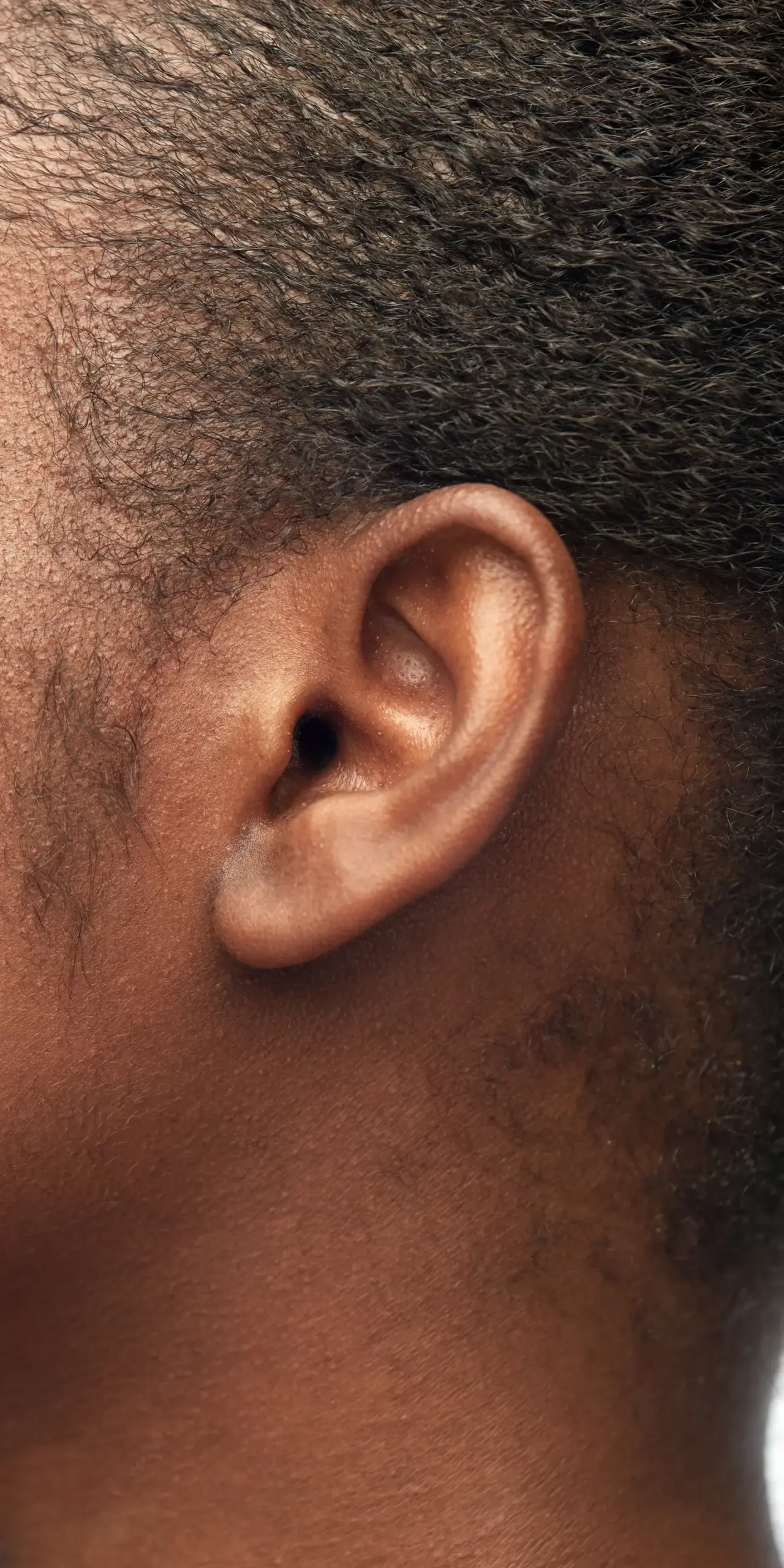
Before and after
Photographs show torn, split, and stretched earlobes repaired to a smooth, natural shape. Results vary from person to person; these are examples, not a promise of a specific outcome.
Gallery 01
A fully split lobe closed to a clean, natural rim.
Gallery 02
A stretched gauge hole rebuilt into a natural lobe.
Gallery 03
A long, heavy lobe reduced to a balanced size.
Photographs are examples of real outcomes and are not a guarantee. Individual results depend on anatomy, healing, and the specific plan. All photos are shared with patient consent.
Cost and financing
In San Diego, earlobe repair commonly runs about $500 to $1,500 per ear, depending on whether it is a simple tear or a stretched gauge, and whether a reduction is added. The quote covers the surgeon, the in-office procedure, and follow-up.
Earlobe repair pricing depends on whether one or both ears are treated, a simple tear versus a gauge repair, and whether a reduction or keloid removal is added. The quote covers the surgeon fee and the in-office visit. Because it is cosmetic, it is usually not covered by insurance.
One or both ears: treating both lobes costs more than one, but per-ear pricing often improves.
Tear or gauge: a stretched gauge hole takes more reshaping than a clean tear.
Added reduction: trimming a long or heavy lobe at the same time adds to the fee.
Keloid removal: removing and treating a keloid is additional work.
Surgeon experience: a double board-certified surgeon reflects training and a careful, natural closure.
Ask about earlobe repair financing
Recovery
Recovery is quick. Most people return to normal activity right away, with a small dressing on the lobe and stitches out in about a week.
Days 1 to 2
Mild soreness and a small dressing on the lobe. Over-the-counter pain relief is usually enough, and most people work the next day.
Days 3 to 7
The lobe heals quietly. Keep it clean and dry as directed. Stitches come out around day seven.
Weeks 2 to 4
The scar is still firming up and may look pink. Avoid pulling on the lobe or wearing heavy earrings.
Weeks 4 to 6
The lobe continues to settle. Many patients can be re-pierced around six weeks, once the surgeon clears it.
Months 2 to 6
The scar softens and fades. The repaired lobe looks natural and holds an earring again.
Keep it clean and dry: follow the wound care so the scar heals thin.
No heavy earrings: wait until the lobe is fully healed before wearing weighty earrings again.
No smoking: smoking slows healing and can thicken a scar; avoid it around the procedure.
Scar care: use any recommended silicone or scar treatment to keep the line soft.
Protect the lobe: avoid snagging or pulling the ear while it heals.
Re-piercing: wait for clearance, usually about six weeks, before re-piercing.
Ask about earlobe repair recovery
Your surgeon
Natural, not patched. Tim Sayed MD repairs the lobe in layers so the rim stays smooth, the scar stays thin, and the ear looks like it never tore.
Tim Sayed MD, MBA, FACS is a double board-certified plastic surgeon, certified by both the American Board of Plastic Surgery and the American Board of Surgery. He trained at UCSF and at Harvard's Massachusetts General Hospital, and earned an executive MBA from Northwestern's Kellogg School of Management.
Dr. Sayed is a double board-certified plastic surgeon with more than 20 years of experience. His approach to earlobe repair is meticulous: he freshens the edges, closes the lobe in layers, and shapes the rim so a repaired ear looks natural and can hold an earring again.
American Board of Plastic Surgery
Board certified and recertified
American Board of Surgery
Board certified and recertified
UCSF School of Medicine
MD and plastic surgery residency
Harvard, Mass General
General surgery training
Kellogg School of Management
Executive MBA, Northwestern
Alpha Omega Alpha
National medical honor society

Serving Southern California
Dr. Sayed sees earlobe repair patients at two Southern California offices: San Diego, at 4510 Executive Drive, Suite 210, near UTC and La Jolla; and Newport Beach, at 3991 MacArthur Boulevard, Suite 320, in the Airport Area near Fashion Island. Patients travel from across San Diego and Orange County for a clean, natural repair.
Southern California makes earlobe repair easy to fit in. It is a quick in-office visit and you are back to normal the same day, with just a small dressing on the lobe.
Tim Sayed MD, San Diego & Newport Beach
Offices
San Diego: 4510 Executive Drive, Suite 210, San Diego, CA 92121. Newport Beach: 3991 MacArthur Boulevard, Suite 320, Newport Beach, CA 92660.
Phone
(858) 247-2933
San Diego area
San Diego, La Jolla, UTC, Del Mar, Carmel Valley, Encinitas, Rancho Santa Fe
Orange County area
Newport Beach, Corona del Mar, Costa Mesa, Irvine, Laguna Beach, Fashion Island

If a torn, split, or stretched earlobe is keeping you from wearing earrings, a consultation with Tim Sayed MD is the place to start. He will examine the lobe, explain the repair and re-piercing, and give you an honest plan and a clear cost per ear.
FAQ
In San Diego, earlobe repair commonly runs about $500 to $1,500 per ear, depending on whether it is a simple tear or a stretched gauge and whether a reduction is added. The quote covers the surgeon and the in-office procedure. Because it is cosmetic, it is usually not covered by insurance.
The lobe heals quickly. Stitches come out in about a week, and most people are back to normal right away. The scar firms up and fades over the following months, and the lobe can usually be re-pierced around six weeks.
Earlobe repair is a short in-office procedure that fixes a torn, split, stretched, or gauged earlobe, or reduces a long or heavy lobe. The edges are freshened and the lobe is closed in layers under local anesthesia, so it looks natural and can hold an earring again.
Yes. A stretched gauge or plug hole is repaired by trimming the thinned skin and rebuilding the lobe into a natural shape. It is a slightly larger repair than a simple tear, but still an in-office procedure under local anesthesia.
There is always a fine scar, but a careful layered closure keeps it thin and well-hidden along the lobe. It is usually pink at first and fades over a few months. Scar care and avoiding heavy earrings early help keep it soft.
Usually yes, once the lobe has fully healed, often around six weeks. The new piercing is placed thoughtfully, generally away from the repair scar, so the lobe stays strong.
Very little. The lobe is numbed with local anesthetic, so the procedure itself is painless. Afterward there is mild soreness that over-the-counter pain relief handles easily.
Most earlobe repairs take about 30 to 60 minutes for one or both ears, in the office under local anesthesia. You go home right away with a small dressing on the lobe.
Yes. Once healed, the repair is permanent and the lobe is as functional as before. A future piercing should be placed carefully, and very heavy earrings can stretch any lobe over time.
Yes. Both lobes are commonly repaired in the same visit under local anesthesia, and a reduction or keloid removal can often be added at the same time.
Earlobe repair is usually considered cosmetic and not covered by insurance. In some cases of trauma it may be, so it is worth checking with your insurer; the consultation includes a clear cost per ear.
Risks are few and minor: a visible or thickened scar, a small notch at the rim, slight asymmetry, and, rarely, infection or a keloid in those prone to them. A careful closure and good aftercare keep the result clean.
Yes. A keloid at the piercing can be removed, usually with a plan to keep it from returning, such as pressure, steroid, or other treatment, since keloids can recur in prone patients.
Almost anyone with a torn, split, stretched, or gauged earlobe is a candidate. You should be in good health and have realistic goals. A quick exam confirms whether a repair, reduction, or keloid treatment fits you best.
Patient Reviews