
(858) 247-2933
Book
Book a consultation
Breast Surgery
Subfascial breast augmentation sets the implant under the fascia and on top of the chest muscle, so the pectoralis is never divided. For La Jolla patients who train, surf, and spend their weeks outdoors, that usually means a quicker, easier recovery and a soft, natural slope. Tim Sayed MD, a double board-certified plastic surgeon in La Jolla and San Diego, performs this muscle-sparing technique at his University City office.
20+
Years in practice
Double
Board-certified
1:1
Surgeon-led care
4.6
Google rating
At a glance
What it is
An over-the-muscle breast augmentation that places the implant beneath the fascia, the firm sheet covering the chest muscle, while the muscle itself stays whole.
Who it suits
Active San Diego women with firm pectoral muscles and enough upper-pole tissue to cover an implant, plus many patients replacing older under-the-muscle implants.
La Jolla cost
Usually about $9,500 to just over $10,000 in total, depending on the implant brand, covering the surgeon, anesthesia, implants, and the accredited facility. Financing is available, and your written quote is the only exact number.
Procedure time
Roughly 1 to 2 hours, performed as outpatient surgery under general anesthesia.
Recovery
Back to a desk in a few days, light activity by about two weeks, and the final shape over a few months.
Provider
Tim Sayed MD, MBA, FACS, a double board-certified plastic surgeon serving La Jolla for more than 20 years.
Subfascial placement keeps the chest muscle intact and relies on the fascia to support the implant, which is why so many active patients choose it for a natural slope and a faster, more predictable return to their routine.
The procedure
Subfascial breast augmentation, also called muscle-sparing or over-the-muscle augmentation, places a breast implant in a pocket just beneath the fascia and directly on top of the pectoralis muscle. The fascia is a thin, strong layer of connective tissue wrapped over the chest muscle, and in this plane it works like an internal sling that helps steady the implant. The operation is outpatient, done under general anesthesia, and generally takes one to two hours.
Three things draw patients to this pocket: a recovery that tends to be shorter and more comfortable than going under the muscle, a soft upper-pole slope with dependable coverage, and freedom from animation deformity, the flexing distortion that can tug on an implant placed below the muscle. The technique first took hold among athletic women who wanted more volume without changing how the chest moved during sport.
Subfascial placement adds fullness; it does not raise the breast or fix significant sagging. When the nipple has dropped below the fold, a breast lift or a breast lift with implants addresses position and volume in one plan. Dr. Sayed walks through both routes at your La Jolla consultation.

Candidacy
You are likely a candidate if your chest muscles are firm, you have enough natural tissue over the top of the breast to cover an implant, and you want a gentler recovery than the under-the-muscle route. The approach fits many active San Diego patients and many who are replacing older implants. A hands-on exam at the La Jolla office confirms whether your tissue can support the implant without a visible edge.
stay active and want to get back to the gym, the trail, or the water quickly
have firm chest muscles and good skin quality
carry enough natural tissue across the upper breast to cover an implant
hold a steady weight, are in good health, and are nicotine free
want added volume with a soft slope and none of the flexing distortion
have very thin tissue over the upper pole, where a partial under-the-muscle pocket may hide the implant edge better
smoke or use nicotine, which slows healing and has to stop well before surgery
are pregnant or nursing, or have not settled at a stable weight
have noticeable sagging, which a breast lift treats better
want an implant larger than your own tissue can reasonably support
The dividing line is tissue coverage. When the upper pole has enough natural tissue, subfascial is an excellent fit; when it is very thin, a muscle-based pocket is the safer choice, and Dr. Sayed will tell you so.
Your options
Implant position is described by where the implant rests relative to the chest muscle and its fascia. No single pocket wins for everyone; the right one follows your tissue, how you move, and the result you are after.
The implant sits above the muscle and right under the breast tissue, with no fascial layer over it. Recovery is quick and there is no flexing distortion, but in thinner patients the edges and rippling can show more easily.
Part or all of the implant sits beneath the pectoralis, which adds cover for very thin tissue and can lower some risks. The trade-off is a longer, more tender recovery and the chance of animation deformity when the muscle contracts.
The implant rests over the muscle but beneath the fascia, so the fascia adds a layer of camouflage while the muscle stays whole. For the right candidate this pairs a natural slope and softened edges with a faster recovery and no flexing distortion, provided the upper pole has enough tissue.
Beyond the pocket, you and Dr. Sayed also decide the implant type (silicone or saline), the shape, size, and profile, and the incision. Those choices are previewed together at your consultation so the plan matches your frame and your goals.
The pocket is matched to your anatomy, not picked from a menu. Subfascial works well when your tissue can cover the implant; when it cannot, a muscle-based pocket is the better choice.
How it works
Subfascial breast augmentation is an outpatient procedure under general anesthesia, usually taking one to two hours. Through a short incision, Dr. Sayed lifts the fascia off the chest muscle, shapes a pocket between the two, delivers the implant with a no-touch funnel, and closes the incision in layers. Three decisions shape the result: the incision, confirming your tissue suits a subfascial pocket, and the implant itself.
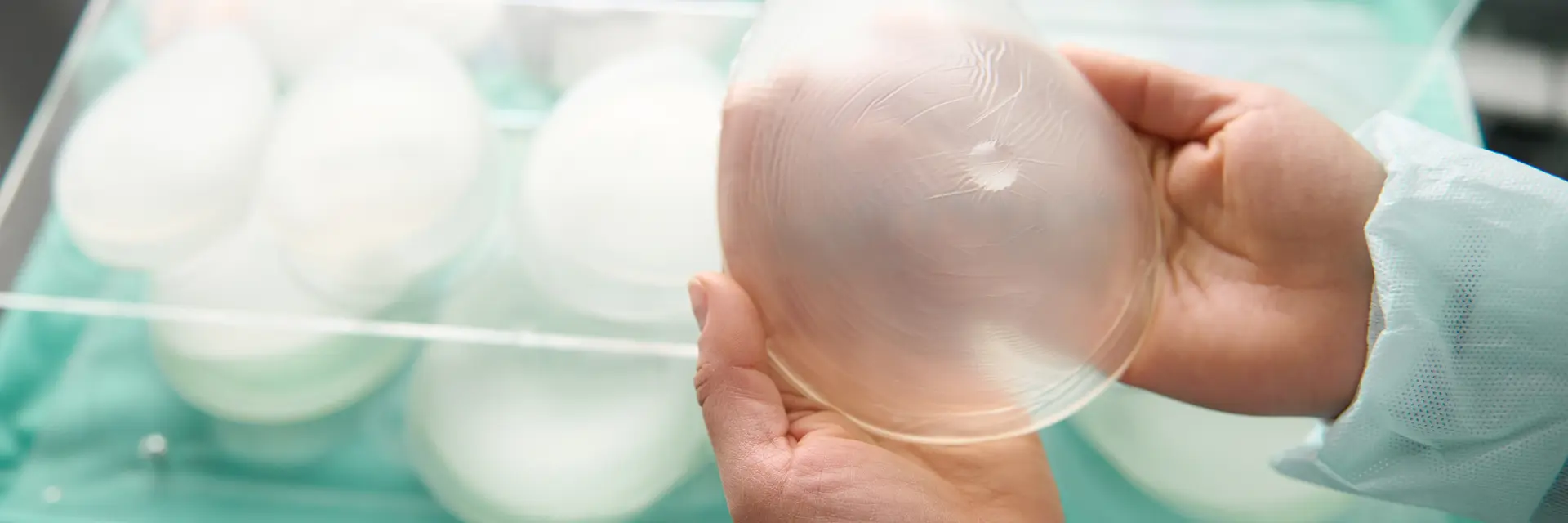
Inframammary. Set in the crease under the breast, this well-hidden incision gives the most direct, controlled route to the subfascial pocket.
Periareolar. Placed at the lower edge of the areola in selected cases, trading a different scar location for access.
Scar care. San Diego sun makes steady scar protection worthwhile, and your plan spells it out.
Tissue check. Dr. Sayed confirms you have enough coverage over the upper pole for a subfascial plane.
Fascia lifted cleanly. The fascia is raised with care and kept intact so it can cradle the implant.
Muscle preserved. The pectoralis is never released, and that one choice avoids the flexing distortion and the slower recovery of under-the-muscle placement.
No-touch delivery. A Keller funnel places the implant without handling, which helps lower contamination risk.
Pocket to fit. A pocket sized to the implant limits movement and holds the natural slope.
Fitted implant. From current silicone and saline options, the implant is chosen to fit your tissue and your goals.
Many La Jolla patients compare this against standard breast augmentation in La Jolla and, when replacing older implants, breast augmentation revision. For the full technique overview, see subfascial breast augmentation across Southern California, or browse the complete range of breast surgery.
Cost
Subfascial breast augmentation in San Diego generally totals about $9,500 to just over $10,000, depending on the implant brand. That figure includes the surgeon's fee, anesthesia, the implants, and the accredited surgical facility. Because every plan is individualized, the only exact number is the written quote from your consultation. Breast augmentation is elective, so insurance does not cover it, and financing is available.
Most subfascial plans in San Diego fall around $9,500 to just over $10,000 in total, depending on the implant brand. The written quote after your La Jolla consultation is the one exact figure.
Implant choice. Silicone, saline, and the various profiles sit at different price points.
Combined work. Adding a breast lift or other procedure changes the total.
Anesthesia and facility. An accredited operating room and board-certified anesthesia are part of safe, comfortable care.
Surgeon experience. A double board-certified surgeon's fee reflects training and track record.
Because it is cosmetic, subfascial breast augmentation is not covered by insurance. Financing options can spread the cost into monthly payments, and the plastic surgery pricing page explains what a quote includes.
Recovery
Because the chest muscle is left whole, subfascial recovery tends to be quicker and easier than the under-the-muscle route. Many patients are back at a desk within a few days, add light activity by about two weeks, and watch the final shape settle over several months. You leave with a written recovery plan built around your week.
Day of surgery
You head home the same day. Expect tightness and some soreness, managed with the medication Dr. Sayed provides.
First week
Most patients return to desk work within a few days. Keep it gentle, rest, and skip any lifting.
Weeks 2 to 4
Light activity and ordinary daily routines come back. Your surgeon clears heavier effort as you heal.
Weeks 4 to 6
Most patients get back to heavier workouts, chest and upper body included, once Dr. Sayed clears you.
3 to 6 months
Swelling fades and the implants settle into their slope as the final shape arrives.
Sleeping. Rest on your back with your upper body slightly raised for the first couple of weeks.
Driving. Resume once you are off prescription pain medicine and can move freely, often within a week.
Exercise. Walking early, light activity near two weeks, and chest work once Dr. Sayed clears it.
Sun and surf. Hold off on the ocean and pools until incisions fully heal, and guard the scar from the strong coastal sun.
Breastfeeding. This placement usually leaves breastfeeding ability intact, though no procedure can guarantee it.
The surgeon
Subfascial results turn on careful pocket control, so your choice of surgeon matters a great deal. Tim Sayed MD, MBA, FACS holds dual board certification from the American Board of Plastic Surgery and the American Board of Surgery. He trained at UCSF, finished general surgery at Massachusetts General Hospital and Harvard, then returned to UCSF for his plastic surgery fellowship.
He is also known for implant removal and revision, so guiding patients from older or under-the-muscle implants toward a natural subfascial result is familiar work. Read his credentials and background and the before and after gallery before deciding.
American Board of Plastic Surgery
American Board of Surgery
Fellow, American College of Surgeons
20+ years in practice, La Jolla
Results
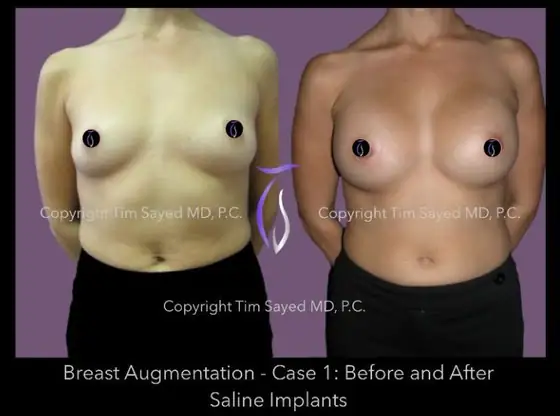
An actual breast augmentation patient of Tim Sayed MD. Results shown are individual and vary from person to person.
The area
Dr. Sayed's La Jolla office sits near Westfield UTC on the University City line, a short drive from La Jolla Village, La Jolla Shores, Torrey Pines, and Bird Rock, and patients travel in from across San Diego County, including Carmel Valley, Del Mar, Encinitas, and Carlsbad. For the wider technique overview, see subfascial breast augmentation across Southern California, or our full range of breast surgery.
San Diego rewards an active outdoor life, from Cove swims and Torrey Pines trails to year-round yoga and gym time, which is exactly why the muscle-sparing approach suits so many patients here: it keeps chest strength intact, avoids flexing distortion, and shortens the path back to the things you do outside. Diligent scar care matters under the strong coastal sun, and your plan includes it.
4510 Executive Drive, Suite 210
San Diego, CA 92121
Get directions to the La Jolla office on Google Maps
Drive times to the office
La Jolla Village
5 min
University City / UTC
4 min
Del Mar
12 min
Carmel Valley
13 min
Carlsbad
35 min
Encinitas
25 min
Meet one-on-one with Tim Sayed MD at the La Jolla office to see whether subfascial placement fits your anatomy and goals. You leave with a clear recommendation, an honest candidacy answer, and a written quote.
Questions
In San Diego, subfascial breast augmentation typically totals about $9,500 to just over $10,000 in total, depending on the implant brand, covering surgeon, anesthesia, implants, and accredited facility. It is elective, so insurance does not apply, and financing is available. The exact figure is the written quote from your consultation.
Subfascial breast augmentation places a breast implant under the fascia, the thin sheet covering the chest muscle, and over the muscle itself. The muscle stays whole, so the fascia helps support the implant. The approach is known for a natural slope and a quicker recovery than under-the-muscle placement.
Subfascial is over the muscle. The implant sits on top of the pectoralis but beneath the fascia that covers it, which is different from submuscular placement, where the implant sits under the muscle.
Neither is better for everyone. Subglandular sits over the muscle with no fascial layer, while subfascial keeps a layer of fascia over the implant for softer edges and a bit more support. Patients with enough tissue often prefer subfascial; your surgeon weighs both at your exam.
With enough tissue over the upper pole, subfascial implants usually feel soft and natural, and the fascia helps hide the edges. In very thin patients, edges or rippling can be easier to feel, which is why coverage is checked before the technique is recommended.
Desk work usually returns within a few days, light activity by about two weeks, and fuller exercise around four to six weeks. The shape keeps refining over several months. Timelines vary by patient, and your surgery includes a written plan.
Yes. Like most implants, subfascial implants settle over the first weeks to months, a process called drop and fluff, as swelling fades and the implant eases into position. Because the muscle is not cut, many patients find this settling quicker and more predictable.
Breasts keep changing with gravity, weight swings, pregnancy, and age, and implants do not stop that. The fascia gives some support, but this is not a lift. Should sagging appear, a breast lift can restore position. Results differ from person to person.
Yes. Because the chest muscle stays whole, subfascial placement avoids animation deformity, the flexing distortion that can shift an implant placed under the muscle. That is one of the main reasons active patients and those who strength-train choose it.
Tim Sayed MD, a double board-certified plastic surgeon, performs subfascial breast augmentation at his La Jolla office near Westfield UTC. He is board-certified by the American Board of Plastic Surgery and the American Board of Surgery and has practiced for more than 20 years.
Usually the inframammary incision in the breast fold, which stays well hidden and opens a direct path to the subfascial pocket. A periareolar incision at the areolar edge is an alternative in selected cases. Your surgeon recommends what suits your anatomy.
Patient Reviews