Removal and relief
Breast implant removal
Removes breast implants, with or without replacement, for a natural result.
Breast Explant Surgery Across Southern California
Tim Sayed MD has practiced for more than 20 years, and breast implant removal is now the center of his work. A double board-certified plastic surgeon with offices in La Jolla and Newport Beach, he treats women from across Southern California, removing the implant and its capsule together as one sealed en bloc unit and planning the shape of the breast with each patient well before surgery.
En bloc
Implant and capsule removed together
2
Board certifications
20+
Years in practice
4.6
Google rating
At a glance
What it is
An outpatient operation that takes out the breast implants and, in nearly all cases, the scar-tissue capsule around them. If the breast needs reshaping, a lift or fat transfer is done at the same time.
Who it suits
Women dealing with capsular contracture, a ruptured or aging implant, symptoms they link to their implants, or worry about a textured device, as well as women who have simply decided they are done with implants.
Southern California cost
En bloc explant with capsulectomy typically costs about $9,000 to $14,000 all in, or about $14,000 to $19,000 with a lift. Financing is available for qualified patients.
Time in surgery
About two to three hours of operating time for en bloc removal, longer if a lift or fat transfer is added. Patients go home the same day.
Back to normal
Most patients return to desk work in about a week. Drains come out within the first week or two, full exercise resumes around week six, and the final shape settles over three to six months.
Your surgeon
Tim Sayed MD, MBA, FACS, double board-certified, sees explant patients at two Southern California offices: one in University City near La Jolla and UTC, the other in Newport Beach near John Wayne Airport, a short drive from Fashion Island.
Explant is not simply an augmentation in reverse. It is a separate operation that needs its own technique and planning. Done well, it removes everything that was placed and leaves a breast that looks natural and settled, although the result differs from one woman to the next.
Why women explant
Women who see Dr. Sayed about explant usually have one of five reasons: a capsule that has hardened and tightened, an implant that has ruptured or reached the end of its life, symptoms they attribute to their implants, a textured device they no longer want, or a simple change of heart about having implants. No one needs to justify the decision. A patient's own reason is enough, and the consultation is where it becomes a surgical plan. For more on the technique itself, see the en bloc breast implant removal page.
When the capsule the body forms around an implant thickens and squeezes it, the breast can feel firm, sit high, ache, or look distorted. Removing the implant together with the entire capsule is the most definitive treatment.
Implants are not designed to last forever. A silent silicone rupture seen on MRI, a saline implant that has deflated, or a device that has been in place for 15 to 20 years can all be good reasons to remove it rather than replace it.
Patients link a range of complaints to their implants, including fatigue, joint pain, brain fog, hair loss, and rashes. Many say they feel better after everything is removed, and women with these concerns make up a large part of Dr. Sayed's practice.
Some textured implants, including the recalled Allergan Biocell devices, have a small but real link to BIA-ALCL. For peace of mind, some women choose to have both the implant and the capsule removed.
Children may be grown, the body may have changed, life may have moved on, or the implants may never have felt right. Wanting natural breasts again is one of the most common reasons women give, and it is a perfectly valid one.
Implants heavy enough to strain the neck and shoulders, implants that have dropped, shifted toward the armpit, or moved too close together in the middle, and rippling visible through thin tissue.

Many other conditions cause the same symptoms, so having them does not prove the implants are responsible. They are still a good reason to see an experienced explant surgeon, review the implant history, and decide together whether removal makes sense.
The technique
The most important question to ask about implant removal is what will happen to the capsule. Dr. Sayed's default is en bloc removal: he frees the capsule from the surrounding tissue while the implant stays sealed inside, and both come out together as one closed unit. If en bloc removal cannot be done safely, he switches to a total capsulectomy, removing the remaining capsule and cauterizing any thin piece fused to the ribs that cannot be lifted off safely.
Explant and revision procedures
Removal and relief
Removes breast implants, with or without replacement, for a natural result.

Capsule removed intact
Removes the implant and the entire capsule together, sealed, as one specimen.

Unexplained symptoms
Addresses symptoms attributed to implants through careful, complete removal.

Fixing an earlier result
Corrects or updates a previous augmentation, including exchange or repositioning.
Why keep the capsule sealed? An older silicone implant can rupture without anyone knowing, and a capsule can hold biofilm, calcium deposits, or gel fragments. Removing it closed keeps that material from spilling into the breast. That matters for comfort, for a clean pocket if implants are ever placed again, and for the reassurance many women are looking for when they choose explant. Dr. Sayed explains the technique in more detail on his en bloc breast implant removal page.
In short: en bloc means the capsule is removed with the implant still sealed inside. A total capsulectomy removes all of the capsule, whether in one piece or several. A partial capsulectomy leaves some capsule behind. Before surgery, patients should ask which approach is planned for them and why.
Compare en bloc removal with the other techniques in Dr. Sayed's detailed guide
Breast implant illness and BIA-ALCL
Breast implant illness (BII) is the term patients and doctors use for a wide range of symptoms, such as fatigue, joint pain, brain fog, hair loss, and rashes, that some women attribute to their implants after augmentation. It is not yet a formal diagnosis, there is no test that confirms it, and research into the cause is ongoing. Many women do report meaningful improvement after their implants and capsules are completely removed, which is why Dr. Sayed takes these symptoms seriously rather than dismissing them.
BIA-ALCL, short for breast implant-associated anaplastic large cell lymphoma, is a separate concern: a rare but serious lymphoma that forms in the capsule around certain textured implants. Because of it, the FDA has issued safety communications and requested the recall of specific textured devices. The agency has also reported rare cases of squamous cell carcinoma arising in the capsule. Most cases surface years after surgery as sudden swelling or a fluid collection, and early-stage disease is treated by removing the implant and the entire capsule en bloc. The FDA publishes BIA-ALCL medical device reports and a plain-language guide to breast implant risks and complications.
In both cases the approach is the same: the implant and the whole capsule are removed as one sealed unit whenever it is safe, the capsule and any fluid go to pathology, and Dr. Sayed goes over the report with the patient in person. He also moderates a private BII explant community where women share their experiences before and after surgery, so no one has to go through it alone.
How Dr. Sayed performs explant
En bloc removal takes about two to three hours under general anesthesia in an accredited surgical facility, longer if a lift or fat transfer is added, and patients go home the same day. Dr. Sayed performs each of the steps below himself.
01
Dr. Sayed goes over the implant records, any imaging, the patient's symptoms, and her goals for how the breast should look afterward. He then examines the tissue and explains plainly what removal alone, removal with a lift, or removal with fat transfer is likely to achieve.
02
The original inframammary scar is reused whenever possible. If a lift is planned, the capsule is removed through the lift incisions, so no extra scar is needed.
03
The capsule is separated from the breast tissue, muscle, and chest wall while the implant stays sealed inside. If the capsule is fused to the ribs, Dr. Sayed stops short of the chest cavity and switches to a total capsulectomy rather than risk an unsafe dissection.
04
The intact specimen is photographed for the patient's records and sent to pathology. Results come back in about a week.
05
If it is part of the plan, Dr. Sayed then repairs the pectoralis muscle where needed, performs the lift, or grafts fat from the abdomen or flanks into the upper breast to restore softness and shape.
06
Small drains help prevent fluid from building up and are usually removed within the first week or two. Patients go home in a surgical bra with a written recovery plan and a follow-up schedule with Dr. Sayed.
Like any operation under general anesthesia, explant carries the usual risks of breast surgery: bleeding, infection, seroma or hematoma, changes in nipple or breast sensation, visible scarring, asymmetry or contour irregularities, and the risks of anesthesia. Entering the chest cavity during capsule removal is uncommon, and Dr. Sayed avoids it by switching to a total capsulectomy rather than forcing an en bloc dissection off the ribs.
Most of these complications are uncommon and manageable. The consultation covers each one in plain terms, along with how a patient's own health history affects her risk. Results, and how much any symptoms improve, vary from patient to patient.
Surgery is usually postponed for women who are pregnant or breastfeeding, still losing a significant amount of weight, unable to stop nicotine for several weeks before and after surgery, or living with an uncontrolled medical condition that raises surgical risk. An active infection or an unexplained breast lump is evaluated first, before any surgery.
Women who want to keep their implants and correct a problem such as capsular contracture or malposition are often better served by breast augmentation revision. Dr. Sayed will recommend the right path, even if it is not the one the patient expected.
Your options after removal
Removing the implants is only half of the plan. The other half is how the breast will look once the volume is gone, which depends on how much natural tissue remains, how much the implant stretched the skin, and where the nipple sits. Dr. Sayed reviews all three options at the consultation and shows results for each.
Patients do not need to make this decision alone or have it settled before they arrive. Dr. Sayed encourages questions and shows how each option has turned out for women with similar tissue.
Read Dr. Sayed's guide to breast lift and fat grafting with explant
Explant alone is the simplest option, and it is the right choice more often than many women expect. It works best when the implants were modest for the patient's frame, the skin still has good elasticity, and the nipple sits at or above the inframammary fold. Dr. Sayed checks all three at the consultation.
With nothing added, the original scar is reused, recovery is the shortest of the three options, and over three to six months the breast settles toward its size before augmentation.
The main drawback is the wait. The breasts can look deflated for the first few weeks, and some women with larger implants later decide they want a lift. That can be done as a second stage once the tissue settles, and many women prefer this to committing to a lift from the start.
If an implant has stretched the skin or pushed the nipple below the fold, removing the volume alone leaves loose skin with nowhere to go. A breast lift done at the same time removes the excess skin, raises the nipple, and reshapes the remaining tissue into a smaller, firmer breast.
The capsule is removed through the lift incisions, so no extra scar is added. Dr. Sayed chooses the most conservative lift that will work: a periareolar lift for small adjustments, or a lollipop or anchor pattern when more skin needs to be removed.
A lift adds about an hour of surgery and a slightly longer recovery, and the scars mature over 12 to 18 months. For most women with larger or long-standing implants, it is often what turns an acceptable result into a very good one.
Fat grafting suits women who are done with implants but miss some fullness in the upper breast. Fat is taken from the abdomen, flanks, or thighs with gentle liposuction, purified, and injected in thin layers into the breast tissue, never into the old capsule space.
Some of the grafted fat survives long term, usually enough for a modest, natural increase in volume, and the donor area gets some contouring as a bonus.
Fat cannot replace a large implant on its own, it depends on having enough donor fat, and it is sometimes done a few months after explant so the graft goes into healed tissue with a good blood supply. Combined with a lift, it is the closest option to rebuilding the breast without implants.
Nipple position. A nipple at or above the inframammary fold favors explant alone; one below it usually means a lift. This is the most important measurement.
Skin quality. A pinch test and a look at any stretch marks show how much the skin is likely to tighten on its own over six months.
Natural tissue compared with implant size. A small implant in a woman with plenty of her own breast tissue behaves very differently from a large implant on a slim frame.
Condition of the capsule and implant. A thick, calcified capsule or a ruptured implant can leave dents in the contour that fat grafting often corrects better than a lift alone.
The patient's priorities. Her feelings about scars, a second surgery, liposuction at the donor site, and cost all shape the plan, and nothing is decided without her.

Case studies
Dr. Sayed photographs and documents his explant cases, so patients can see results on real bodies rather than in illustrations. The galleries are grouped by the option each patient chose. Every case was performed by Dr. Sayed, and every capsule was removed intact or completely.
Case study 01
This is the biggest category in the gallery: women whose implants had stretched the skin or lowered the nipple, treated with en bloc removal and a lift (mastopexy) through the same incisions. The photos show lifted breasts that look natural rather than deflated.
Case study 02
These patients had modest implants and good skin elasticity, and nothing else was added. Their photos answer the question Dr. Sayed hears most often: what will I look like with the implants simply removed?
Case study 03
Patients who chose to stay implant-free while keeping some upper fullness. Fat grafted from the abdomen or flanks fills the upper part of the breast and smooths the contour where the implant used to be.
Case study 04
For women who need only a small nipple adjustment, a periareolar lift keeps the scar around the edge of the areola. The capsule is removed and the lift performed in the same operation.
Results differ from patient to patient, and all photos appear with patient consent. At the consultation, patients can ask to see cases similar to their own implant size, tissue, and goals.
Cost
Across Southern California, breast implant removal with en bloc capsulectomy typically costs about $9,000 to $14,000 all in, including the surgeon's fee, anesthesia, the accredited facility, pathology, and follow-up. Adding a breast lift usually brings the total to about $14,000 to $19,000, and fat transfer adds to that depending on how many areas are treated. Dr. Sayed provides a written quote after the consultation, once the plan is clear.
Capsule work. En bloc or total capsulectomy takes more time and skill than simply taking an implant out, which is reflected in surgeon and facility time.
An added lift or fat transfer. Each adds operating time and complexity, and each is included in one combined fee rather than charged as a separate operation.
Implant history. Older ruptured silicone implants, heavily calcified capsules, and previous revisions all make a clean removal take longer.
Insurance. Removal for a documented rupture, severe contracture, or BIA-ALCL may be partly covered; removal for breast implant illness or a change of mind usually is not. Dr. Sayed's team can help patients request a predetermination from their insurer.
Financing. Monthly payment plans through third-party medical lenders are available to qualified patients.
When comparing quotes, three questions are worth asking: is capsule removal included, does the capsule go to pathology, and is a lift included if one is needed? The answers show what a price really covers.
See Dr. Sayed's pricing overview | Explore financing options
Recovery
Most patients are walking the same day, return to desk work after about a week, and resume full exercise at around six weeks. Drains usually come out in the first week or two. The breast continues to soften and settle for three to six months before the final result is clear. Every patient leaves with a written recovery plan and sees Dr. Sayed himself at each follow-up.
Surgery day
Surgery is outpatient, and patients go home within a few hours. Tightness and soreness are normal and are controlled with prescription medication. Someone should drive the patient home and stay for the first night.
Days 2 to 7
Swelling and bruising peak and then begin to fade. Short walks several times a day are encouraged. Drains are usually removed at the first visit, and many patients are back at a desk by the end of the week.
Weeks 2 to 3
Normal daily routines resume. Driving is fine once prescription pain medication is stopped. The surgical bra stays on, and lifting, pushing, and chest exercises are still off limits.
Weeks 4 to 6
Light cardio returns, followed by full activity and upper-body training once Dr. Sayed confirms everything has healed.
Months 3 to 6
Swelling fades, the breast softens, and the results of any lift or fat transfer settle into their final shape. This is when the final result can be judged.
Sleeping. Sleep on the back with the upper body raised for about three to four weeks. Side sleeping can resume once Dr. Sayed gives the go-ahead.
Drains. Thin tubes that stop fluid from collecting in the space where the implant was. Most patients find them more awkward than painful, and the team shows how to empty them before discharge.
Scars. The original incision is reused whenever possible. Scars mature over 12 to 18 months, and Dr. Sayed advises on taping, silicone, and sun protection.
Exercise. Walking from the first day, lower-body workouts at about three weeks, and full training, including chest and shoulders, at around six weeks.
Early appearance. A flat or deflated look in the first few weeks is normal. Fullness and shape improve as swelling goes down and the tissue relaxes.
Change in symptoms. Many women who had explant because of BII report improvement over weeks to months. Results vary, and Dr. Sayed does not promise outcomes he cannot predict.
Your surgeon
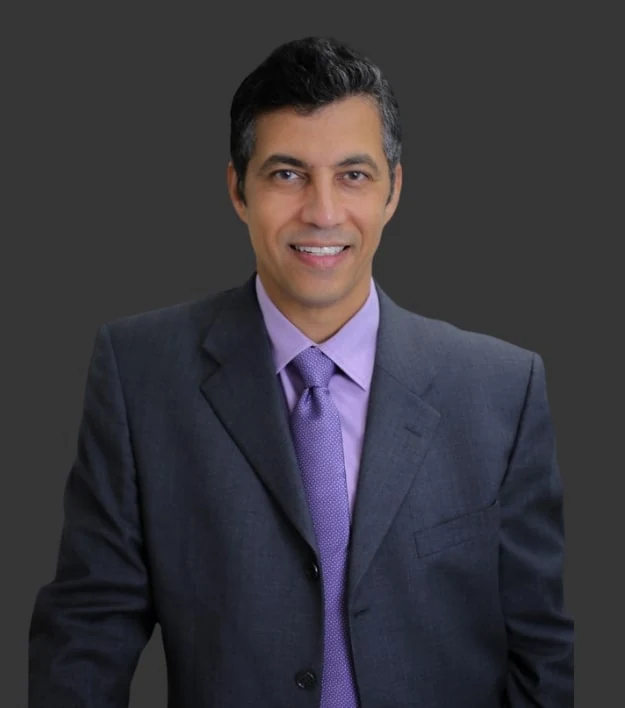
Tim Sayed MD, MBA, FACS is a double board-certified plastic surgeon, certified and recertified by both the American Board of Plastic Surgery and the American Board of Surgery. He studied at UC Berkeley and the UCSF School of Medicine, trained at Massachusetts General Hospital at Harvard, and completed a plastic surgery fellowship at UCSF. He later earned an executive MBA from Northwestern's Kellogg School of Management.
In more than 20 years of practice, breast implant removal has become the center of his work. En bloc capsulectomy is his standard technique, he sends every capsule to pathology, he shares his cases in a public gallery, and he moderates a BII explant community where patients learn from one another. He performs every operation himself, from first incision to final suture, and sees patients at every follow-up.
American Board of Plastic Surgery
Board certified and recertified
American Board of Surgery
Board certified and recertified
UCSF School of Medicine
MD and plastic surgery fellowship
Harvard, Mass General
General surgery training
Kellogg School of Management
Executive MBA, Northwestern
Alpha Omega Alpha
National medical honor society
Aesthetics Done Right is a commitment, not a slogan: the complete operation, an honest picture of what to expect, and the surgeon himself at every follow-up visit. This page was medically reviewed by Tim Sayed MD, MBA, FACS. Last updated October 2026.
Visit us
Dr. Sayed sees explant patients at his La Jolla and Newport Beach offices, with patients traveling from across Southern California, and some from out of state, for en bloc breast implant removal.
4510 Executive Drive, Suite 210, Second Floor
San Diego, CA 92121
La Jolla Village
7 min
University City
6 min
Torrey Pines
8 min
Del Mar
13 min
Carmel Valley
14 min
Rancho Santa Fe
18 min

3991 MacArthur Blvd, Suite 320, Third Floor
Newport Beach, CA 92660
Newport Center
6 min
Corona del Mar
9 min
Turtle Rock
10 min
Balboa Island
12 min
Newport Coast
13 min
Laguna Beach
17 min

Bring your implant records and your questions, along with any concerns. Dr. Sayed will examine you, explain how en bloc removal works, show results from patients with similar tissue, and give you a written plan and quote. There is no pressure to decide that day.
Questions
In Southern California, breast implant removal with en bloc capsulectomy usually costs about $9,000 to $14,000 all in, including the surgeon, anesthesia, facility, and pathology fees. A breast lift typically brings the total to about $14,000 to $19,000, and fat transfer adds to that. Insurance may help with a documented rupture, severe capsular contracture, or BIA-ALCL. You receive an exact figure in a written quote after your consultation, and financing is available.
Both remove the entire capsule. The difference is whether it stays closed. In en bloc removal, the capsule is freed from the surrounding tissue without being opened, so the implant comes out sealed inside it. In a total capsulectomy, the capsule is opened, either to take the implant out first or because it has to be removed in pieces. A sealed capsule matters most with ruptured silicone, textured implants, and breast implant illness concerns, so Dr. Sayed uses en bloc whenever it is safe and switches to total capsulectomy only to protect the chest wall.
Not always. When the back wall of the capsule is thin and stuck to the ribs, trying to remove it intact can put the chest cavity at risk. In that situation, Dr. Sayed removes as much as he safely can en bloc, completes a total capsulectomy, cauterizes any fragment that cannot be lifted off safely, and records exactly what was done. He discusses this possibility with you before surgery and explains the details afterward.
Not necessarily. Women with modest implants, elastic skin, and a nipple at or above the breast fold often do well with explant alone. When the skin has stretched or the nipple has dropped, a lift during the same operation removes the extra skin and reshapes the breast through the same incisions. Dr. Sayed shows results of both approaches at your consultation.
Expect them to look flatter and smaller at first than they will once healed. Swelling fades and the tissue relaxes over three to six months, and most women end up near their pre-augmentation size, give or take changes from pregnancy, weight, or age. If a lift or fat transfer is planned, it shapes that final result; the gallery has real examples of each.
Patients' symptoms are real, and many women report feeling better after complete removal of their implants and capsules. Researchers have not yet identified a cause or developed a test, so breast implant illness is not currently a formal diagnosis. Dr. Sayed takes these concerns seriously and offers en bloc removal to patients who have them, while being honest that no one can promise which symptoms will improve.
It is a rare lymphoma that forms in the capsule around certain textured implants, especially the recalled Allergan Biocell devices. For women without symptoms, the FDA does not recommend removing textured implants, but it does advise prompt evaluation of any new swelling, fluid, or lump. Some women decide on removal with en bloc capsulectomy anyway, for peace of mind. Dr. Sayed reviews your implant records and helps you weigh that decision.
Most patients return to desk work in about a week, have their drains removed within the first week or two, start light cardio at around four weeks, and are cleared for full exercise at about six weeks. Swelling and shape keep settling for three to six months. Recovery from en bloc explant takes a little longer than recovery from a straightforward augmentation because more surgery is done inside the breast.
Sometimes. A documented rupture, severe and painful capsular contracture, or BIA-ALCL may qualify for partial coverage, and some plans cover removing implants that were placed for reconstruction. Removal for breast implant illness or a change of mind is usually considered cosmetic and is not covered. Dr. Sayed's team can help you request a predetermination from your insurer.
Yes, always. A pathologist examines the capsule and any fluid and reports back in about a week. Most reports describe ordinary scar tissue, and if anything unexpected turns up, Dr. Sayed reviews it with you and arranges appropriate follow-up.
Yes. Dr. Sayed routinely places small drains to clear fluid from the space the implant and capsule occupied. This helps the tissue heal together and lowers the risk of a fluid collection. The drains usually come out at a follow-up visit within the first week or two.
It can bring back some softness and upper fullness, but not the volume an implant provided. Fat is harvested from the abdomen or flanks, purified, and grafted into the breast, and part of the graft survives long term. It works best for women who want to stay implant-free and have enough donor fat, and Dr. Sayed will be clear about what it can realistically achieve for your body.
He is double board-certified, in plastic surgery and in general surgery, and trained at UCSF and at Harvard's Massachusetts General Hospital. In more than 20 years of practice, explant has become his main focus. He removes capsules en bloc as standard, sends each one for pathology, publishes his cases in a gallery, and handles every operation and follow-up personally. Patients can see him in University City, near La Jolla and UTC, or in Newport Beach, near John Wayne Airport.
Helpful things to bring include your implant card or operative report, the year of your augmentation and the surgeon's name, any imaging, and a list of symptoms and goals. It is also worth deciding whether you hope to stay implant-free and browsing the gallery for results you like. Consultations are unhurried, and virtual visits are available if you live outside the area.
Patient Reviews