(858) 247-2933
Book
Book a consultation
Breast Augmentation Revision, Southern California
Breast augmentation revision is surgery to improve or replace a previous breast augmentation, whether to correct capsular contracture, a ruptured or aging implant, a size you have outgrown, or an implant that has shifted. Tim Sayed MD, a double board-certified plastic surgeon, revises implants placed elsewhere as well as his own, and will tell you honestly what a revision can and cannot change. He sees revision patients in San Diego and Newport Beach.
Revision
Implants improved, exchanged, or removed
2
Board certifications
20+
Years in practice
4.6
Google rating
At a glance
A revision is not an admission that your first surgery failed. Implants are not lifetime devices, bodies change, and goals change. The point of a revision is to get you back to a result you are happy with.
What it is
Surgery to correct or update a previous augmentation: exchanging implants, treating capsular contracture, changing size or position, or removing implants altogether.
Common reasons
Capsular contracture, a ruptured or aging implant, wanting a different size, an implant that has dropped or shifted, rippling, or a style change.
Your options
Exchange the implants, rebuild the pocket, add a lift or fat transfer, switch over or under the muscle, or go smaller or implant-free.
Pathology
If a capsule is removed during the revision, it is sent to pathology, so a pathologist can examine the tissue, including a check for BIA-ALCL.
Cost and recovery
Commonly about $8,000 to $15,000 depending on what the revision involves. Desk work in about a week, fuller recovery over several weeks.
Your surgeon
Tim Sayed MD, MBA, FACS, double board-certified, revising breast implants in San Diego (University City) and Newport Beach (Airport Area).
Reasons for revision
Most revisions come down to one of a handful of issues. Some are medical, such as a ruptured implant or capsular contracture; others are about how the result looks or feels years later. Dr. Sayed sees all of them, on implants he placed and on work done elsewhere.
Scar tissue around the implant tightens and hardens, making the breast feel firm, look round, or sit high. Revision releases or removes the capsule and places a new implant.
Saline ruptures deflate visibly; silicone ruptures are often silent and found on imaging. Implants are not lifetime devices, and many women revise simply because theirs are 10 to 15 years old.
Wanting to go larger, or just as often smaller, is one of the most common reasons for revision. Dr. Sayed sizes with your own tissue and frame in mind, not a number.
Considering removing implants instead? See breast implant illness
Implants can drop too low (bottoming out), ride too far to the side, or drift together in the middle (symmastia). Revision rebuilds the pocket to hold the implant where it belongs.
Thin tissue can let an implant edge ripple or be felt, especially with saline or over-the-muscle placement. Revision can add soft-tissue support, change the plane, or add fat.
Switching saline to silicone, round to shaped, or moving the implant under or over the muscle, often to get a more natural look than the original surgery gave.

A good revision surgeon will sometimes tell you that surgery is not the answer yet, or that a smaller change than you expected will get you there. Dr. Sayed would rather talk you out of an operation you do not need than sell you one.
What revision fixes
Revision can reliably fix a mechanical problem: a ruptured implant, a tight capsule, a pocket that lets the implant drift. It cannot stop your tissue from aging, which is why the honest plan sometimes includes a lift, not just a new implant.
A revision is a problem-solving operation. The first job of the consultation is to name the actual problem, because the fix for a ruptured implant is different from the fix for one that has bottomed out, and both are different from simply wanting to be smaller.
Why does the plan matter so much? Because reusing an old, stretched pocket for a new implant often just repeats the original problem. Rebuilding the pocket, adding internal support where the tissue is thin, and choosing the right implant for your frame is what makes a revision last.
The pocket and support
The implant pocket is the space the implant sits in. In many revisions the real work is not the implant at all, it is the pocket. A pocket that has stretched, thinned, or scarred is why the first result drifted, and simply dropping a new implant into it tends to repeat the problem.
To fix that, Dr. Sayed rebuilds the pocket. That can mean tightening it with internal sutures (capsulorrhaphy), reinforcing thin tissue with an internal bra of surgical mesh or acellular dermal matrix, or moving the implant to a new plane under or over the muscle. The goal is a pocket that holds the implant where it belongs for years, not months.
When a capsule is removed as part of the revision, it is sent to pathology, so a pathologist can examine the tissue, including a check for BIA-ALCL. You receive a copy of the report, and Dr. Sayed reviews it with you.
The procedure
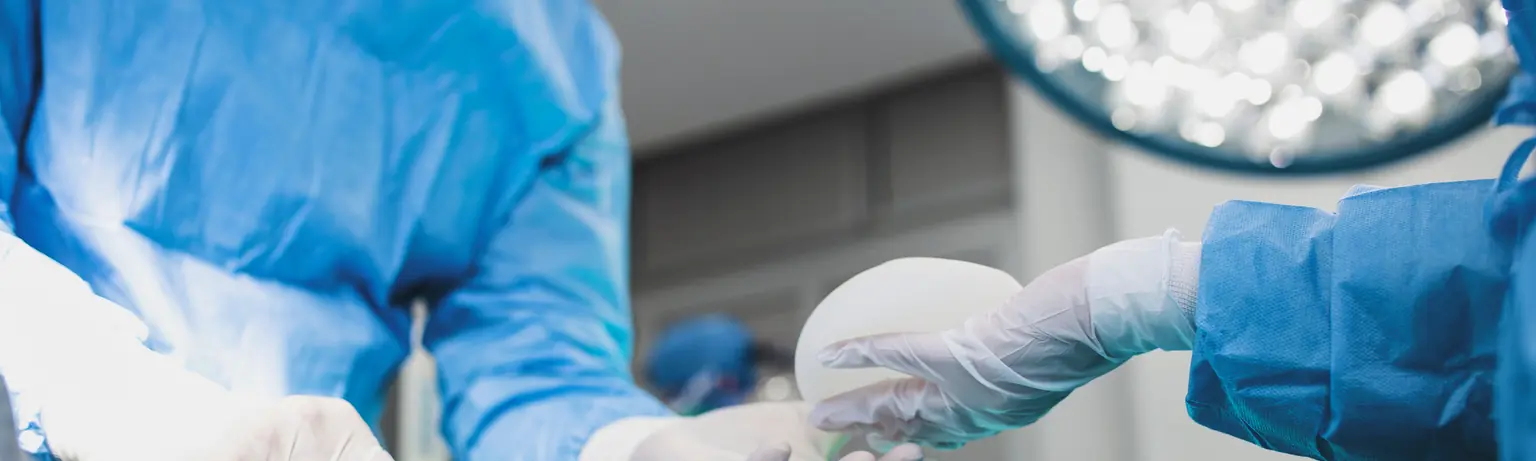
A revision is tailored to the problem, so no two are identical, but most follow the same arc. It is outpatient surgery under general anesthesia, usually one and a half to three hours depending on what is involved.
01
Dr. Sayed reviews your implant records and history, examines the breasts, and orders imaging when a silent rupture is possible. Then he names the specific problem and your options.
02
Whenever possible he reuses your existing scar, usually in the fold or around the areola, so no new scar is added.
03
Depending on the problem, he releases or removes the capsule, tightens or rebuilds the pocket, or changes the plane. A removed capsule goes to pathology.
04
The new implant is chosen for your frame and goals: a different size, a switch from saline to silicone, or a different shape. Sometimes the right answer is no implant at all.
05
Where the tissue is thin, he adds an internal bra of surgical mesh or acellular dermal matrix. A lift or fat transfer is added here if it is part of your plan.
06
Drains are used when needed, you go home the same day, and Dr. Sayed sees you through healing, including the pathology report if a capsule was removed.
Revision is surgery under general anesthesia and carries the usual risks: bleeding, infection, a fluid collection, changes in nipple or skin sensation, scarring, asymmetry, and the chance of needing a further revision down the line. Because it works on tissue that has already been operated on, healing can be a little less predictable than a first augmentation.
Most of these are uncommon and manageable, and your consultation covers each one along with how your own history changes the picture.
If your implants are young and the problem is minor, Dr. Sayed may recommend waiting or monitoring. Revision is also usually postponed during pregnancy or breastfeeding, significant weight change, or active nicotine use.
Some women decide the better answer is to remove implants rather than revise them. If that is you, Dr. Sayed also offers breast implant removal.
Your options
You do not have to decide the whole plan before you walk in. Dr. Sayed will show you what each path looks like on women with tissue like yours and recommend the simplest one that gets you there.
A revision is rarely just swapping one implant for another. What makes the result look right is matching the plan to your tissue: sometimes a new implant alone, often a new implant with support or a lift, and sometimes less implant, not more.
Read Dr. Sayed's guide to lift and fat grafting
The simplest revision: out with the old implant, in with a new one, often a different size or a switch to silicone. It works when the pocket and skin are still in good shape.
Recovery is the shortest of the options, and because the pocket already exists, swelling settles relatively quickly.
If the only issue is size or implant age and the tissue is sound, this is frequently all that is needed.
When the skin has stretched or the nipple has dropped, a new implant alone looks bottom-heavy. A breast lift tightens the skin and lifts the nipple so the revised implant sits right.
Dr. Sayed chooses the lightest lift that will do the job, matching the scar pattern to how much skin must come out.
It adds time and scars that fade over 12 to 18 months, and for many long-standing augmentations it is what makes the revision look natural.
Fat grafting softens rippling and adds fullness where the implant edge shows, using fat harvested from the abdomen or flanks during the same operation.
It is especially useful for thin upper-pole tissue, and the donor area gets a contour improvement at the same time.
Fat transfer supplements an implant rather than replacing it, and a portion of the grafted fat reabsorbs, so the gain is modest and natural.
Pocket condition. A stretched or scarred pocket often needs rebuilding or support, not just a new implant.
Skin and nipple position. A pinch test and the nipple's height decide whether a lift belongs in the plan.
Tissue thickness. Thin tissue points toward a change of plane, an internal bra, or fat transfer to hide the implant edge.
Implant age and type. Older or ruptured implants, and saline in thin tissue, shape which new implant and plane he recommends.
Your goals. Bigger, smaller, more natural, or out for good: the plan follows what you actually want, not a default.
Case studies
Dr. Sayed documents his revision cases so you can see what is possible on real bodies, including implants first placed by other surgeons. The galleries below group cases by what the revision involved.
Gallery 01
The largest group: implants exchanged and the breast lifted to correct stretched skin or a dropped nipple.
Gallery 02
Straight exchanges for size changes, aging implants, or a switch to silicone, where the pocket and skin were still sound.
Gallery 03
Bottomed-out, lateralized, or symmastia cases where the pocket was rebuilt to reposition the implant.
Gallery 04
Thin-tissue cases where fat grafting softened rippling and filled the upper pole alongside the implant exchange.
Results vary from patient to patient, and photographs are shared with consent. Ask at your consultation to see cases that match your implants, tissue, and goals.
Cost
When you compare quotes, ask what is included: the implants, any capsule work, internal support, and whether a lift is part of the price. A cheap exchange that reuses a failing pocket is not a bargain.
Breast augmentation revision in Southern California commonly runs about $8,000 to $15,000 all in, covering the surgeon, anesthesia, the accredited facility, and the new implants. The range is wide because a simple exchange and a full pocket rebuild with a lift are very different operations.
What the revision involves. A straight implant exchange costs less than capsule removal, a pocket rebuild, or an internal bra.
Adding a lift or fat transfer. Each adds operating time and is quoted as part of a single combined fee.
Implant choice. New implants, and especially a switch to certain structured or cohesive silicone devices, affect the total.
Insurance. Revision for a documented rupture, severe capsular contracture, or BIA-ALCL may be partly covered; a revision for size or cosmetic reasons is not.
Financing. Monthly payment plans through third-party medical lenders are available to qualified patients.
Recovery
Most revision patients are up and walking the day of surgery, back at a desk in about a week, and cleared for full exercise around six weeks. A straight exchange recovers faster; a pocket rebuild, lift, or fat transfer takes a little longer.
Surgery day
Outpatient, home within a few hours. Expect tightness and soreness managed with prescribed medication. Someone drives you home and stays the first night.
Days 2 to 7
Swelling and bruising peak then ease. Short walks several times a day. Any drains usually come out at your first visit, and many are back at a desk by the end of the week.
Weeks 2 to 3
Daily routines return. Driving once you are off prescription pain medication. Surgical bra continues. No lifting, pushing, or chest exercise yet.
Weeks 4 to 6
Light cardio resumes, then full activity and upper-body training once Dr. Sayed confirms healing.
Months 3 to 6
Swelling resolves and the implants settle into their final position and shape. This is your result.
Sleeping. On your back, upper body raised, for about three to four weeks. Side sleeping once Dr. Sayed clears it.
Scars. Dr. Sayed reuses your original incision whenever he can, so a revision usually adds no new scar. Existing scars continue to fade.
Bras. A surgical or supportive bra protects the rebuilt pocket; he will tell you when you can return to underwire.
Working out. Walking from day one, lower body at about three weeks, full chest and shoulders at about six.
How the breasts look early on. High and firm at first is normal after a revision; they soften and drop into place over three to six months.
Will it last. No implant is forever, but a well-rebuilt pocket and the right implant give a revision the best chance of a durable result.
Your surgeon
For Dr. Sayed, Aesthetics Done Right means diagnosing the real problem, recommending the smallest operation that solves it, and performing the full revision himself.
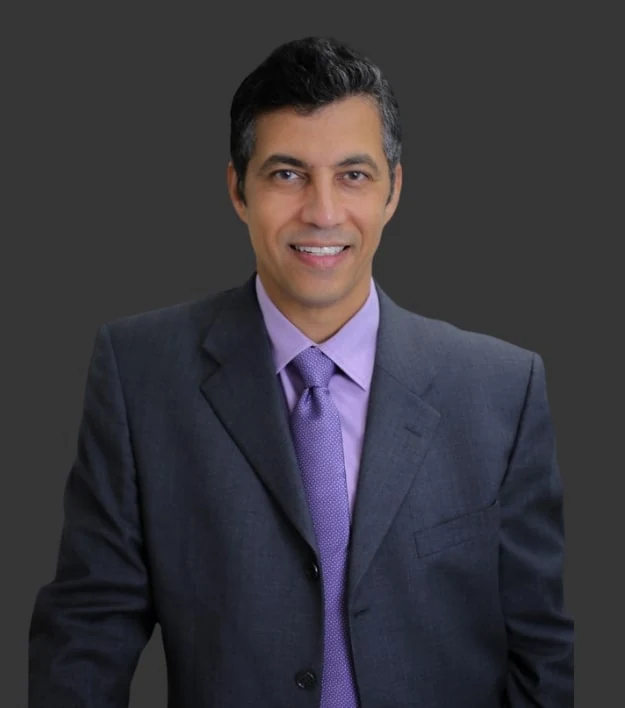
Tim Sayed MD, MBA, FACS is a double board-certified plastic surgeon, certified by both the American Board of Plastic Surgery and the American Board of Surgery. He trained at UCSF and at Harvard's Massachusetts General Hospital, and earned an executive MBA from Northwestern's Kellogg School of Management.
Over more than 20 years in practice, breast surgery has become the heart of his work, and revision is among the most demanding parts of it. Women come to him to correct augmentations done elsewhere because he explains what actually went wrong, rebuilds rather than reuses, and tells the truth about what a revision can achieve.
American Board of Plastic Surgery
Board certified and recertified
American Board of Surgery
Board certified and recertified
UCSF School of Medicine
MD and plastic surgery residency
Harvard, Mass General
General surgery training
Kellogg School of Management
Executive MBA, Northwestern
Alpha Omega Alpha
National medical honor society
Serving San Diego and Orange County
Dr. Sayed sees revision patients at two Southern California offices. His San Diego office is in University City at 4510 Executive Drive, Suite 210, minutes from UTC, La Jolla, and Del Mar. His Orange County office is in the Newport Beach Airport Area at 3991 MacArthur Boulevard, Suite 320, near Fashion Island. Women travel to him from across the region, including Los Angeles.
Southern California makes recovery easier. Walking is the best early activity, and the region's flat coastal paths and mild, dry weather make daily walks comfortable in the first weeks after a revision.
Tim Sayed MD, Southern California
Offices
San Diego: 4510 Executive Drive, Suite 210, San Diego, CA 92121. Newport Beach: 3991 MacArthur Boulevard, Suite 320, Newport Beach, CA 92660.
Phone
(858) 247-2933
San Diego area
University City, UTC, La Jolla, La Jolla Shores, Torrey Pines, Del Mar, Carmel Valley, Encinitas
Orange County area
Newport Beach, Corona del Mar, Costa Mesa, Irvine, Laguna Niguel, Laguna Beach

Bring your implant records, what you like and do not like about your current result, and your goals. Dr. Sayed will examine you, name the problem, and lay out the options honestly, so you can make a clear decision.
Questions
Implants are not lifetime devices. Many women revise because an implant has ruptured, a capsule has tightened, or the implants are simply 10 to 15 years old. Others revise to change size or correct a result that has shifted. Not every concern needs surgery, and part of the consultation is deciding whether it does.
For a cosmetic change, Dr. Sayed usually waits until the breasts have fully settled, about six months, so you are revising the final result rather than a swollen one. A medical problem such as a rupture or significant contracture can be addressed sooner.
It commonly runs about $8,000 to $15,000 all in, covering the surgeon, anesthesia, facility, and new implants. A straight exchange is at the lower end; capsule work, a pocket rebuild, or an added lift raises it. Insurance may help for a documented rupture, severe contracture, or BIA-ALCL.
Only if the skin has stretched or the nipple has dropped. If the implants were modest and the skin still has good tone, an exchange alone can look great. Dr. Sayed measures nipple position and skin quality and recommends a lift only when it is needed.
Yes, larger or smaller. Going smaller is one of the most common revision requests. Dr. Sayed sizes to your frame and tissue, and if you want a big drop in size, he will discuss whether a lift is needed so the skin fits the smaller implant.
Yes. Switching saline to silicone is a common revision, often to soften rippling or get a more natural feel. He will talk through the current silicone options and which suits your tissue.
Capsular contracture is when the scar capsule around an implant tightens, making the breast feel firm, look round, or sit high. Revision releases or removes the capsule and places a new implant, often in a fresh plane, to lower the chance it returns.
Yes. Bottoming out, lateral displacement, and symmastia are corrected by rebuilding the pocket, with internal sutures or an internal bra of mesh or acellular dermal matrix, so the implant is held in the right position.
Often. Rippling usually comes from thin tissue over the implant. Options include moving the implant under the muscle, adding an internal bra, switching to a different implant, or grafting fat over the implant to pad the tissue.
If a capsule is removed as part of the revision, yes. It goes to a pathologist who examines the tissue, including a check for BIA-ALCL, and you receive the report.
Yes. Many of Dr. Sayed's revision patients had their original augmentation elsewhere. He reviews your records where available, examines what you have, and plans the revision from there.
Most women are back at desk work in about a week, return to light cardio around four weeks, and are cleared for full exercise around six weeks. A straight exchange recovers faster than a pocket rebuild or a revision with a lift.
That is a valid choice, and Dr. Sayed offers it. Some women are done with implants and want them out, with or without a lift or fat transfer. See his breast implant removal and breast implant illness pages.
He is double board-certified in plastic surgery and general surgery, trained at UCSF and Harvard's Massachusetts General Hospital, with more than 20 years in practice. He diagnoses the real problem, rebuilds the pocket rather than reusing it, revises work done elsewhere, and recommends the smallest operation that solves it.
Patient Reviews